On track opening for cultural train station
Shavuot-themed opening day at revitalized 'First Station' arts-entertainment-dining complex draws thousands
Jerusalem’s painstakingly and elegantly redeveloped “First Station” officially reopened Tuesday with a series of Shavuot events, and looks set to establish itself as the city’s most attractive pedestrian public space.
Amid plenty of bales of hay, flower crowns and other farm festival props, strikingly large crowds enjoyed hours of Israeli dancers, street performers, break-dancers and more.
Stalls sold clothes, baby and kids’ gear, jewelry, DIY ice cream, cheese and some spectacularly sweet corn to the swirling mass of Jerusalemites plainly delighted to have a new eating, culture and entertainment center, in a prime location that was derelict until recently. Delighted organizers estimated that 10,000 people flowed through in the course of the day.
Several of the permanent restaurants and stores have been open for a few days — including Adom and Re:bar. Others will open soon. Bikes and Segways are available to rent. The area will feature different themes on different days of the week, Monday through Saturday, including a farmers’ market, local fashion designs, kids’ days and various artists exhibits and sales — many of which were showcased on Tuesday.
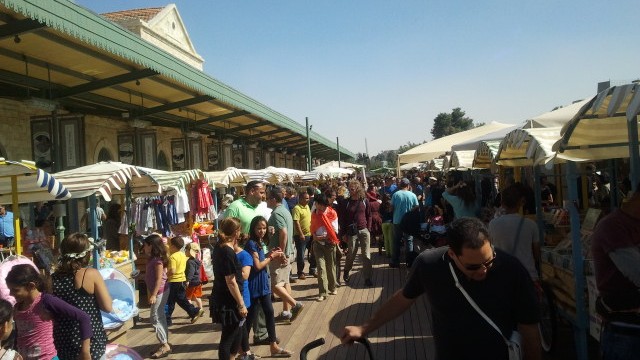
The designers of the complex have managed to retain the old-fashioned beauty of the 120-year-old Ottoman-era train station, while making it practical for the modern masses. They’ve also preserved its history at a small museum.
(See Jessica Steinberg’s recent feature, “In Jerusalem, the station is a destination even though there’s no train.”)