Opposition MK compares recent outpost law to pedophilia
Remarks by Merav Michaeli cause an outcry; she later apologizes, saying that was not what she meant
The chairwoman of Israel’s largest opposition party caused an outcry Thursday when she compared a law passed this week legalizing illegal settlement outposts built on private Palestinian land in the West Bank to pedophilia.
In an interview with the 101.5 radio station, MK Merav Michaeli (Zionist Union) said that just as there is no prohibition in Jewish law on “having sexual relations with five-year-old boys and girls,” legalizing illegal outposts is not acceptable for the same reason.
Michaeli said just because a law is proposed does not mean it needs to be pased in the Knesset, particularity if it is immoral.
In response to Michaeli’s comments, MK Shuli Moalem-Refaeli (Jewish Home) — who was one of the sponsors of the bill — accused Michaeli of “slandering an entire public whose only crime is a love of the land of Israel.”
“How much hate and abhorrence does MK Michaeli have in order to make a comparison like this concerning Israelis that want to live a life of equal rights” to “a law that permits sexual relations with a five-year-old girl,” Israel National News quoted Moalem-Refaeli as saying.
Michaeli later apologized after MK Yehuda Glick (Likud) called on her to retract her statement.
“This is not what I meant to say. I apologize if it came out wrong. There is no room for comparison,” she wrote on Twitter.
Moalem-Refaeli also called out “the hypocrites and bleeding hearts in the media and the left” for not condemning Michaeli, noting how they had “pounced” on fellow Regulation Law sponsor MK Bezalel Smotrich (Jewish Home) for comparing the recent evacuation of the illegal West Bank outpost of Amona to a “brutal rape.”

The so-called Regulation Law, which was passed in a contentious vote on Monday, legalizes wildcat outposts constructed on private Palestinian land if the owners can prove they built the land in good faith or received government support, which could constitute as little as the provision of basic services such as water and electricity.
Under the law, Palestinians whose land is appropriated will receive compensation in the form of either payment for the land or alternative plots elsewhere.
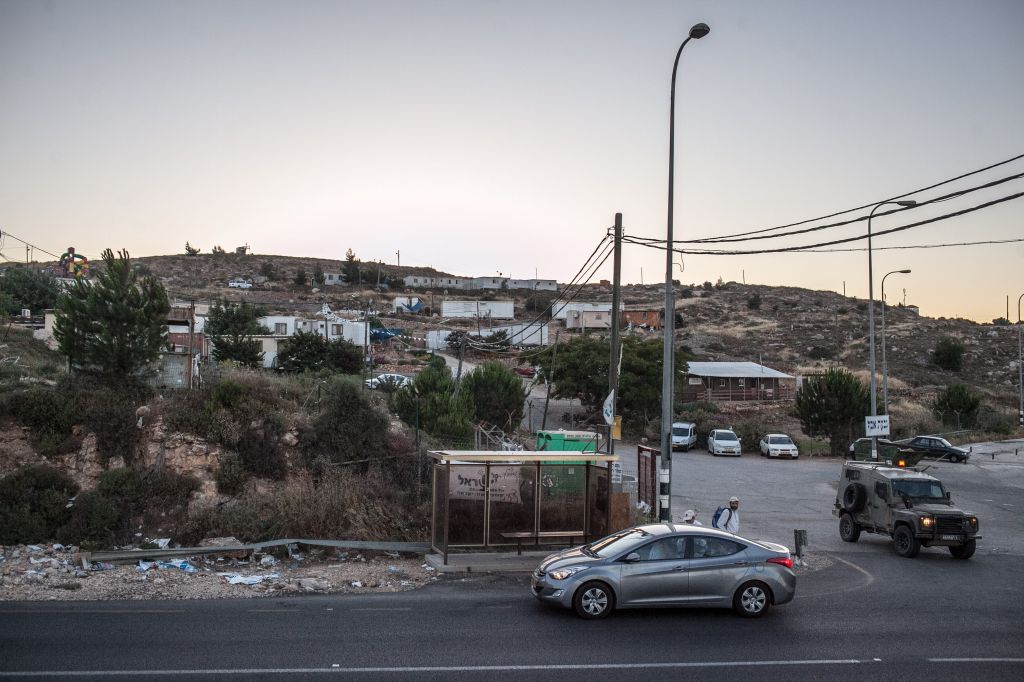
Palestinian and left-wing Israeli NGOs have already petitioned the court over the law, which is expected to be struck down by Israel’s High Court of Justice.
Israel has been widely criticized since the law was passed Wednesday, with European countries such as Germany saying “the confidence we had in the Israeli government’s commitment to the two-state solution has been profoundly shaken.”
The US on the other hand has remained noticeably silent on the law, saying only that it will be “a topic of discussion” during a planned meeting in Washington between US President Donald Trump and Prime Minister Benjamin Netanyahu next week.