Over a million refugees reached Europe in 2015, data shows
Increased patrols, razor wire, border controls have failed to slow desperate migrants fleeing their war-torn homes
BRUSSELS (AP) — One million — and counting. The International Organization for Migration says its statistics show the number of people fleeing conflict or poverty who have arrived in the European Union by sea this year has hit the seven-digit mark.
Despite increased coast-guard patrols, razor-wire topped fences, tightened security, the reintroduction of border controls, new laws and refugee distribution schemes, nothing has slowed down the arrivals.
More than two years after the drowning of over 400 people off Italy’s southern coast brought cries of “never again,” every record has been broken in 2015. The IOM says the total number of arrivals is more than four times that of last year.
Here are some questions and answers about how the EU is handling the crisis:
Where are they coming from?
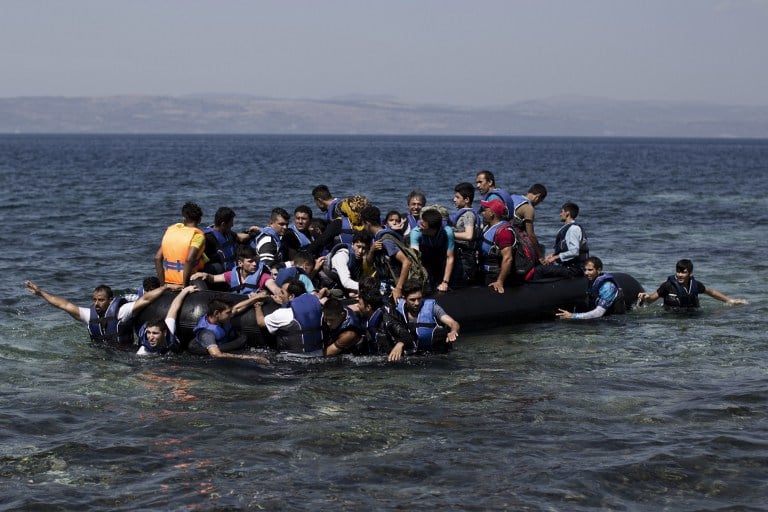
Most people arriving in Europe are now entering Greece after taking short trips on rickety boats or inflatable rafts from Turkey. The IOM says more than 820,000 came that way in 2015, many fleeing wars in Syria and Iraq. More than 150,000 have crossed the Mediterranean to Italy this year, mostly from the Libyan coast. Nearly 3,700 are dead or missing, mostly along those two routes. As winter closes in, the colder weather appears to have slowed the flow somewhat, although this is unlikely to last long.
Where are they going?
Most who come via Greece travel by foot and on trains, buses and trucks north and west through central Europe, en route to the more prosperous countries of western Europe. Germany, which has taken in hundreds of thousands of people this year, and Sweden have been among the most welcoming.
What’s been done?
The EU has beefed up the Frontex border agency and launched a naval operation to hunt human traffickers. To ease the number of arrivals and prevent dangerous journeys across the sea, EU nations agreed to resettle some refugees by bringing them directly from countries outside Europe.
EU teams were sent to Greece and Italy to fast-track migrant registration and sort out whether those arriving should qualify for international protection or be sent home. Twenty-three nations also agreed to share 160,000 refugees in Greece and Italy to lighten the two countries’ burden. The EU is also investing funds, assistance and assets in Turkey and countries neighboring Libya that migrants leave or travel across to get to Europe.

How did it get so bad?
Europe has been overwhelmed by the sheer numbers and the response has been slow. The EU initially tried to respond with policy changes and refused to treat the continent’s biggest refugee crisis since World War II as a humanitarian emergency. Border guards and reception facilities were swamped. As the control of Europe’s external borders broke down, countries desperate to halt the influx took unilateral measures that undermined confidence and trust, mainly closing borders without informing their neighbors, causing chaos as people looked for alternate routes.
A key policy, the system to share 160,000 refugees, has moved at snail’s pace. As of December 15, three months after it was introduced, just over 200 people had moved to other countries. Moreover, of the people whose asylum or residency applications have been turned down, just over one in three are actually sent home.

What’s next?
In an effort to stanch the flow, the EU will give Turkey three billion euros to cope with Syrian refugees and ease visa restrictions for Turkish nationals. It has already sped up Ankara’s membership process. In exchange, Turkey is to crack down on migrants leaving for Greece. To better control the Turkey-Greece maritime border, the EU will look to endorse before July a European border and coast guard, a new agency that would monitor external borders and intervene when countries are unable or unwilling to respond to big migrant movements.
In March, the EU’s executive arm will introduce ‘smart borders’ policies to control entry and exit, better register travelers and change the rules governing the Schengen passport-free zone that allows people to travel without border checks or visas through many countries in Europe.
