Palestinians holding up Gaza war probe, says ICC
International Criminal Court prosecutor claims that PA still has not given confirmations needed to open investigation
The Palestinian Authority has yet to approve an International Criminal Court investigation into the fighting in the Gaza Strip this summer, according to an ICC document obtained by Al Jazeera.
Without the PA officially granting the ICC jurisdiction, no investigation in Gaza can move forward.
In an August 14 letter from ICC Prosecutor Fatou Bensouda’s office to the French attorney for PA Justice Minister Saleem al-Saqqa and General Prosecutor Ismail Jabr, Bensouda said she “did not receive a positive confirmation” that documents accepting ICC jurisdiction were approved on behalf of the PA’s top leadership, the only figures who can authorize an investigation.
“Accordingly,” she writes, “there is no legal basis for my Office to consider and/or treat the 30 July 2014 communication as emanating from a representative of Palestine endowed with the required full powers to seize the Court’s jurisdiction…”
On July 25, Al-Saqqa and Jabr had submitted a letter to the ICC through their lawyer requesting an investigation, but only a head of government, head of state, or foreign minister — not the justice minister or general prosecutor– has the authority to grant the ICC jurisdiction for an investigation.

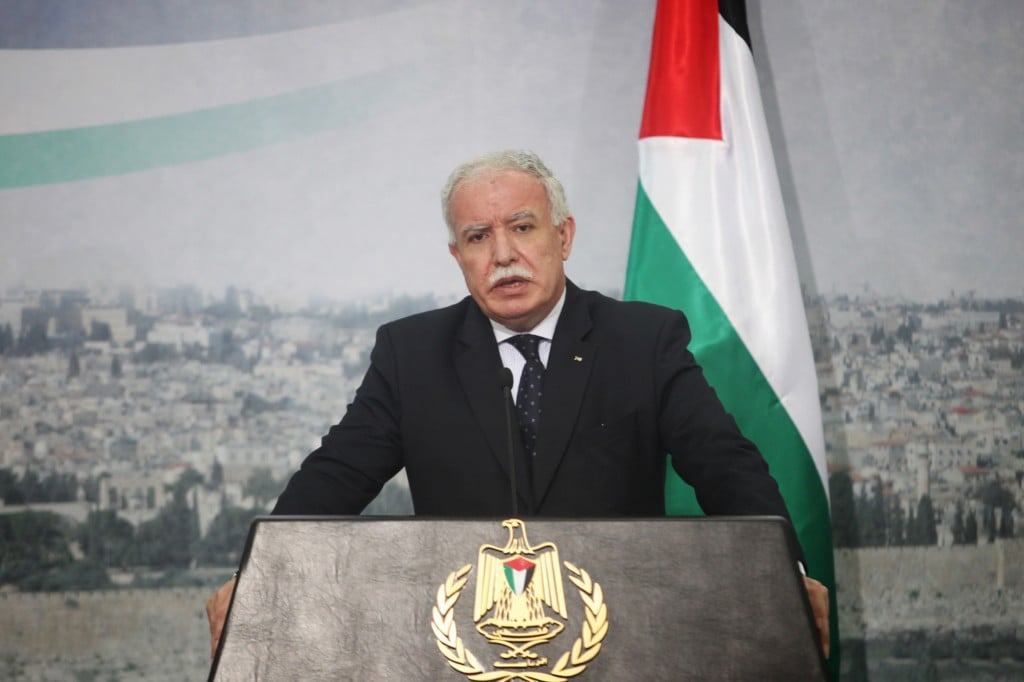
In early August, Riad Malki, the PA foreign minister, met with ICC officials in the Hague, and said Palestinians should do everything in their power to enable the ICC to investigate.
On August 29, however, Bensouda wrote in the Guardian that the Palestinians had yet to grant the ICC jurisdiction to investigate alleged war crimes in its territory.
Palestinian Authority President Mahmoud Abbas has debated for months whether to join the court, a step that would transform his relations with Israel from tense to openly hostile and could also strain his ties with the United States.
Turning to the International Criminal Court became an option for Abbas in 2012, after the UN General Assembly recognized “Palestine” in the West Bank, Gaza and East Jerusalem, lands captured by Israel in 1967, as a non-member observer state. The upgrade to a state opened the door to requesting the court’s jurisdiction in Palestine.
In August, Hamas signed a pledge to back any Palestinian bid to join the ICC, two senior officials in the group said Saturday.
The decision by Hamas to sign a document in support of a court bid removes a major obstacle, though it’s not clear if Abbas now will go ahead. A hesitant Abbas has said he would not make any decision without the written backing of all Palestinian factions. In July, he obtained such support from all factions in the Palestine Liberation Organization.
Since the start of the Gaza war, Abbas has come under growing domestic pressure to pave the way for a possible war crimes investigation of Israel. Last month, he told senior PLO officials and leaders of smaller political groups he would only go ahead if Hamas supports the bid.
If Abbas were to turn to the court, Hamas could be investigated for indiscriminate rocket fire at Israel since 2000. Israel could come under scrutiny for its actions in the current Gaza war as well as decades of settlement building on war-won lands the Palestinians seek for a state.
Izzat al-Rishq, a senior Hamas official, said previously that Hamas was not concerned about becoming a target of a war crimes investigation.
“We are under occupation, under daily attack and our fighters are defending their people,” he said in a phone interview from Qatar. “These rockets are meant to stop Israeli attacks and it is well known that Israel initiated this war and previous wars.”
However, it is not clear if such arguments would hold up in court. After the last major round of Israel-Hamas fighting more than five years ago, a UN fact-finding team said both Israel and Hamas violated the rules of war by targeting civilians — Hamas by firing rockets at Israel. That report’s author, Richard Goldstone, later retracted his assertion that Israel had intentionally targeted civilians.
The 50-day Gaza war between Israel and Hamas-led terrorists ended on August 26 after killing more than 2,100 Palestinians, most of them civilians, according to Gaza-based medical sources.
Israel has said that as many as 1,000 killed were fighters and contends that Hamas is largely responsible for civilian casualties due to its tactics of firing from populated areas and using human shields.
AP contributed to this report.