Paris display shows Gaza’s imperiled heritage via artifacts exiled after 2007 Hamas coup
With an exhibition now extended through December, the Arab World Institute hosts 130 ancient objects stranded in Europe for years, as others remain threatened by war in the coastal enclave
PARIS — As a fragile US-brokered ceasefire to the two-year Israel-Hamas war appears to hold, local archaeologists fear that the conflict that reduced much of the Gaza Strip to rubble has caused extensive, irretrievable losses to the coastal enclave’s heritage and archaeology.
Over 3,000 kilometers away in Paris, about 130 objects from Gaza are on view in an exhibition at the Arab World Institute (Institut du Monde Arabe).
Called “Treasures Saved from Gaza: 5,000 Years of History,” the exhibition was organized in protest of the massive bloodshed in Gaza following Hamas’s October 7, 2023, onslaught on southern Israel. It came together after the AWI gained access to Gazan artifacts that had been stranded in Europe for nearly two decades.
Initially scheduled to close in early November, the exhibition will be extended until December due to strong interest.
“The number of visitors is very high, beyond our expectations, which shows that there is a real interest in this story, because it was completely unknown,” said the exhibition’s curator, Élodie Bouffard. “This exhibition is unique; it is the only one in the world that has truly been dedicated to the heritage of Gaza since 2007.”
In 2006, the Geneva Museum of Art and History in Switzerland hosted a major exhibition on Gaza’s past, featuring approximately 260 objects unearthed during building projects and donated by Palestinian construction and real estate magnate Jawdat Khoudary. Many were uncovered amid the real estate boom in Gaza in the 1990s, following the Oslo Accords and the establishment of the Palestinian Authority.
From that time, with the creation of a Palestinian Antiquities Service and Franco-Palestinian cooperation, excavations revealed major sites: an early Christian monastery at Nusseirat, Roman necropolises at Jabaliya, the ancient Greek port of Anthedon at Blakhiya, and Tell es-Sakan, a key vestige of the Bronze Age.
The Geneva exhibition was a success, but in 2007, Hamas ousted the Palestinian Authority from power in Gaza in a bloody coup, and Israel subsequently imposed a blockade on the enclave. The Gazan artifacts have not returned home since, and have remained in Geneva.
“We found ourselves in a situation where there was a lot of public demand on this topic, and we had archaeological pieces that were stuck in [Gaza] at the same time that we had other archaeological pieces that had been stuck for 17 years in Switzerland,” said Bouffard.
Stepping into Gaza’s colorful past
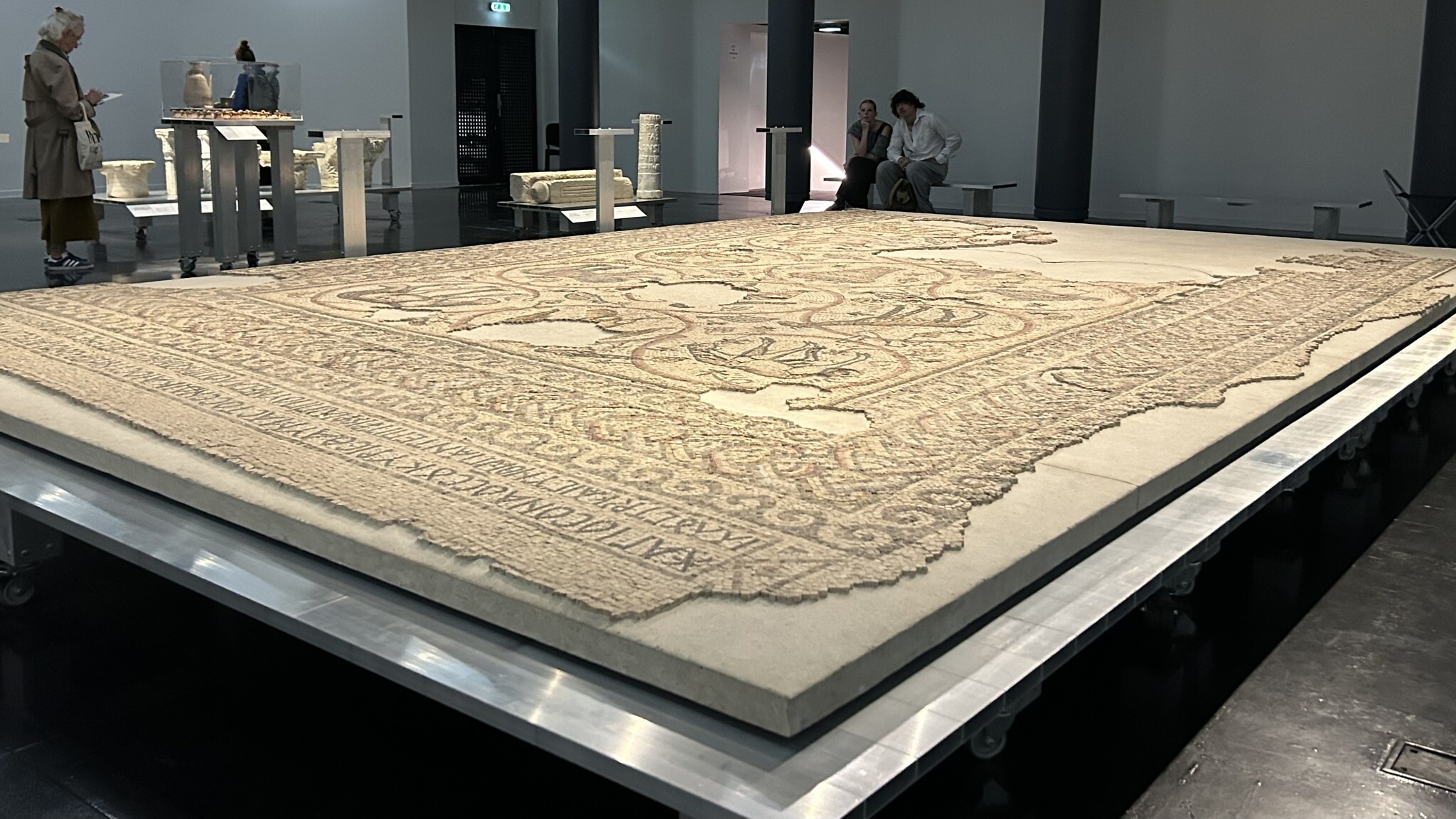
A vast mosaic pavement, eroded by time, greets visitors as they enter the exhibition. Taken in 1997 from a now-vanished Byzantine church site at the central Gaza city of Deir el-Balah, this 24-square-meter mosaic is just one of the many pieces spread over two levels.
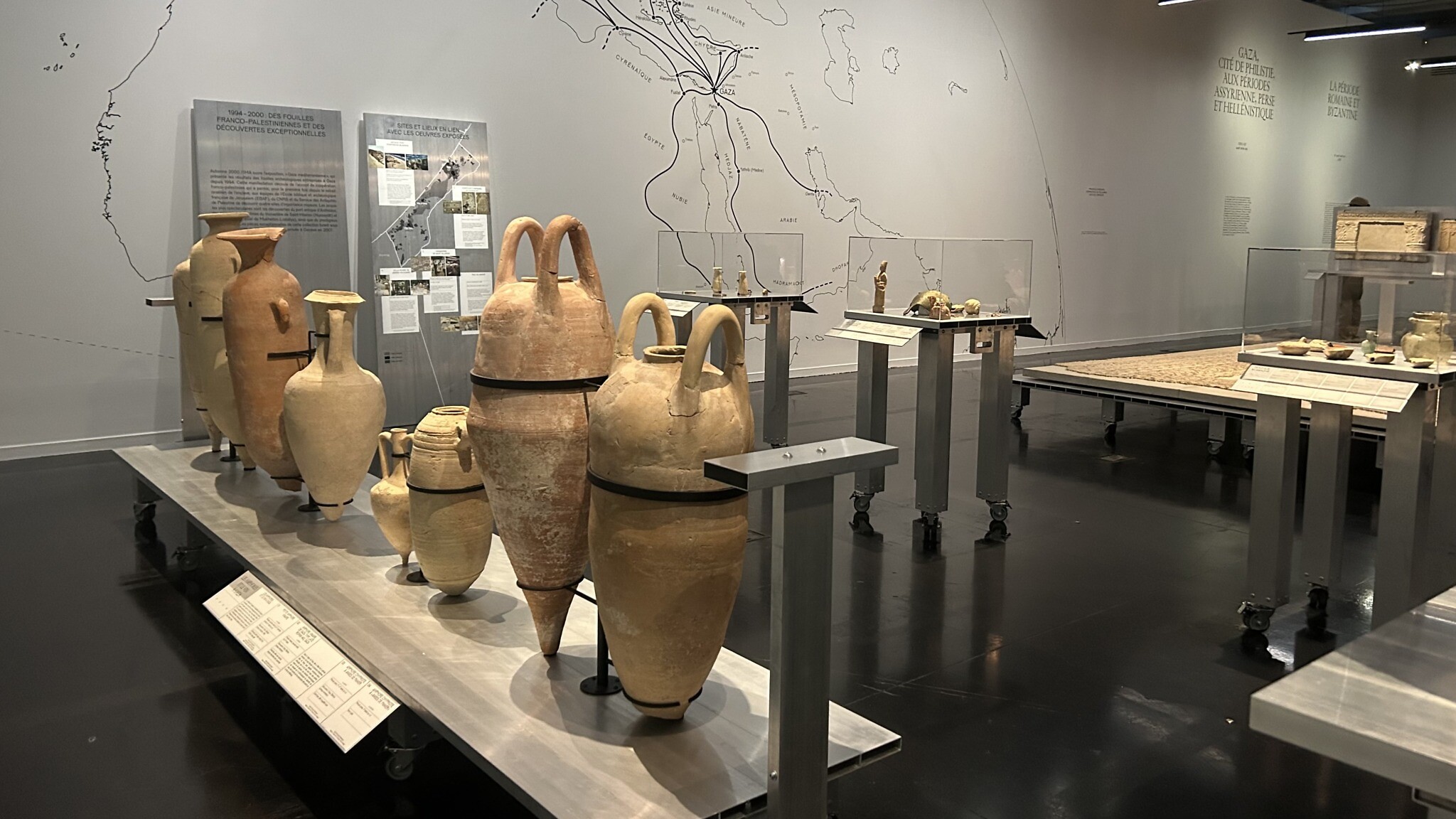
In the first room, visitors can see rare objects such as a Roman oil lamp, Arab funerary stelae, and amphorae, all attesting to the exchanges, conflicts, and vibrant life that animated this city on the Levantine coast. The objects rest on gray metal wheeled supports, evoking a storage space and deliberately avoiding any sense of dramatization.
“We don’t want to make people cry about heritage when people are struggling to survive,” said Bouffard. “The goal is to fight against the essentialization of the territory, to rehumanize it in some way, and to talk about this rich history.”
David, a 21-year-old German tourist, said that he and his travel mates came upon the exhibition by chance as they looked for a museum to visit in Paris.
“I must say that we were very surprised,” David said. “We heard about Gaza in the news, but it’s true that we know little about the history of this territory. I had never seen objects from Gaza with my own eyes before.”
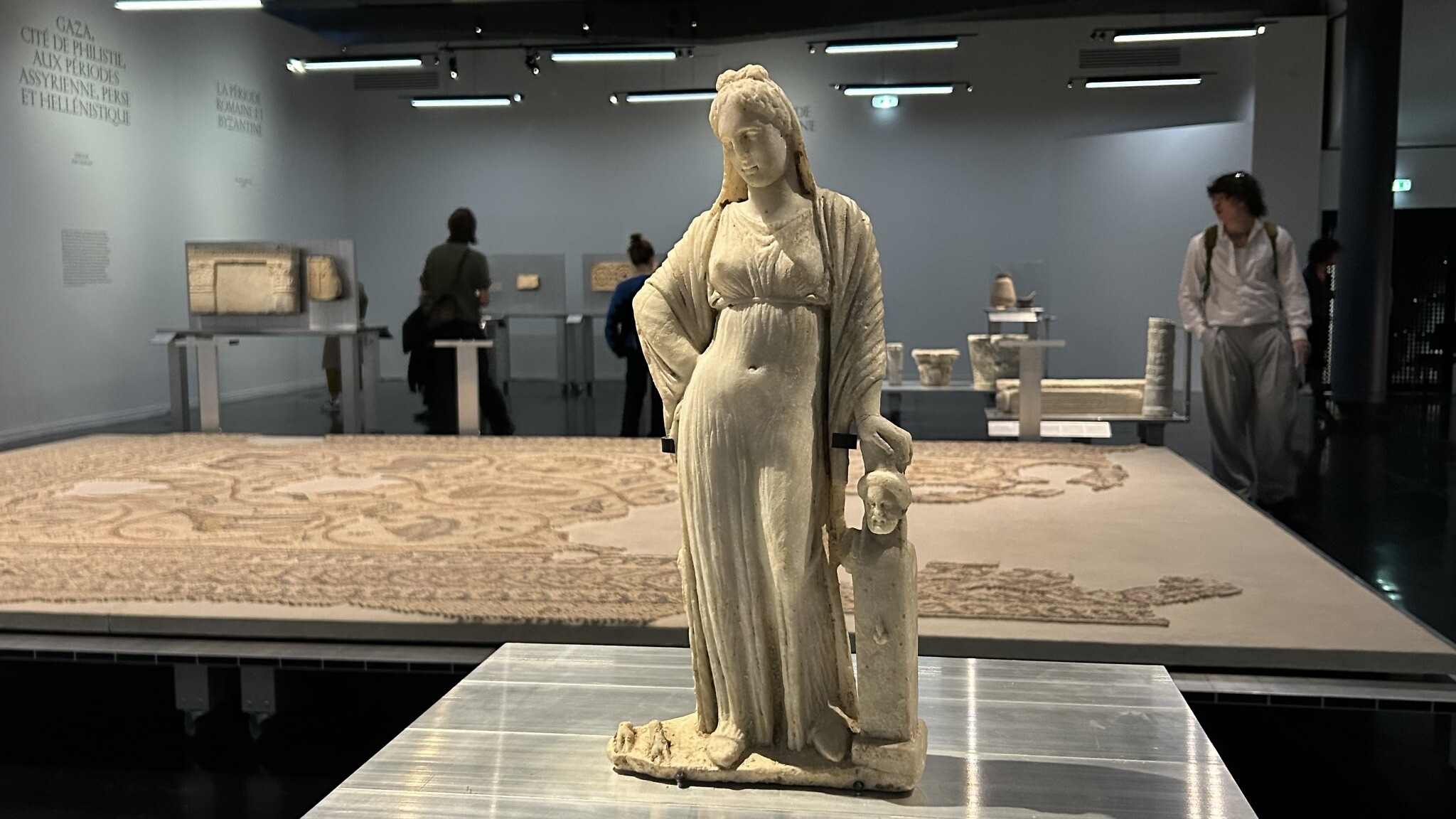
Standing before a small marble statue — one of the exhibition’s major pieces — visitor Marie said she was “very impressed by the quality of these objects.” Dating from the Hellenistic or Roman period, the sculpture depicts Aphrodite or Hecate with the child Pan.
“I’m a historian, so I have some knowledge on the topic, but seeing these pieces in person and seeing what a crossroads Gaza was is truly fascinating,” said Marie.
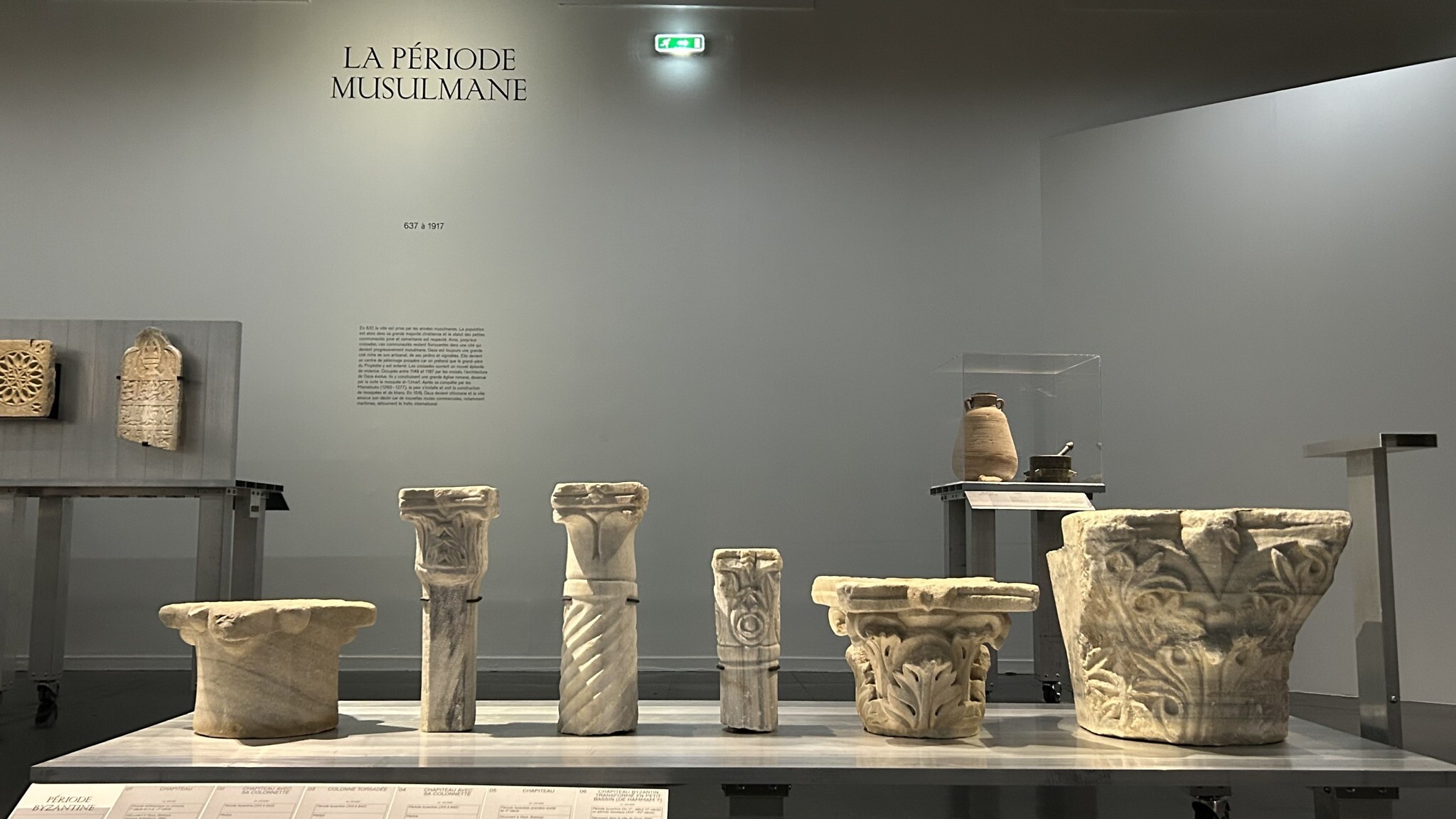
The pieces on display span the Canaanite, Egyptian, Philistine, Neo-Assyrian, Babylonian, Persian, Hellenistic, Byzantine, Roman, and Arab civilizations that once occupied this slender strip of coastline.
“Gaza has always been highly coveted,” said Bouffard. “This fertile land, long a trading crossroads between Africa and Asia, has been conquered and destroyed by many civilizations fascinated by its riches.”
Conservation in wartime
Photographs exhibited in the second room convey the scope of the loss wrought by the Israel-Hamas war. On large panels, the images show interrupted excavations, archaeologists at work in landscapes of still-smoldering ruins, their work halted by Israeli bombardment starting in October 2023, following the Hamas onslaught on southern Israel that murdered 1,200 and saw 251 kidnapped to Gaza.
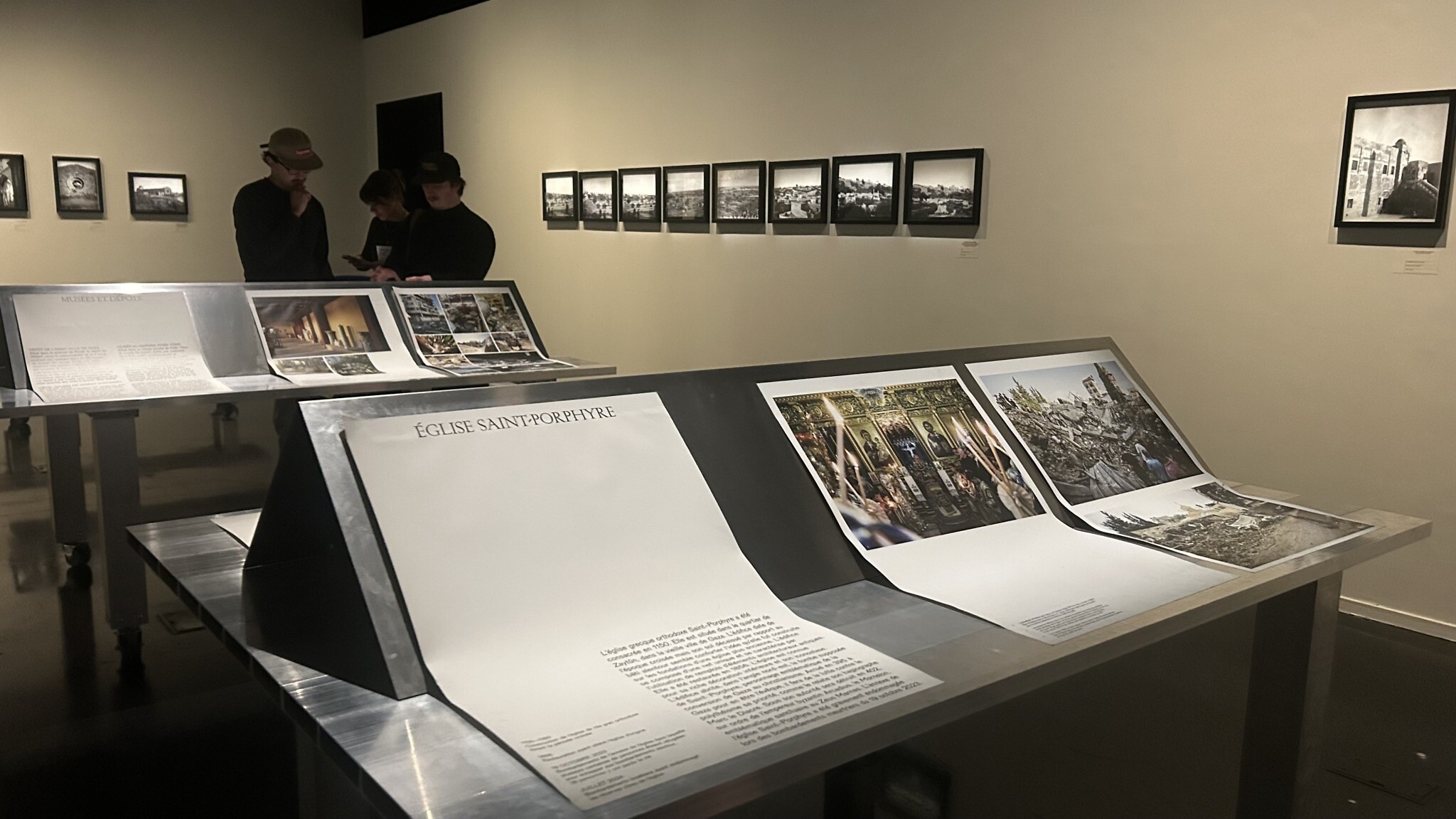
“Before the war, we dug, we rediscovered entire swathes of forgotten history, especially since some areas had never been excavated before,” said Bouffard. “These photographs are as much a tribute to the people who excavate as a warning: this is what we risk losing forever.”
As of October 6, 2025, UNESCO had observed damage to at least 114 cultural sites in the Gaza Strip. In September 2025, the IDF said Hamas was using a warehouse that housed artifacts from over 25 years of excavations, including some of the oldest known evidence of Christianity in Gaza.
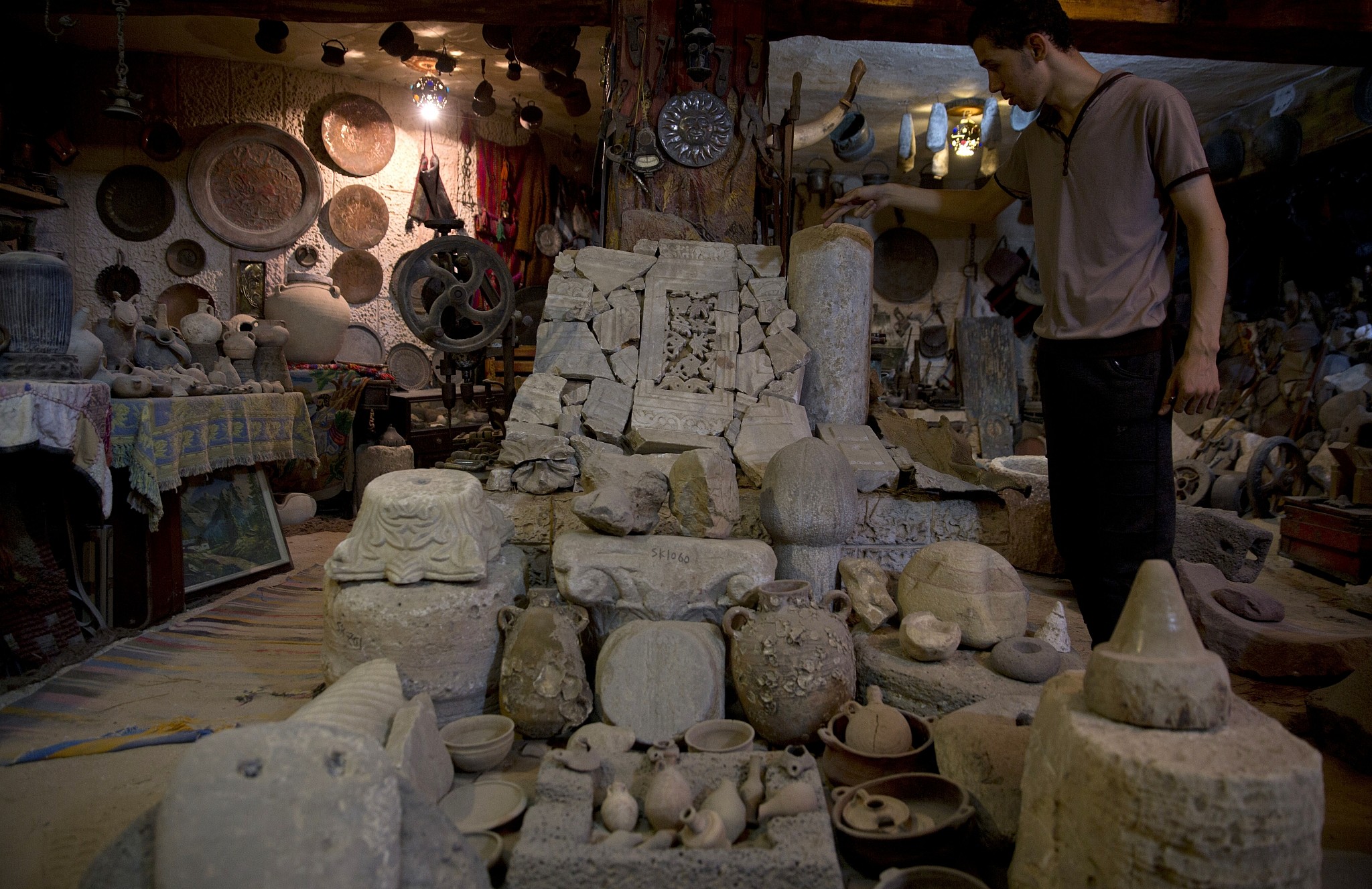
“The built heritage, which is essentially from the old city of Gaza but also in Rafah with the Arab-Muslim structure of the old city, is the one that has been the most seriously affected since it is in the urban system,” said Bouffard, adding that she has received very little updated information on the extent of the damage since June.
Acting to prevent threats to cultural heritage, UNESCO activated an emergency procedure under the World Heritage Convention, adding the Monastery of Saint Hilarion to the List of World Heritage in Danger on July 26, 2024. The designation underscores the urgent need to protect the site and grants it enhanced protection, along with access to emergency funding and technical support.
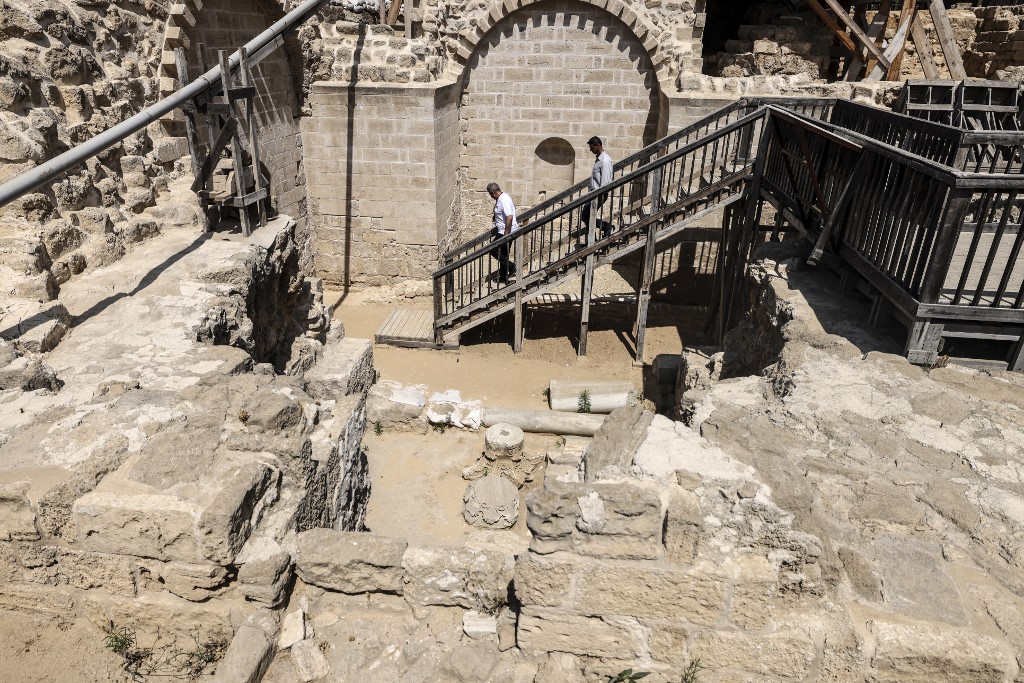
While the recent ceasefire may eventually allow experts to go on-site to assess the damage, many visitors in Paris say they feel like they’re seeing unique pieces that may be difficult to see again.
“It’s a rather strange feeling to be here with everything that’s going on,” said Martin, a visitor who came to see the exhibition for the second time. “You think this might be one of the last times you’ll see objects from this territory with your own eyes.”