Police said to probe whether PM’s office faked Arab vote-buying scandal to undermine election
Report alleges Netanyahu's chief of staff tipped off police with purported information from an ex-employee of his office; Zini reportedly sought to wiretap 5 Arab lawmakers, AG refused
Law enforcement officials are probing whether information that led to an investigation into alleged vote-buying in Arab society was planted deliberately by officials in Prime Minister Benjamin Netanyahu’s office to manufacture arrests that would bolster his claims on and after election day that Arab parties had stolen the vote, according to a Sunday report.
Channel 12’s investigative program Uvda reported that an initial complaint against activists for the Ra’am party that led to the arrests of three southern Bedouin men at dawn on election day, October 27, was supplied to police by Netanyahu’s chief of staff, Ido Norden, a day before the vote.
Norden allegedly told the office of Israel Police Commissioner Daniel Levy about a purported effort by activists for the traditionalist Ra’am party to pay Arab voters to boost turnout at polling stations.
He also referred police to a source whom he said could provide further intelligence to back up his complaint, Uvda said, alleging that the source, who was indeed contacted by police before the arrests, is a former Prime Minister’s Office employee.
Hours after Norden allegedly tipped off the police and hours before polling stations would open, 14 police officers descended on the homes of three Ra’am activists in southern Israel, searching them without a warrant, based solely on information it had received from Netanyahu’s chief of staff and a former employee in his office.
The men were arrested, and police issued a statement claiming officers had recovered envelopes containing tens of thousands of shekels in cash inside the activists’ homes.
In reality, one of the searches came up empty, as officers found nothing in the home of the suspect, Rahat resident Dr. Saef Abu Reash.
Despite this, he was held for six days before the Beersheba Magistrate’s Court ordered his unconditional release, slamming investigators’ conduct.
The other two men, Hussein al-Masoudin and Ibrahim al-Garibi, were released days later, also without any restrictive conditions or charges brought against them. Both men denied the bribery allegations and said the money found by police during the dawn search was intended for charitable causes.
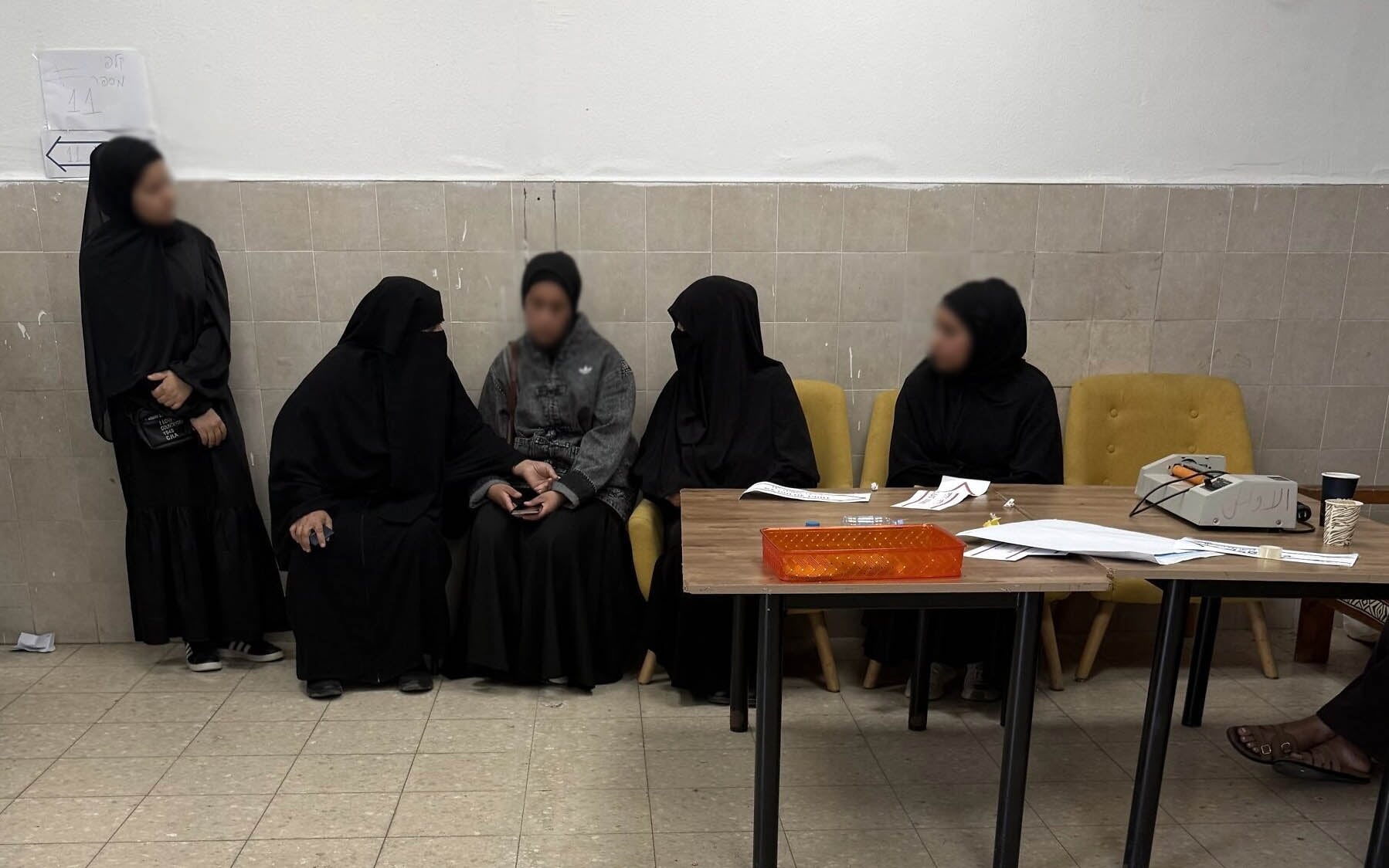
In footage obtained by Channel 12 of the raid on Abu Reash’s house, his pregnant wife can be heard demanding to know why they were arresting her husband, and whether they had a warrant, while at the same time cooperating with the search, telling an officer the correct way to open one of her cabinets.
“Are you taking him?” she can be heard asking at one point. “Why? I’m just asking because I’m about to give birth and I’ll be home alone.”
Following his release from jail, Abu Reash said he believed his arrest was “pure political persecution,” and described being led in handcuffs to the police station as “one of the most humiliating moments of my life.”
Though the arrests and subsequent investigation have led to few results of substance, according to multiple reports on the state of police’s efforts, they served to undermine public confidence in the vote and were swiftly used by the prime minister to allege the election had been stolen by Arab parties.
Uvda reported that Attorney General Gali Baharav-Miara and the police’s Investigations and Intelligence Division were now probing whether police were used by the PMO to undermine the legitimacy of the election in a pre-planned effort.
Following up on the report, the Kan public broadcaster aired recordings of an interview with Norden after the election, in which he claimed that he contacted the police about the vote-buying allegations after “a citizen” whom he did not know “approached me with some information.”

A senior law enforcement official familiar with the details of the affair was quoted by Channel 12 as saying that the series of events “have taught me that there will be no more fair election here.”
“Once the Shin Bet and the police act in this way, whether knowingly or as tools, we cannot guarantee that the next election will be fair,” the official added.
Separately, Channel 12 reported that Shin Bet chief David Zini sought on election day to wiretap five Arab lawmakers in connection with separate suspicions, made public two days later, of foreign interference in the election — an investigation whose announcement sent shockwaves through the country, but which has also seemingly fizzled out.
The Attorney General’s Office “was horrified by the request and fended it off,” the report said.
Two days after the election, after Zini presented information on possible interference to Central Elections Committee chair Noam Sohlberg, leading Sohlberg to instruct him to probe the interference allegations, the Shin Bet chief met with Yashar party head Gadi Eisenkot, Netanyahu’s lead challenger.
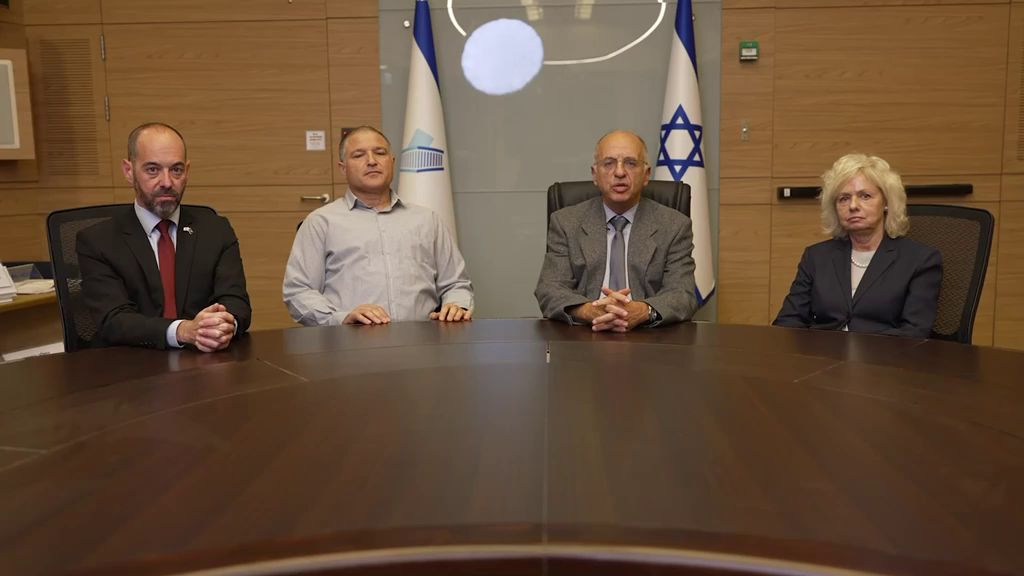
During the meeting at Zini’s office, Channel 12 reported, the Shin Bet chief pulled out a large binder of intelligence and said that “since 2018, the Arabs have been stealing the election in Israel. All the Shin Bet heads have ignored it. I came and turned over this stone.”
Arab turnout in Israeli election has historically been low, with the high turnout (close to 80 percent) at last month’s election being a historic high.
For comparison, voter turnout was 53% among Arab Israelis in 2022, and just 44.6% in 2021, according to Reichman University’s Institute for Policy and Strategy.
Responding to the Uvda report, Netanyahu’s office released a statement rejecting the contents of the program and defending Norden’s conduct.
“Criminal information reached [PMO] Chief of Staff Ido Norden,” the statement said. “He fulfilled his duty, as expected of every law-abiding citizen, and put that individual in touch with the police.”
Any further involvement by Norden, said the PMO, “is false and constitutes grounds for a defamation suit. He never spoke with police intelligence officials or any other officials involved in the investigation.”
Meanwhile, Yashar chair Gadi Eisenkot pledged to create a commission of inquiry to look into “the interference of the Prime Minister’s Office on election day, and the behavior of the security agencies around it.”
“Netanyahu and his associates’ conduct poses a tangible, direct and immediate threat to Israeli democracy,” he said in a statement.
“Under no circumstances must Netanyahu be allowed to remain at the helm of government for even one minute longer,” added Eisenkot. “Under no circumstances must Israel be dragged into another round of election with him as prime minister. It is clear that as long as he remains in office, there will be no more fair election. This is the main consideration guiding me in the coalition negotiations I am now conducting.”