PM to approve police live fire in Jerusalem when civilian lives in danger
Five held for stone-throwing Saturday; new police-Shin Bet unit goes into operation; hundreds of Border Police reservists called up
Prime Minister Benjamin Netanyahu will on Sunday convene a meeting aimed to finalize new measures to combat Palestinian rock-throwing and firebombing in and around Jerusalem, and may give permission for police to use live fire in certain circumstances when civilian lives are in danger.
Police will present a proposal approved by Attorney General Yehuda Weinstein that mandates less restrictive rules of engagement.
According to the proposal, officers would be allowed to fire live rounds in certain instances where civilian lives are considered to be in danger. Permission would be granted “in very limited instances, with lots of restrictions,” Israel’s Channel 2 reported. It would likely be granted during incidents considered “grassroots terror” or lone-wolf attacks, as opposed to during mass demonstrations, the report said, noting nonetheless that this would represent a marked departure from current open-fire procedures in East Jerusalem and Israel.
An official in the Prime Minister’s Office told Haaretz that Weinstein has already approved the use in East Jerusalem of a Ruger rifle, a .22 caliber firearm with a capacity to neutralize without being as potentially deadly as heavier weapons.
The meeting Sunday will be attended by Defense Minister Moshe Ya’alon, Public Security Minister Gilad Erdan, Justice Minister Ayelet Shaked and Weinstein.
The police proposal comes after nearly a week of daily violence on the Temple Mount, around Jerusalem and in the West Bank. The unrest on the Temple Mount began Sunday, on the eve of the Jewish New Year, after police, acting on information from the Shin Bet security service, raided the Temple Mount and found pipe bombs and other improvised weapons, apparently prepared in advance for an organized riot.
So far, police have used rubber bullets, tear gas, water cannons and other non-lethal measures to quell riots in Jerusalem or to combat incidents where Palestinians throw rocks at Israeli forces, pedestrians or cars.
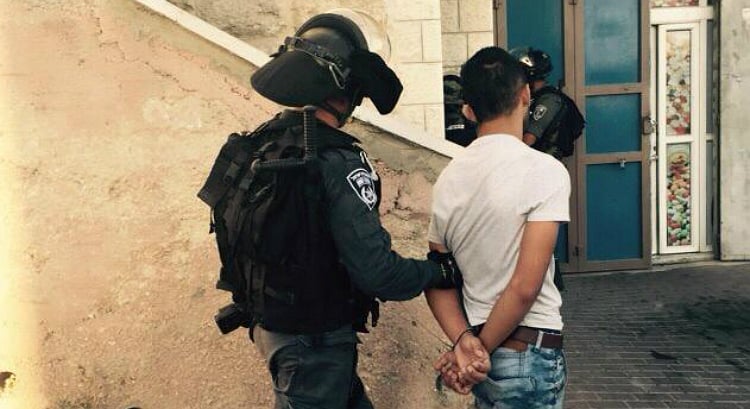
In an operation initiated by Border Police in the village of Isawiyah in northeastern Jerusalem on Saturday evening, Palestinian youths hurled rocks at Border Police officers. The soldiers chased the perpetrators and arrested five people, several of them minors.
Also on Saturday, a brush fire broke out near a military base located in Anatot, north of Jerusalem. An initial report indicated that the fire began when a Palestinian hurled a Molotov cocktail at a guarding post in the base. Two firefighting teams doused the flames.
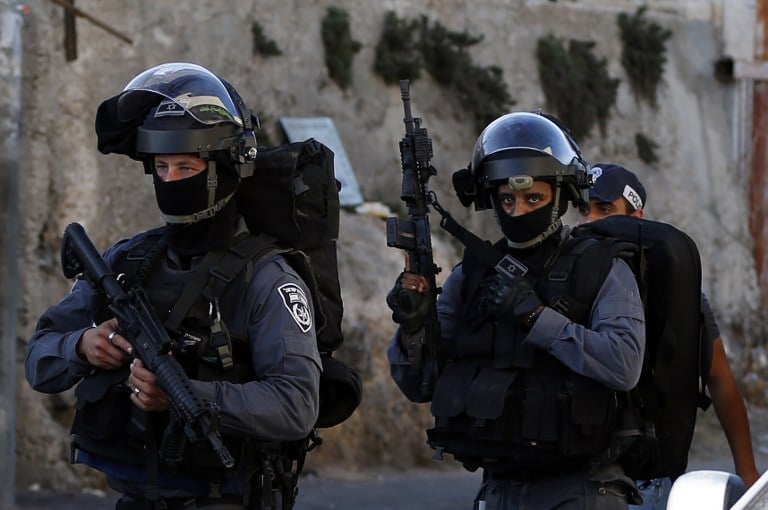
In Jerusalem on Friday, police fired tear gas and rubber bullets as protesters pelted them with stones in neighborhoods around the Mount of Olives, including in Shuafat refugee camp. Rioters threw a petrol bomb at a Border Police vehicle in Jabel Mukaber in East Jerusalem, wounding three policemen. The police fired into the air and at the rioters who threw the petrol bomb. Three people were arrested, including one person who had been injured in the incident.
A new joint police-Shin Bet unit was operational in the Jabel Mukaber incident, Channel 2 said.
Israeli leaders have also called up a few hundred border police reservists to beef up security.
On Tuesday, Netanyahu ordered the establishment of a committee to reexamine the rules of engagement with stone-throwers who endanger lives and to stiffen penalties for perpetrators.
At an emergency meeting at the Prime Minister’s Office convened immediately at the end of Rosh Hashanah, Netanyahu said that stone-throwers would face harsher penalties in the future.
“I take the throwing of stones or firebombs against Israelis very seriously, and I intend to fight this phenomenon by any means necessary, including the use of implementing stricter sentences and enforcement,” he said.
Netanyahu vowed to use “any means necessary” to curb stoning-throwing attacks against Israelis and ongoing violence on the Temple Mount.
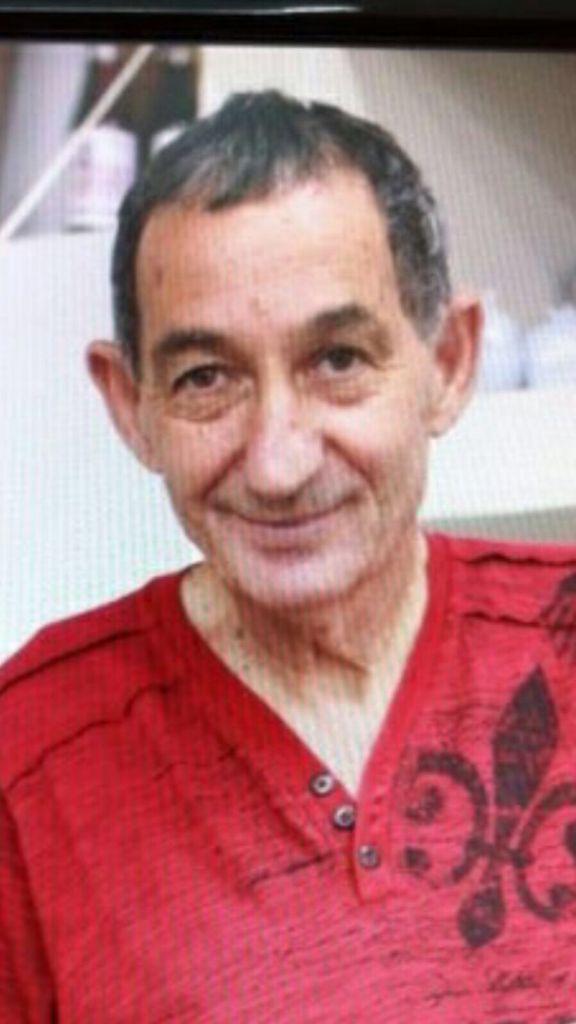
The emergency meeting Tuesday came after three days of violent clashes on the Temple Mount and a rock-throwing attack that led to a fatal car crash in Jerusalem Sunday night, killing the driver, Alexander Levlovitz.