Policing only deepfakes, Israel leaves chatbot-trusting voters exposed to real AI threat
While authorities keep eye on fake videos, experts warn electorate more vulnerable to chatbots like ChatGPT and Gemini, which can sway opinions, suppress turnout and be used to bolster claims against legitimacy of vote
Yair Lapid, opposition leader and No. 2 on the B’Yachad electoral slate, already has a pretty good idea of where voters will see him and what they will hear as the nation goes to the polls on October 27.
“On election day, you will receive a video on your phone, and you will see me, and I will look and sound as I do now,” he warned a crowd in Tel Aviv on Monday. “But it won’t be me.”
“I’ll tell you that, contrary to previous statements, we are going to form a government with the Arab parties,” he predicted. “It will not be me. It will look like me, and it will sound like me, but it won’t be me.”
“And by the time we explain that it’s a lie,” he told the Law and Lies conference on disinformation held by the Brandeis Institute and civil society group FakeReporter, “the elections will be over.”
In an election campaign where AI-generated political content has become commonplace and convincing deepfakes can be produced with unprecedented ease, Lapid’s scenario no longer seems far-fetched.
It is also only a single manifestation of a much broader threat facing Israel as it heads into what experts warn could be one of the world’s first major elections to be significantly shaped by artificial intelligence, with chatbots giving political actors unprecedented — and largely invisible — tools to manipulate what voters are led to believe, whether they turn out to vote and, ultimately, whether they accept the results.
This will be the first Israeli election in which generative artificial intelligence has become an everyday source of information, with nearly nine in 10 Israelis now using ChatGPT, according to the Israel Internet Association’s annual survey in May.
That rapid adoption could leave Israel particularly vulnerable to AI-driven election interference, experts told The Times of Israel, pointing to a potent combination of chatbot ubiquity alongside markedly low digital literacy.
Also contributing to the dangerous mix is the near-complete absence of regulation or accountability for tech giants behind the platforms increasingly shaping Israelis’ information environment, and alleged efforts by politicians in the governing coalition to undermine public trust in the bodies administering the vote.
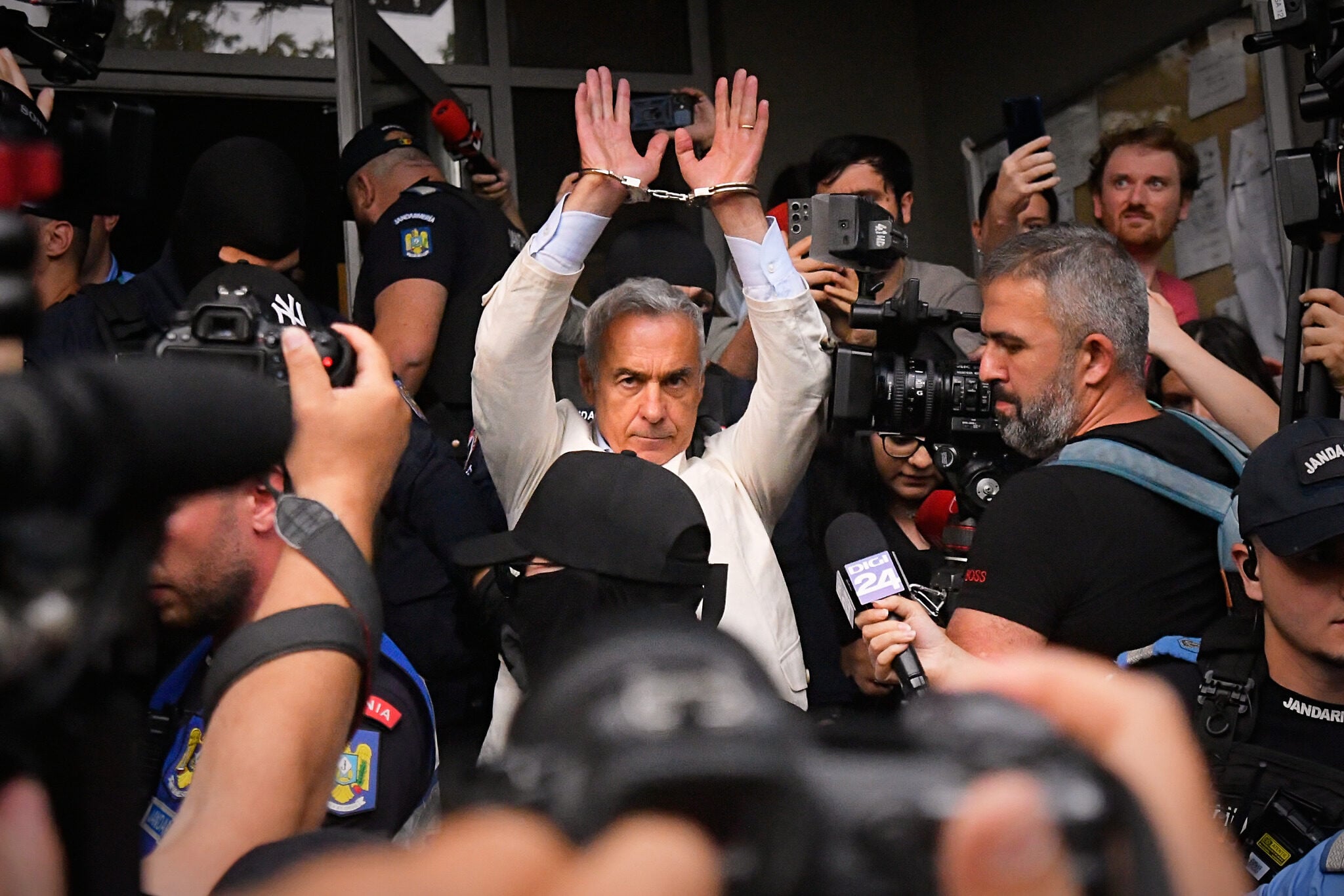
The potential uses of AI to manipulate elections have already been seen abroad. In Romania’s November 2024 presidential election, a little-known, far-right candidate, Călin Georgescu, surged from single digits in opinion polls to an unexpected first-round victory.
Romanian intelligence subsequently reported evidence of illegal campaign tactics and suspected Russian interference, which included a massive online influence campaign that used AI-generated content, coordinated bot networks, and the manipulation of TikTok’s algorithms to amplify his popularity artificially. Romania’s Constitutional Court subsequently annulled the election, and Georgescu was subsequently barred from running in the May 2025 rerun. He is now on trial on charges including attempting to undermine the country’s constitutional order following the annulment.
Generative AI has taken such manipulation to another level, allowing political actors to produce and distribute vast quantities of tailored propaganda at unprecedented speed and scale. OpenAI itself admitted in June 2025 that it had banned accounts linked to a Philippine marketing firm that used ChatGPT to mass-produce social media comments promoting President Ferdinand Marcos Jr. and against Vice President Sara Duterte during the country’s midterm election campaign, in an apparent attempt to manufacture public support.
In an election expected to be closely fought, such tools could sway enough of the electorate to significantly affect the outcome. AI’s ability to manipulate perceptions and degrade trust in what is real could also supercharge efforts to undermine confidence in the electoral process, aiding any actor seeking to whip up doubts about the legitimacy of unfavorable results.
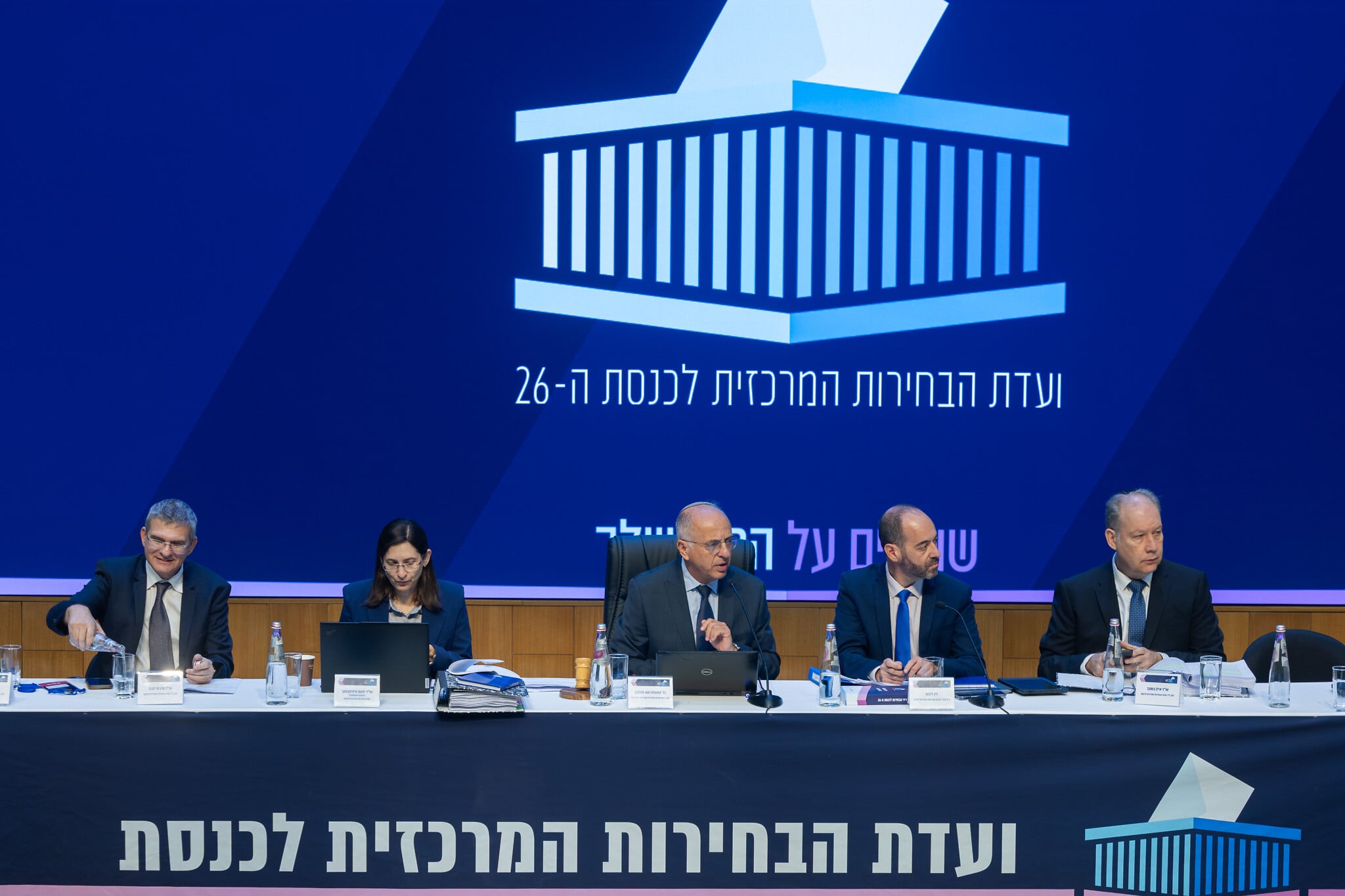
Israel’s Central Elections Committee has sought to address one aspect of the threat, introducing rules in July requiring election campaigns to clearly label AI-generated or substantially manipulated images, videos, audio recordings and other material that could be mistaken for authentic content.
Under the regulations, issued by committee chairman Justice Noam Sohlberg, such material must carry prominent written disclosures or standardized labels identifying it as artificially generated or digitally altered. Failure to comply may constitute a violation of election law.
But the rules, which will remain in effect until a year after the October 27 election, address only a narrow slice of the risks posed by AI. They do little to confront the potentially more pervasive influence of chatbots as purveyors of knowledge, the susceptibility of their responses to manipulation, or the broader challenge of protecting voters in an information environment increasingly shaped by systems whose inner workings remain largely opaque.
When nobody knows what’s real
AI-generated and manipulated campaign material has become a familiar sight ahead of the election, pushed into the public sphere by parties from across the political spectrum. The ease with which AI tools can generate convincing fake footage of real-life people has proven irresistible to politicians, who have repeatedly put out material portraying their rivals in compromising positions.
Some of the most contentious examples have come from coalition parties: a video shared by Prime Minister Benjamin Netanyahu drew accusations that it purposely invoked Gadi Eisenkot’s son, who was killed in Gaza, while Religious Zionism depicted Democrats lawmakers amid inflammatory imagery. Likud was also ordered to remove a doctored image that falsely placed Naftali Bennett and Yair Lapid alongside Arab party leaders at the signing of a nonexistent political agreement.
Those images and videos have drawn attention and outrage. But experts say AI’s most consequential uses may be far less visible: shaping the information voters receive from chatbots, targeting individuals with personalized political messaging and, perhaps most significantly, influencing whether particular groups turn out to vote at all.

“When researchers examined the 2024 British, French and European elections, they found very few AI-generated disinformation campaigns and no sign that any of them changed a result,” said Shay Hershkovitz, an adjunct professor at Georgetown University in Washington, DC, and an expert on national security and emerging technology. “Most of what circulated reached people who already agreed with it. So as a tool for flipping votes, synthetic video has underperformed the fear around it.”
“The campaign that we see in public is creating public opinion. It constantly creates noise in the system, but in practice it doesn’t move people from one side of the political map to the other,” agreed Tehilla Shwartz Altshuler, a senior fellow at the Israel Democracy Institute and head of its Democracy in the Digital Age Program.
That does not mean the flood of AI-generated media disseminated during the campaign is harmless.
“The more we are inundated with it, the harder it is to differentiate, because you have about two or three seconds when you scroll through your feed to assess whether it’s real or not,” Shwartz Altshuler said.
The effect is not necessarily to persuade a voter that a fabricated video is genuine or to win them over. Instead, a constant stream of synthetic images, videos and claims add to the noise of an already deeply divided information environment while steadily weakening the distinction between authentic and manufactured material.
“The purpose of this AI slop is not actually to move voters from one side to the other, but to increase gaps in society and to convey the message that it doesn’t matter what is real and what is not,” Shwartz Altshuler said.
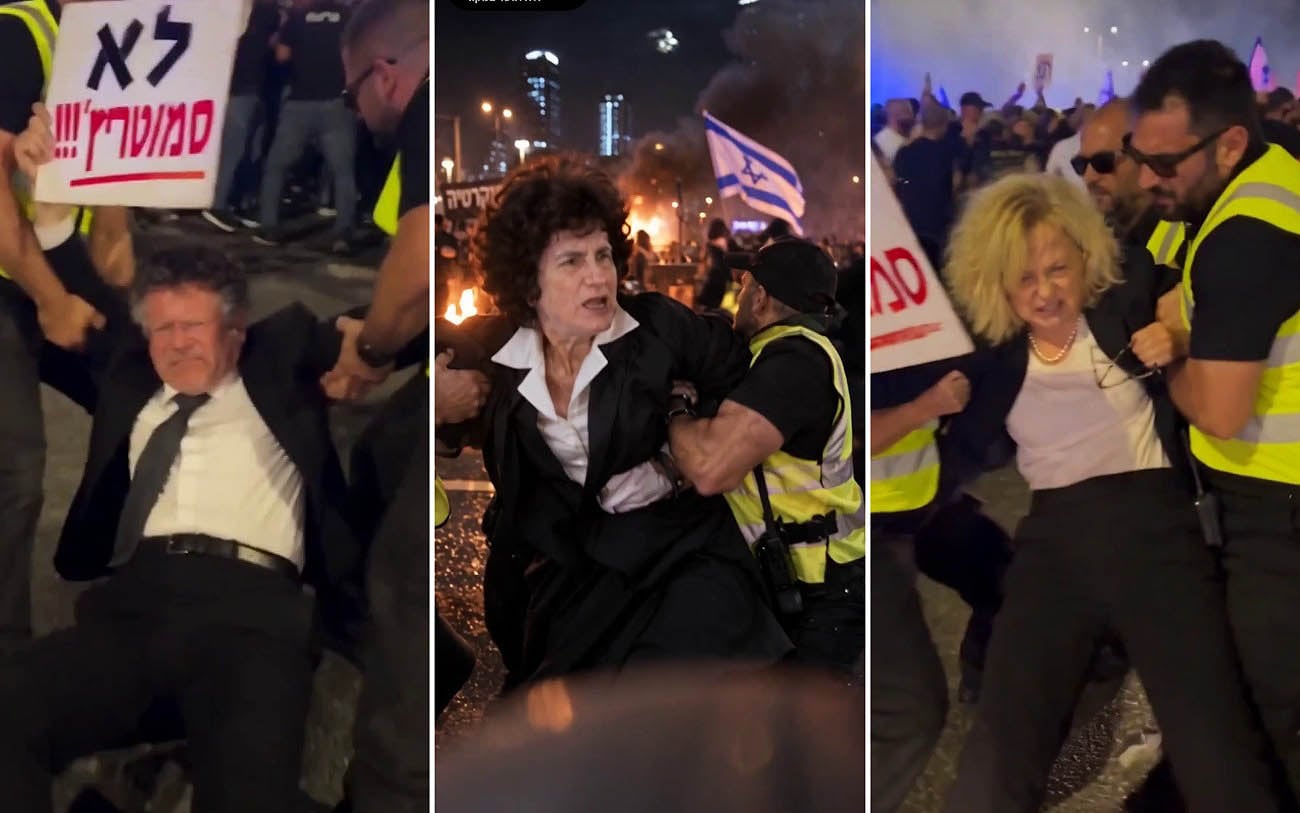
That creates a phenomenon researchers have termed the “liar’s dividend”: once voters know that almost any convincing image, recording, or video can be artificially generated, authentic material can itself be dismissed as AI.
A genuine recording of a politician making a politically damaging statement, for example, could simply be dismissed as an AI fabrication. Conversely, fabricated material can be presented as authentic. The result is an information environment in which evidence itself becomes increasingly easy to contest.
Some parties are preparing their own defenses against election disinformation. At Monday’s conference, Lapid said B’Yachad would operate an election-day war room, which he would personally oversee, allowing voters to forward suspicious material to a designated phone number for verification by a team of fact-checkers.
The erosion of a shared understanding of reality could have consequences extending well beyond whether voters believe any particular piece of campaign propaganda. If the public increasingly doubts its ability to distinguish authentic evidence from fabrication, experts warned, the same uncertainty can be exploited to undermine confidence in the election itself.
That risk is particularly acute in Israel, where the bodies responsible for administering the election and adjudicating disputes over its outcome have already been subject to sustained attacks on their legitimacy by the government and its allies.
That uncertainty could become especially consequential if the government loses a close election. After years of attacks by the government and its allies on the judiciary and, more recently, the judge-led Central Elections Committee, claims that the result was fraudulent would reach a public already struggling to distinguish authentic evidence from AI-generated falsehoods.
Shwartz Altshuler warned that if the result goes against the government, AI could be used to flood that already distrustful environment with purported evidence of fraud or bolster the court’s delegitimization.
“There are ministers in the government standing and saying, ‘Don’t listen to the Supreme Court, the Supreme Court’s decisions are illegal.’ Who guarantees you that they won’t do the same regarding the election results?” she added.
The invisible campaign
At the same time that AI is making it increasingly difficult to determine what information can be trusted, Israelis are paradoxically becoming more and more reliant on AI systems themselves to tell them what is true, which is of far greater concern to researchers than AI-generated campaign videos.
“The old worry about bots was that they would fool people directly in their social media feeds,” Hershkovitz said. “That is still true, but it is no longer the main danger. It’s not the fake video you see, it’s the AI system you trust.”
Unlike during Israel’s last election, millions of voters now routinely turn to generative AI systems like OpenAI’s ChatGPT, Google’s Gemini, Anthropic’s Claude and others to answer questions, explain events, and offer advice.
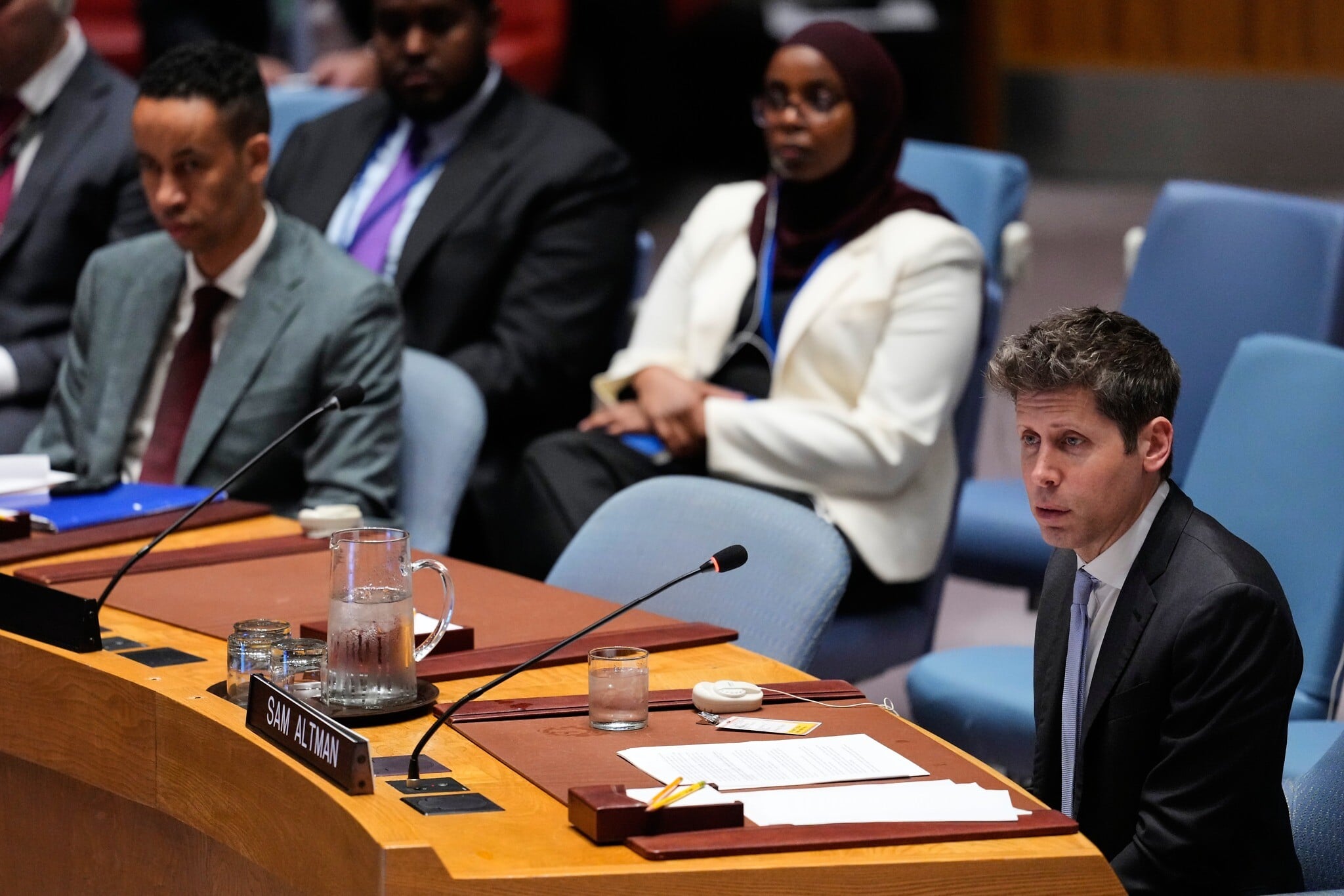
When asked about current affairs, chatbots draw on information retrieved from the internet and synthesize it into an answer delivered in an authoritative, ostensibly neutral voice — often without the user having a clear understanding of why particular sources were selected or what information shaped the response. The answers are also liable to contain plainly false information, delivered with the same confidence.
Much as search engine optimization is used to game Google’s algorithm in a way that makes certain websites more prominent in search results, generative engine optimization, or GEO, is now being employed to shape the answers chatbots give by influencing what information AI systems rely on.
Shwartz Altshuler said political campaigns are already exploring how to use GEO to their advantage, and predicted that it “will decide the elections.”
The government is already getting in the GEO game, paying millions to sway American opinions on Israel. According to reports in US media in July, a contract with an American firm run by US President Donald Trump’s former campaign manager Brad Parscale “explicitly includes building websites designed to shape how chatbots answer questions,” said Hershkovitz.
“That effort targets American audiences and the Gaza debate, not Israeli voters, but it proves the mechanism works and can be bought. Anything a government can purchase, a party with a media budget can purchase,” he added.
The manipulation can be difficult to detect because the voter may encounter only the chatbot’s answer, with no indication that the information behind it was planted or distorted.
“If someone has seeded that pool of retrievable material with distorted content, the model repeats the distortion as if it were an objective answer,” Hershkovitz said. “The fake image is a problem you can spot, but the poisoned retrieval layer is a problem you cannot, because it arrives dressed as a straight answer to a direct question.”
Voter manipulation is only one potential form of AI-enabled election interference. Experts warned that the same technology could be used for voter suppression.
With polls showing a neck-and-neck race between blocs backing Netanyahu and his chief rival Eisenkot, factions seeking an edge may find suppressing turnout among particular groups more consequential, and much easier, than persuading voters to cross Israel’s deeply entrenched political divides.
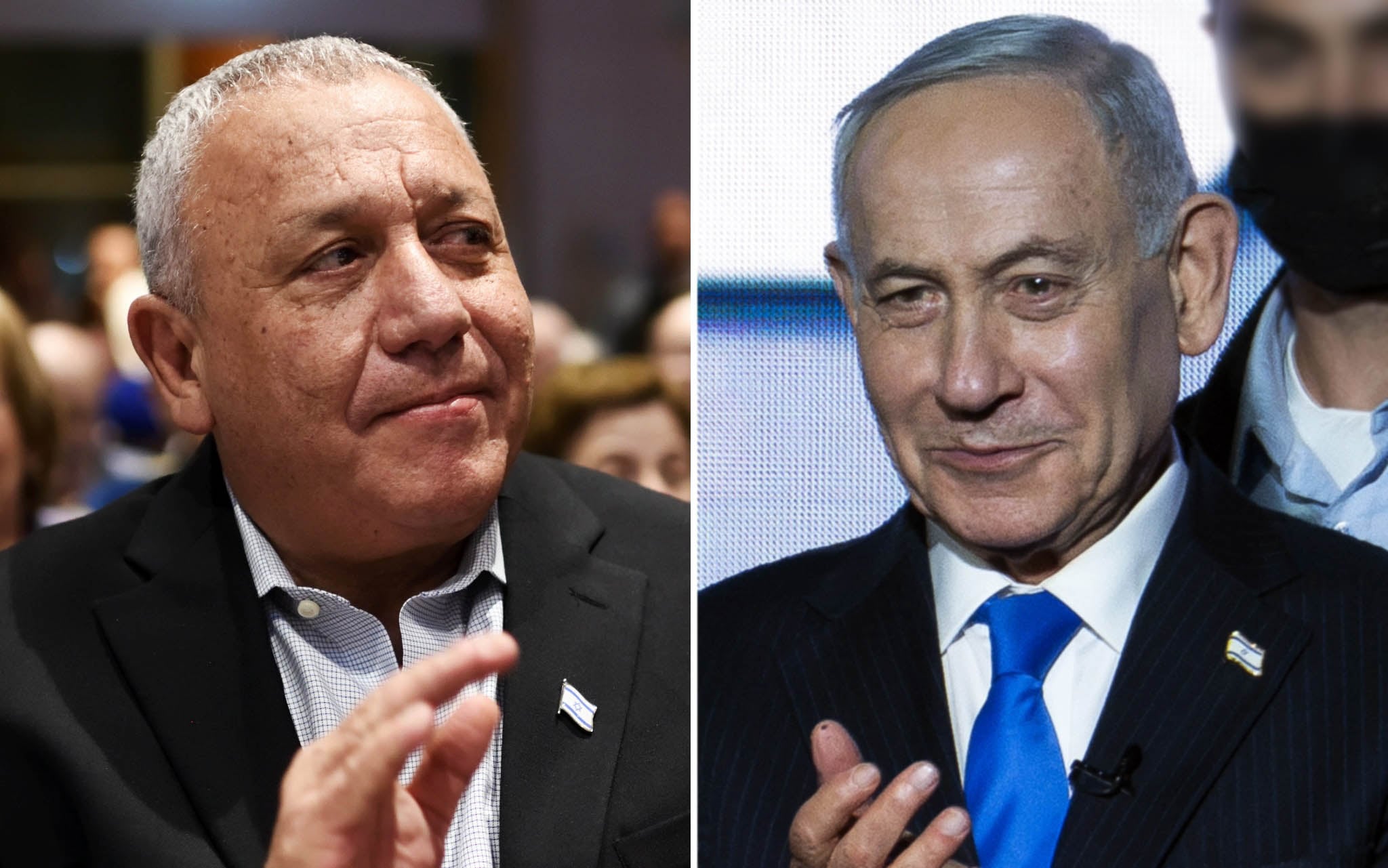
Israel has already seen efforts to influence turnout without AI, including Likud’s deployment of hidden cameras at polling stations in Arab communities during the April 2019 election, which was seemingly intended to suppress Arab turnout.
AI creates new ways of pursuing the same objective at vast scale.
“Imagine that on election day I hear rumors that violence has broken out at polling booths and I ask the chatbot whether I should go out to vote or not. Its answer will affect my behavior — I’ll either stay home or go out and vote,” Shwartz Altshuler said.
She pointed to disaffected Likud voters as a group whose votes — including whether to vote at all — could determine the election. A Channel 12 poll in May found that about 40% of those who voted Likud in the last election were considering another party. Their votes are being sought by parties both inside and outside Netanyahu’s bloc, including Eisenkot’s Yashar.
“There are many Likud members who don’t want to vote for the party, but they don’t want to vote for anyone else. So what will they do? Stay home?” Shwartz Altshuler said. “That’s the question and this is where a chatbot can be very effective.”
A perfect mark
The potential for those techniques to influence an election depends in part on the information environment in which they are deployed, and experts said several characteristics of Israel make it uniquely exposed.
A 2026 Israel Internet Association survey found that 88% of Israeli adults use ChatGPT and 73% use Gemini, while 99% use WhatsApp. But that exceptionally high adoption of digital platforms is paradoxically matched by very low levels of digital and media literacy, experts say.
“We have overconfidence in our ability to distinguish between what’s real and what isn’t because our digital literacy is low. We trust ourselves more than is justified,” said Shwartz Altshuler.
Israel’s information ecosystem presents other vulnerabilities. Political information is sought in Hebrew, Arabic, Russian and English on fast-moving, contested issues. Hershkovitz warned that where reliable information in a particular language is sparse or difficult for chatbots to use, planted material may be retrieved simply because there is little other content there.
Much of Israel’s political communication also runs through WhatsApp and Telegram, where messages can circulate within trusted private groups with little visibility to those trying to detect or correct false claims. AI makes it easier to produce campaign content tailored to those myriad and often highly influential groups.
Yet perhaps the most significant weakness, experts said, is that it remains unclear who is responsible for defending against the broader information threat.
Israel has institutions charged with protecting the mechanics of elections and has robust rules regulating the use of political advertising in mass media such as TV, radio and newspapers.
However, those guardrails have failed to keep pace with the shift to digital media and social networks, allowing a campaigning free-for-all to take shape. Rather than implement tools or oversight mechanisms to deal with disinformation or root out nefarious actors, authorities have sought to tackle the issue by introducing rules requiring disclosure of AI-generated deepfakes in campaign materials, a guideline that largely avoids grappling with how campaign material is actually consumed.
According to Asaf Wiener of the Israel Internet Association, Israel can demand much more transparency and accountability from tech companies that control these platforms.
In the European Union, major social media platforms and search engines, including services operated by Meta, Google and TikTok, must report on their content-moderation practices. The largest must also assess and address risks to elections. Providers of AI models, including those behind chatbots such as ChatGPT and Gemini, face a separate set of transparency and risk-management requirements under the EU’s AI Act. Israel has no comparable overarching framework for these services.
In Israel, said Wiener, “there is no regulation whatsoever on platforms, no accountability, even regarding illegal content.”
Israel’s reluctance to impose more regulations stems at least in part from the country’s extraordinary dependence on its technology sector, a central engine of the country’s economy, making policymakers wary of measures perceived as burdening the industry.
Israel has also faced pressure from Washington over proposed obligations on American companies. That pressure carries particular weight as Israel has relied on US diplomatic and military support amid growing international isolation since October 7, 2023.
The result, Wiener argued, is that companies forced to devote substantial resources to safety, transparency and regulatory compliance elsewhere face considerably fewer demands in Israel.
“We are becoming the backyard [playground] of global platforms,” he said.