Polish trade envoy seeks to build new ties with Jewish state
Many of the views Israelis hold about his country -- even regarding its role in the Holocaust -- are inaccurate, says Polish trade counselor Krzysztof Bartosz
As the Start-Up Nation’s reputation grows and news of Israel’s tech prowess spreads, delegations of corporate and government officials from around the world arrive weekly to seek out the companies that are developing world-changing technologies.
Almost every country in Europe, along with most US states, as well as several Asia countries, offer Israeli start-ups incentives to place their foreign operations in their locations. For an Israeli start-up looking to expand abroad, the world is open and welcoming; companies have their choice of venue, with the decision based on where the best business opportunities and biggest investment possibilities are.
Given all that, Poland, it would seem, doesn’t have a chance. Ever the butt of jokes — so many, in fact, that there are more books dedicated to “Polish jokes” than any other national group (except perhaps, Jews) — Poland is unlikely to be on any Israeli high-tech entrepreneur’s short list of European cities in which to open an office.
More seriously, for many Jews, Poland will forever be associated with the worst horrors of the Holocaust. The Nazis were Germans, but for many Jews, the fact that they chose Poland as the place to build Auschwitz and other concentration and death camps was no coincidence.
Yet Israeli companies do constitute a major presence in Poland, according to Krzysztof Bartosz, Economic Counsellor for the Polish Embassy in Tel Aviv. It’s his job to dispel myths Israelis may believe about Poland, and to encourage greater trade and business relations between the two countries. “Many Israeli companies have chosen to locate in Poland, because of its central location in Europe, low labor costs, and conscientious workforce. In addition, Israeli firms benefit from the economic benefits accruing to Poland as a result of its membership in the European Union,” he said.
Trade between Israel and Poland was around $800 million in 2013. Israel generally imports from Poland food products, machinery, vehicles, parts, mechanical and electrical devices, while Israeli companies mostly export chemical products, mechanical and electrical devices, plastic and plastic goods.
It’s a respectable trade total, said Bartosz, but there is potential for much more. Most of the Israeli companies with a major presence in Poland are in the industrial and retail space; among them are household names (in Israel) including Elite, Eden, Multilock, Teva, Egged, Cinema City and Super-Pharm. Several tech companies, like ECI Telecom and Tadiran, also have facilities in Poland.
What would be even better, said Bartosz, would be for Israeli start-ups to consider Poland as a place to open their European offices. “We have a very highly educated workforce, with many Western-educated engineers who work in areas like information technology, life sciences, and material and nanotechnology.” A high-level conference including Israeli and Polish nanotech scientists is set to be held in Tel Aviv in December.
Aside from the tech advantages for Israeli firms, Poland – the new Poland, which has the sixth-largest economy in Europe – is a major hub, with a spanking-new superhighway system that connects Germany and Western Europe with Eastern Europe, Ukraine, Russia, and points beyond. “Ten years ago, if you had told an average Pole that they could ride in cars on three and four lane highways from border to border at high speeds, they would have laughed at you,” said Bartosz. “I sometimes marvel at the changes in this country myself.”
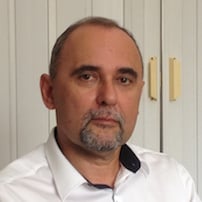
Besides access to important markets, Israeli start-ups that open facilities in Poland will also benefit from the EU’s largesse. “Over the next several years we are set to get 100 billion euros in benefit from the EU, and there are programs in many localities to help foreign start-ups get set up in Poland,” said Bartosz. “We realize that Warsaw is not Paris or London, but we too have access to large companies and investors. All the major multinationals have facilities in Poland, and foreign investors come to Warsaw all the time. Over the past decade they have invested $250 billion in the Polish economy, so any start-up that wants to gain the attention of investors will have plenty of opportunity to do so in Poland.”
On paper, Poland has everything an Israeli start-up could want – but communicating that message has been difficult. “In my opinion, we have been the victims of long-standing stereotypes,” said Bartosz. “I realize that many people still see Poland as a rural, backward Communist-era country, and think that the average Pole is a farmer milking cows by hand and subsisting on potatoes. But this is the 21st century, and 60% of Poles now live in cities. Many things, in fact, have changed, and Poland has moved right into the 21st century.”
The old Polish jokes no longer apply, added Bartosz. “When we bring Israeli business officials here to check out facilities, they are amazed at how modern everything is. The Poland of today is as up to date as any other European country.”
Overcoming the stereotype of Poland among Israelis as a backwards backwater is one of Bartosz’s goals as a Polish economic representative in Tel Aviv, he said.
But overcoming the image Israelis and Jews around the world have of Poland as a hotbed of anti-Semitism may be even more challenging, Bartosz admits. “I can understand why Israelis would have that view of Poland, but historically it is incorrect – and just plain unfair,” he asserted.
If Poland was the place where the biggest mass murder of Jews took place, there’s a reason for that, said Bartosz – it’s where most of the Jews who fell under the Nazi occupation lived. “Obviously it was more convenient for the Nazis to kill the Jews on site than to transport them, so that’s what they did.” That there were collaborators among the Poles who helped the Nazis cannot be denied, “but we have to remember that there was an important and large resistance that fought the Nazis – and included Jews among their ranks. In addition, many thousands of Poles – only some of whom have been recognized by Yad Vashem as Righteous Among the Nations – helped save Jews. In addition, we mustn’t forget that we Poles were victims as well – three million Poles were killed by the Nazis, too.”
Before the Holocaust, Jews had been in Poland for hundreds of years – and in fact, said Bartosz, his country was one of the few willing to take in Jews after a previous holocaust, the Inquisition. “Poland was historically one of the friendliest and most open societies for Jews in Europe, at least in the context of the times and compared to most other countries in the region,” said Bartosz. “I can understand why the stereotype of Poland as anti-Semitic is so strong, but in my opinion it is nothing more than ignorance.”
One Israeli who has overcome that ignorance, said Bartosz, is Israeli President Reuven Rivlin, who recently dedicated a museum in Warsaw dedicated to the history of Polish Jewry. “I concur with every word of the speech he gave at the event,” said Bartosz. After describing the “shuddering in your body and a longing in your heart” that a Jew feels upon hearing the name Poland, Rivlin said that courage was needed ‘so we can write, and we have already begun to write, a new and promising chapter in the centuries old history shared between us. Only with this kind of courage we can, one day, add a new wing, new wings, to the museum we are inaugurating today. Wings that will describe the common path we take together today.”
Seen in that light, Bartosz said, Poland is no worse – and today, much better – that some others in terms of its relationship with Israel. “Unlike in many other European cities, you do not find mass anti-Israel demonstrations in Poland. We see Israel as a friend, and we are reaching out in that spirit of friendship to increase ties of all kinds, both cultural and business.”
It’s still an uphill battle, Bartosz added. “There is a lot of work that we need to do, on both sides. But we are getting there.”