Prisoner says he was left with severe burns after guard detonated stun grenade in his cell
Zaid Abu Mayouf tells judge a guard pressed grenade into his back, and he was refused medical treatment, according to Hebrew media; Prison Service doesn't address story, denies he was refused care
An Arab Israeli prisoner suffered severe burns after a prison guard detonated a stun grenade in his closed cell earlier this month, the man’s lawyers told Hebrew media outlets on Wednesday, alleging “shocking” abuse and medical neglect.
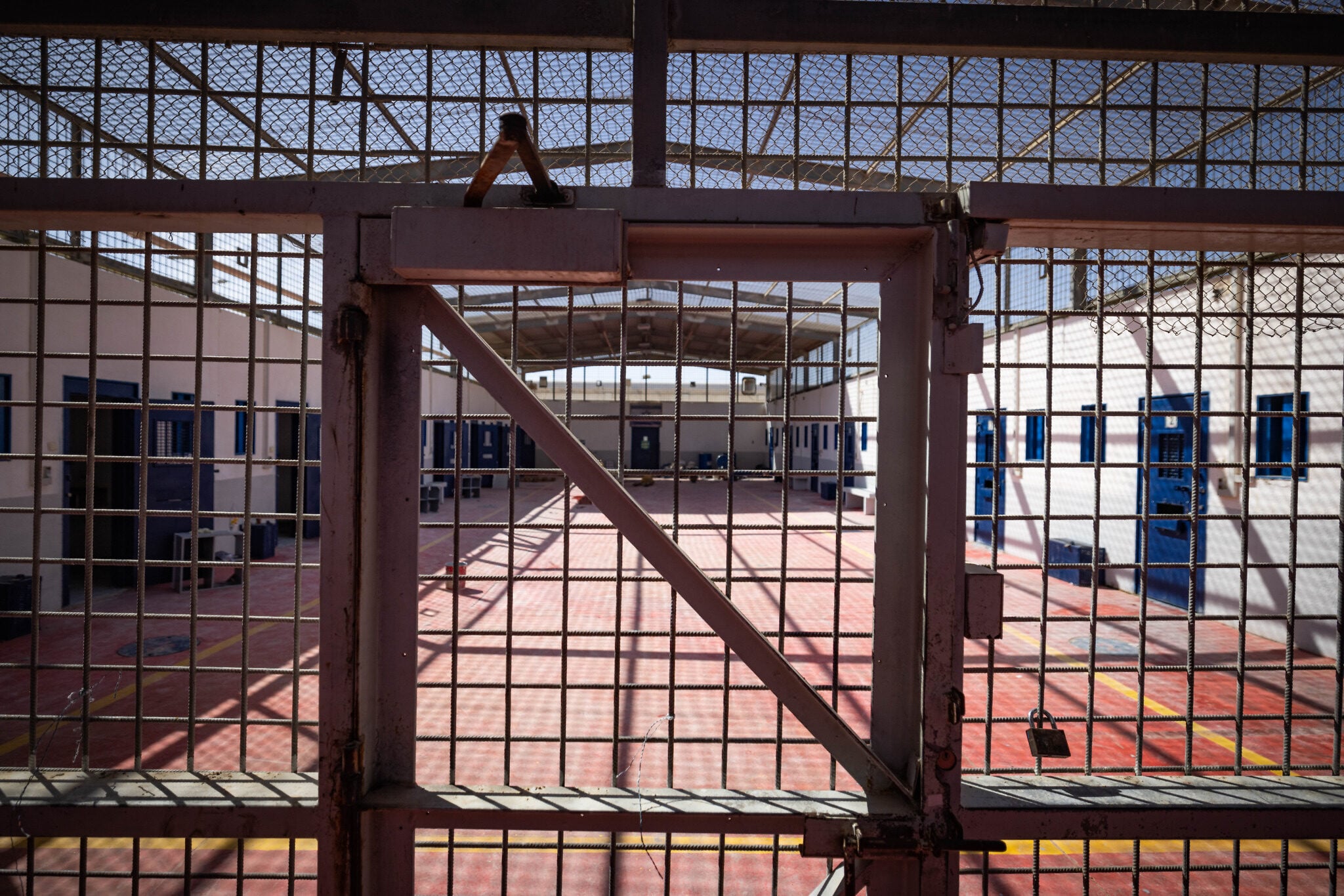
The prisoner, Zaid Abu Mayouf, is a resident of the Negev with no prior criminal record. He was detained in August on suspicion of smuggling contraband from Egypt via drone, and was held on criminal charges at Ela Prison near Beersheba until November 10, when he was reclassified as a security prisoner and transferred to Ganot Prison, which is used to house Palestinian inmates convicted of terror offenses.
The reason for his transfer and reclassification was not given. His relatives say, according to the Walla news outlet, that no drone or drugs were found in his possession at the time of his arrest, and that prosecutors have thus far presented no evidence to justify his reclassification as a security detainee.
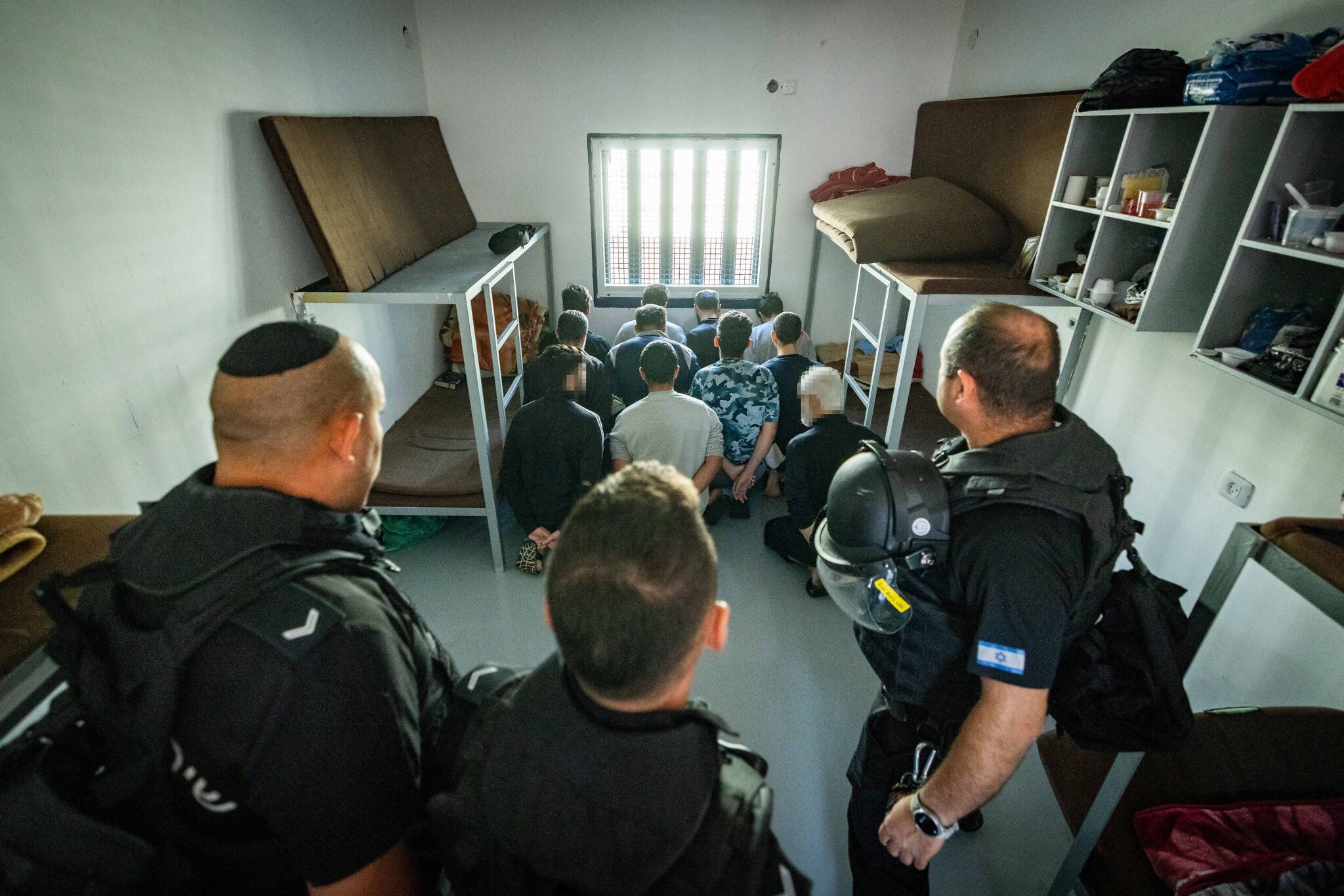
After he was transferred to Ganot and placed in a temporary holding cell awaiting processing with a few other prisoners, masked prison guards detonated a stun grenade in his closed cell, Abu Mayouf said during a Tuesday hearing, according to the reports.
He further alleged that one guard pressed the grenade into his back, causing severe burns on his back and abdomen.
During the Tuesday hearing, which was conducted via video conference, Abu Mayouf showed the judge his injuries, which could be clearly seen on camera as at least two third-degree burns across his midsection, along with several bruises, according to the reports.
Abu Mayouf told the judge that the burns were caused by the stun grenade, and said that prison guards refused to grant him medical treatment, or even painkillers, for several weeks after the incident.
Seeing the severity of his injuries, Beersheba District Court judge Alon Gabizon ordered that Abu Mayouf be brought before an Israel Prison Service doctor as soon as the Tuesday hearing ended.
His lawyers also contacted the Israel Prison Service legal adviser and the commander of Ganot Prison, demanding to see Abu Mayouf’s medical records, surveillance footage of the incident, and any other records of Abu Mayouf’s imprisonment.
They are also demanding his immediate release, have filed a complaint with the body that investigates prison guards, and have requested that the commandant of Ganot Prison be summoned for a hearing on the matter, according to Walla.
“I left the hearing shocked by the sight of the injuries my client presented to the court,” his defense attorney Moran Gaz told Ynet. “My client was in the custody of the IPS and was dependent on the staff to protect him and ensure that he received treatment.”
“He is still in their custody, so we asked the IPS to immediately preserve the documentation, ensure that it was reviewed in accordance with the court’s decision, and clarify what steps were taken to ensure his safety,” she said.
Responding to the allegations, the Israel Prison Service did not address, or dispute, Abu Mayouf’s account of prison guards burning him with a stun grenade, and only disputed the claim that he was denied medical treatment: “The claim regarding the failure to provide medical treatment to prisoners is incorrect,” it said.
“All prisoners in the prison service receive the rights granted to them by law and the medical treatment required according to their condition, professional medical judgment, and the guidelines of the Health Ministry,” IPS said.
The IPS has previously said that all prisoners are detained according to the law with their basic rights fully upheld. However, multiple reports have alleged that security prisoners have faced systematic abuse, neglect and deprivation in Israeli jails under the orders of far-right National Security Minister Itamar Ben Gvir, who has repeatedly boasted about the harsh conditions he imposes, particularly on security prisoners.