Promises of revenge
A US official warns 'there will be a price' for Netanyahu's visit; the IDF gears up for a possible Hezbollah retaliation
Israel’s increasingly frail diplomatic ties with the US lead the news coverage in Friday’s Hebrew dailies, as President Barack Obama announces he won’t meet Prime Minister Benjamin Netanyahu during his March visit — a visit coordinated behind his back.
To boot, a US official warns that “there will be a price.”
Meanwhile, the Israel Defense Forces continues to be on high alert on the northern border in anticipation that Hezbollah and Iran will hit back for an airstrike that killed 12 near Quneitra on Sunday.
Netanyahu is set to address Congress in March on Iranian sanctions upon the invitation of the house speaker, a move that has been perceived in some quarters as an effort to interfere with US policy on Iran.
Haaretz quotes senior US officials who say Netanyahu “spat in our face” in deciding to address Congress on Iran on the invitation of House Speaker John Boehner, and who warned there would be repercussions.
“We thought we’ve seen everything,” a senior American official said. “But Bibi managed to surprise even us. There are things you simply don’t do. He spat in our face publicly and that’s no way to behave. Netanyahu ought to remember that President Obama has a year and a half left to his presidency, and that there will be a price.”
Yedioth Ahronoth, meanwhile, terms the diplomatic crisis an “unprecedented” low in the Israeli-US relationship, and focuses on the White House’s announcement that Obama will not meet with Netanyahu during his March visit, citing the proximity to elections. “Obama’s Revenge,” its front-page headline reads.
The paper quotes an official close to Netanyahu who maintains that “we can understand their decision.”
Other senior Israeli officials tell the paper the situation is “an unprecedented low in the ties between the US and Israel.
“It’s clear this is revenge, and a desire to put Netanyahu down and deny him the joint photo with the US president that he so wanted to distribute before elections,” the officials add.
Yedioth pundits — never fond of Netanyahu — largely agree he was in the wrong.
Shimon Shiffer compares Netanyahu’s move to his decision to attend the Paris mass rally after the Charlie Hebdo and Hyper Cacher attacks — despite the French government’s reservations — and his push to the front row of world leaders during the march. But where it worked with the French, he writes, Obama swiftly countered Netanyahu’s political maneuvers by refusing to meet with the prime minister.
“The events last night put the final stamp on the sense that the Obama administration has decided to take the gloves off where Netanyahu is concerned,” he continues.
Israel Hayom emphasizes the tension in northern Israel, in anticipation of retaliation for an airstrike last Sunday — attributed to Israel — that killed six Hezbollah members and six Iranians, including a general.
The paper reports that the IDF has significantly bolstered its forces along the northern border with Lebanon in “the highest level of readiness since the 2006 Second Lebanon War.
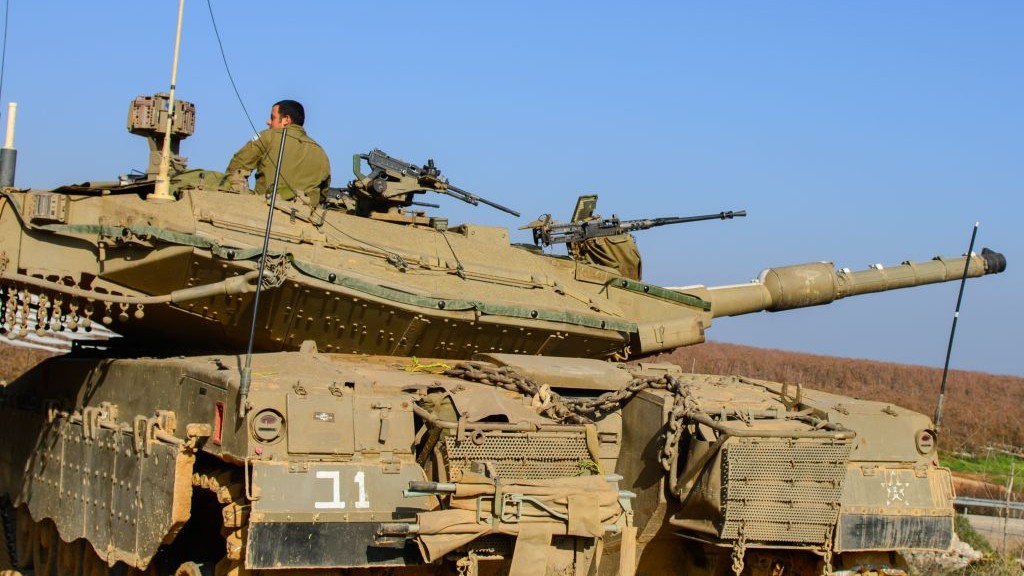
“In light of intelligence and remarks by senior Iranian and Hezbollah leaders, the IDF is operating under the assumption that there will be a retaliation. The question now is what kind of retaliation it will be,” the articles adds.
Meanwhile, for residents of the north, it’s business as usual, it writes, and only a fraction of tourists have canceled their reservations in guesthouses in the north.
Haaretz’s Amos Harel writes that the airstrike has led Iran to open up “a new score-book” with Israel.
“When nuclear scientists in Tehran died at the height of their careers, Jerusalem was always able to roll its eyes and claim it has no clue what transpired. And when Tehran would arrest suspects in the attacks, they were Iranian citizens,” he continues, and “those really responsible have never been revealed.”
But an assassination of an Iranian in the Syrian Golan Heights is different, Harel argues, and could have harsher consequences.
The dailies also report that the stabbing victims in the Tel Aviv bus attack are out of immediate danger. The bus driver, Herzl Biton, who fought off the attacker and was seriously injured, regained consciousness and spoke to his family members.
“The terrorist was strong,” he told his relatives, according to Yedioth. “I fought with him, but no matter what I did, he wouldn’t drop the knife. I braked, or else the doors wouldn’t open. I’m not a hero, I did what I had to do to save my passengers.”
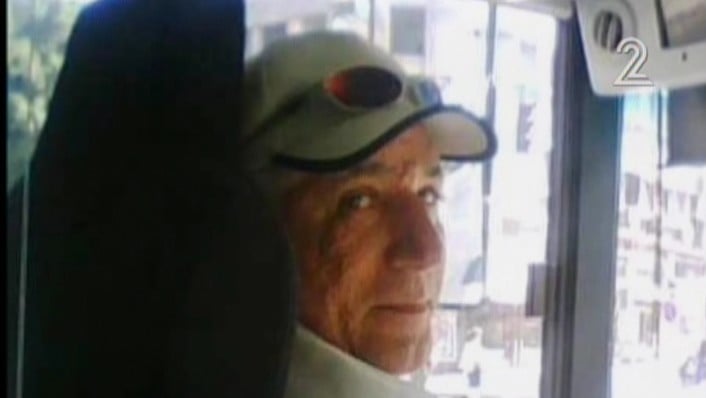
The family members said Biton’s first questions were whether the terrorist had been caught, and about the condition of the victims.
He was relieved that no one was killed in the attack, they said, and was eager to go back to work as soon as possible.