Prosecutor: Milchan feels uncomfortable with Sara Netanyahu in room during testimony
Netanyahu’s defense attorney Amit Hadad objects to remarks, says it is 'illegitimate' for prosecutors to speak with key witness in fraud case against PM
Deputy State Attorney Liat Ben Ari revealed on Monday that Arnon Milchan, a key witness in Prime Minister Benjamin Netanyahu’s corruption trial, told her he feels uncomfortable with the presence of Netanyahu’s wife Sara in the hall where he is testifying in the Old Sea Hotel in Brighton, UK.
“This morning when I and Attorney [Alon] Gildin entered the hall the witness turned to us and asked to tell us that he feels very uncomfortable with the situation that has been created in which Mrs. Netanyahu is sitting in the hall and the prime minister is in [the Jerusalem District Court room] in Jerusalem,” Ben Ari said, according to Hebrew media reported on the seventh day of Milchan’s testimony.
Milchan has been testifying from the Old Sea Hotel in Brighton via a live broadcast to the Jerusalem District Court, where Netanyahu is on trial for fraud and breach of trust in three separate cases, as well as bribery in one of them.
“The witness feels very uncomfortable and asks that the court understand his feelings — these are his words. I asked him to tell the court and he asked us to say it [instead],” said Ben Ari.
Sara Netanyahu flew out to the UK for Milchan’s testimony and has been present every day in the conference room in the Brighton hotel where Milchan’s testimony is ongoing. Milchan did not come to court in Israel due to health problems.
Last week, Ben Ari accused Sara of communicating through gestures and expressions with Milchan during his testimony and also objected to an incident last Wednesday when the premier’s wife embraced and briefly spoke with Milchan in the hall before his testimony began.
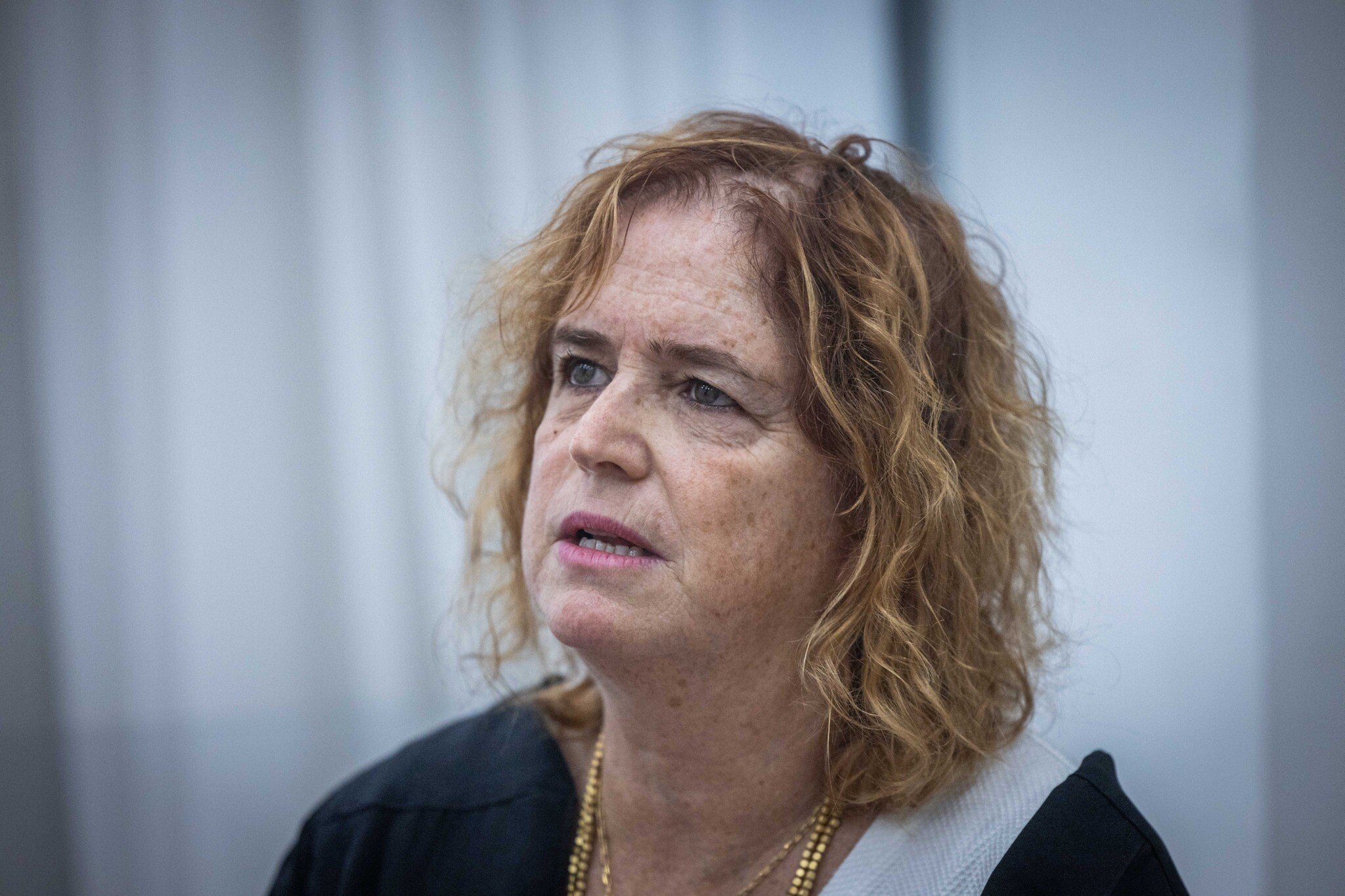
Presiding Judge Rivka Friedman-Feldman implicitly Sara Netanyahu following that incident, saying anyone involved in the case should have no contact with Milchan during his testimony.
Netanyahu’s defense attorney Amit Hadad objected strenuously to Ben Ari’s comments on Monday, and said it was “illegitimate” for the prosecutors to speak with the witness, adding, “I asked the witness if he is requesting that Mrs. Netanyahu leave the room and he said no.”

On Sunday, Milchan testified that the premier had not provided him with assistance in advancing a proposed merger of the Keshet and Reshet television networks, a move which could have benefited him financially. Milchan averred that the proposal for merging the channels had merely been vague ideas that never significantly advanced, and that the prime minister had regardless not helped him on the matter.
Other key witnesses, such as former senior Netanyahu aide Shlomo Filber, have testified, however, that the prime minister did attempt to help his friend Milchan — who gave luxury gifts worth hundreds of thousands of shekels to Netanyahu — advance the Keshet-Reshet merger.
The indictment against Netanyahu in Case 1000 alleges that Netanyahu abused his power to advance Milchan’s interests in helping him obtain a long-term US visa, advancing legislation that could have given Milchan tax breaks, and promoting the Keshet-Reshet merger, all while receiving lavish gifts from Milchan.
Milchan is now in the second week of his testimony, most of which has been under cross-examination from Netanyahu’s defense attorney.
Milchan — a well-known businessman and Hollywood producer who owned shares in Channel 10 (since changed to Channel 13), operated by Reshet — testified on Sunday that the merger of Keshet and Reshet did not advance very far.
“I’ll make the whole story with Reshet and Keshet simple, I wasn’t willing to enter as an investor until there was a merger,” Milchan said on Sunday.
Asked by Judge Moshe Baram if there had been any commercial negotiations between the two sides, Milchan said that Udi Angel, Reshet’s majority shareholder, had simply not been interested in the idea.
“There was no negotiation, there was no price, there was nothing, just vague ideas,” said Milchan.
In testimony given in February last year, Filber said that Netanyahu had told him to assist Milchan with regulatory issues relating to the merger.
Milchan said in his testimony on Sunday that he had informed Netanyahu about the idea “in his role as communications minister,” which the prime minister had held at the time, and that the premier had been interested in the idea, but he concurred with Hadad that the proposal never got far enough to request regulatory approval.
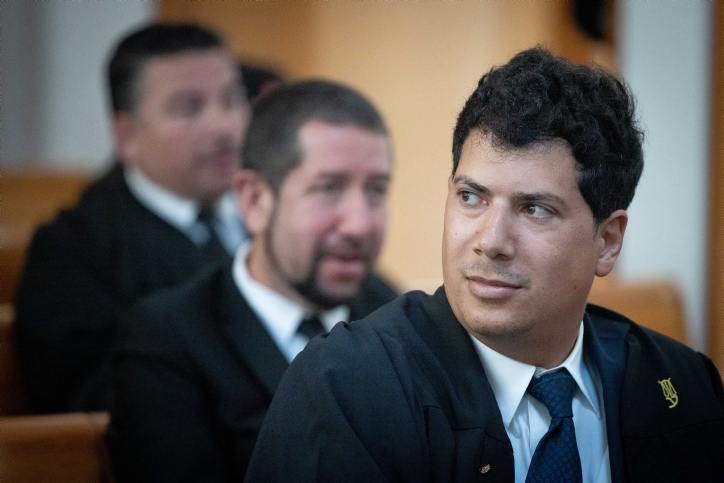
Hadad returned to other aspects of Case 1000 during the course of his testimony, specifically asking about whether or not Netanyahu or his wife Sara had ever given Milchan or his family gifts — in an attempt to demonstrate that the relationship between Milchan and the prime minister had been one of friendship and not transactional.
Milchan said that Sara had indeed given his wife Amanda and their children gifts and concurred with Hadad’s assertion that this was a sign of their mutual friendship, given that Milchan’s wealth meant he did not need anyone to buy him anything.
In his testimony under questioning by the police, Milchan previously derided the idea that Netanyahu had ever given him anything.
“Do you want me to fall on the floor from laughter?” he said in his testimony at the time. Asked about that comment last week, Milchan said he had made the remark because he had felt “pressured” by the investigator and had requested to have it removed from the record.
Asked about his testimony last week that he and the Netanyahus had used code words for the champagne, cigars and clothing that he had bought for them, Milchan said that they did so just as a game and not out of any desire to hide or cover anything up.
Milchan also denied that Sara had ever complained if he visited them and did not bring champagne.
“There’s was no such thing,” he said.
Netanyahu was indicted for fraud and breach of trust in three cases. The prime minister also faces a bribery charge in one of them, Case 4000, over allegations that he promised regulatory benefits for telecom giant Bezeq in order to secure positive media coverage from the Walla news site, which at the time was owned by the same family.
Netanyahu has steadfastly maintained his innocence throughout the investigation and trial, claiming the charges were the result of a biased media and police force, overseen by a weak attorney general. Both the police commissioner at the time of investigation and the attorney general during the indictment were appointed by Netanyahu.