Pushing 90, this golden age rabbi has written the book on getting older — gratefully
Dr. Arnold Gilberg, a psychiatrist who got rabbinical ordination in his late 70s, draws on science and his own life to make the case for staying engaged, connected and curious with age
At an age when many Americans his age were thinking about doing less, not more, Dr. Arnold Gilberg decided to become a rabbi. Gilberg was in his late 70s and already had a decades-long practice as a Beverly Hills psychiatrist. Yet he successfully managed the addition to his portfolio.
Now, at age 89, he still works at both jobs. And he’s added a third career as well: Author. Gilberg helps fellow Americans understand how to make the best of their golden years in a new book, “The Myth of Aging: A Prescription for Emotional and Physical Well-Being,” written with Jon Land and published this year by Post Hill Press.
What the title expresses, Gilberg told The Times of Israel, is “that you can age and you may not be perfect, but you still are able to be creative, useful, meaningful to people.”
Over 43 chapters, each one influenced by questions from various patients over the years, the book advises readers on how to make the best of aging. For the author, part of the answer comes from a long-ago mentor.
Gilberg believes he is the last living student of Franz Alexander, a Hungarian-American Jewish psychoanalyst who was himself a friend of Sigmund Freud. Studying under Alexander had a deep impact.
“Franz Alexander, over 60 years ago, was talking about the link [between] the mind and body,” Gilberg said, “really important things that contemporaries — even mental health specialists — did not understand or take into consideration.”
“He effectively also dispelled the myth that we are just dealing with your mental issues [in therapy], because your mind and body are connected. That’s what I practiced all my life, and I also live that way,” he said.
When Gilberg spoke with The Times of Israel on a Tuesday afternoon, he had recently finished 25 minutes of pedaling a recumbent bicycle at a gym in LA.
“I think that our mental state, especially as we age, is really critically involved with our bodies,” he said. “We need to try to find ways to treat our body well, no matter what the age. It allows for our mental stimulation, mental well-being.”
He added, “All the research suggests people who remain mentally alert not only see mental stimulation, but they have physical stimulation, either from exercise or doing something important for their physical well-being.”
This is how Gilberg approaches each chapter, combining scientific research with examples from his own life to make thought-provoking conclusions.
“I’m not quite sure I know what retirement is,” Gilberg said, touching on one of the book’s most universally relevant themes. “For some people, it’s the end of a career in some area, but they’re able to move into some other career choices.”
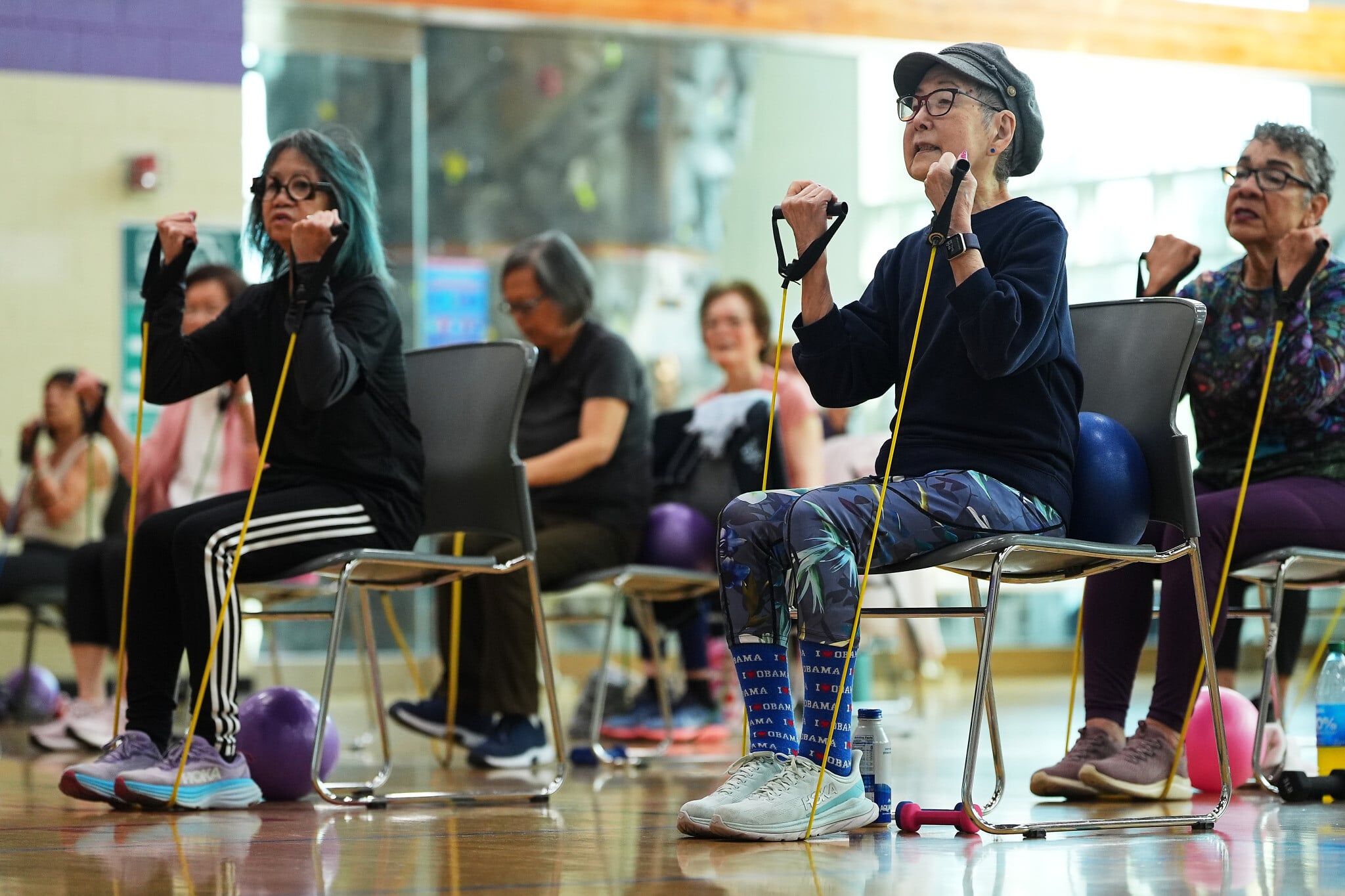
“As far as longevity goes,” he continued, “our body may get old — or older — but mentally we need to keep staying alert. I find the brain has to be stimulated. It is a bodily organ. I think it absolutely [needs] some stimulation, whether it’s continuing to work, finding some hobby, an additional cause, or volunteering.”
Or, in Gilberg’s case, becoming a rabbi. He had been moved by the experiences of his paternal grandfather, an ordained rabbi in Poland who had to switch careers out of economic necessity after immigrating to the United States in 1913, and went into business instead. Decades later, Gilberg was inspired by his grandfather’s first career and entered rabbinical school at the Academy of Jewish Religion.
“I’ve identified with [my grandfather] in lots of ways,” Gilberg said. “The challenge of becoming a rabbi was something I felt I needed to do.”
Being part of a community, whether faith-based or secular, can bring benefits, according to the book.
“People, I think, do much better when they’re part of a community,” Gilberg said. “It may be faith-based or not. It is really critical. You can’t rely on just your family to maintain your mental and physical health. That’s too much of a responsibility for them.”
For faith-based communities, he mentioned, there are churches, synagogues and mosques, while “[if] you’re not going to connect to a community of faith, there are other ways to connect. It might be senior exercise facilities, or doing group experiences to challenge yourself.”
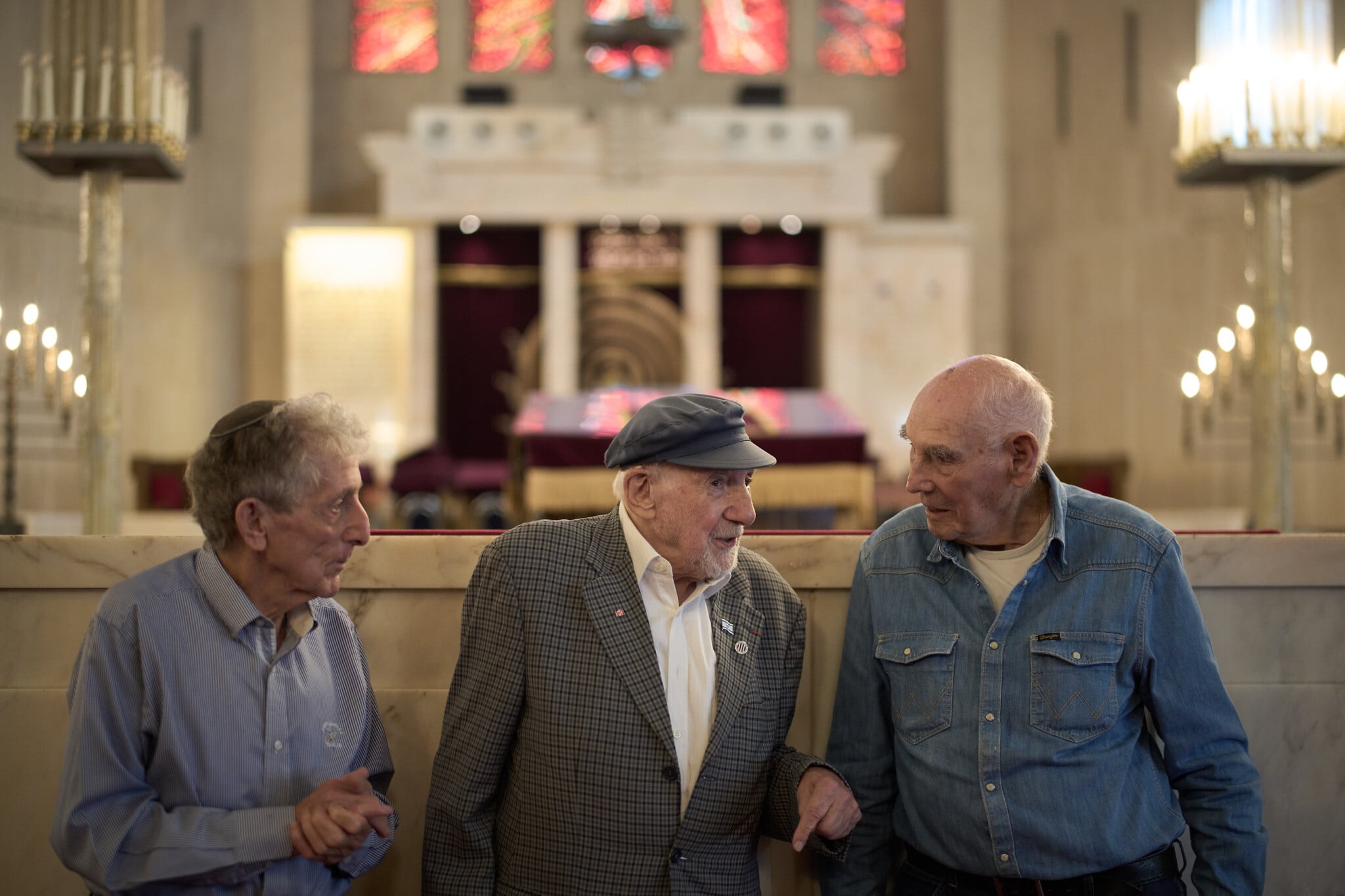
“No matter what your age is, if you’re 30 or you’re 80, we need someplace to come to,” he said.
The author also draws upon his own experience to discuss the issue of finding love later in life. In his case, after a divorce, he met the woman who became his second wife at age 72.
“I do believe that both of us are lucky,” Gilberg said. “We fell in love with each other.”
“These things can happen,” he continued. “You can fall in love. It happened with us. We have friends, acquaintances, who have the same life experience — they either lost a spouse, got divorced, or something else. There’s always that new opportunity.”
Although Gilberg encourages readers to look for opportunities in their golden years, he recognizes that this period can also be a time of loss as loved ones pass away.
“Grief is a natural process that we all have to go through as we age,” he said. “It can be the loss of parents, it can be the loss of siblings, it can be the loss of your own child. There are losses of friends. There are losses that occur as we age. I know that for a fact.”
“It’s only natural that we might be grieving these losses,” said Gilberg, who has advice on ways to deal with grief. “One of these ways, in a positive sense, is to be grateful. Being grateful implies you may have to say to yourself, ‘I am so grateful to have had that person in my life for that long, I have to value that experience,’ rather than just go into a funk or get very depressed, not wanting to come out of it.”
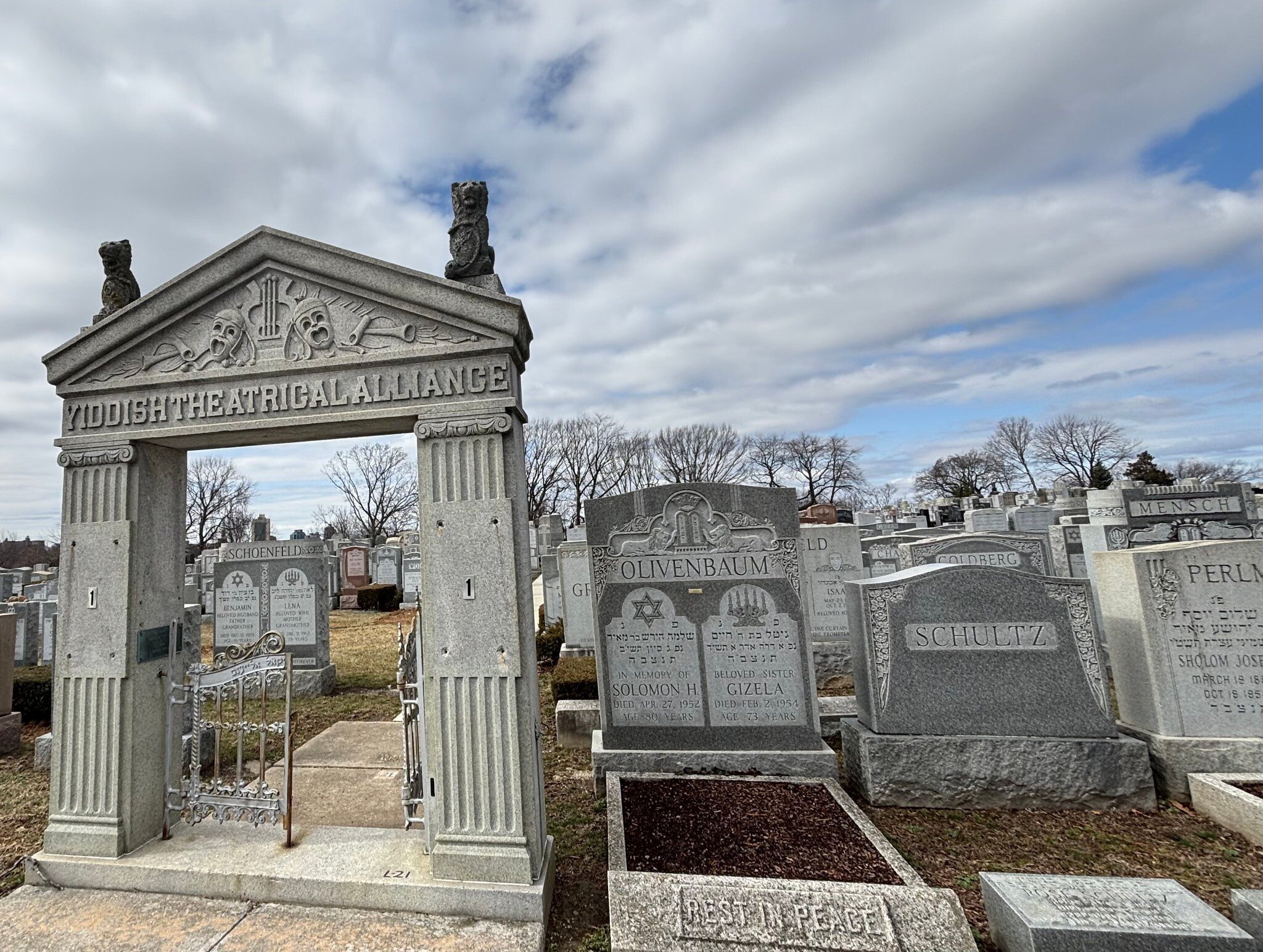
He noted that many religions offer ways of dealing with grief, including Judaism, in which mourners sit shiva for seven days after a loss, continue to grieve through the 30-day period of shloshim, and say the kaddish prayer for 11 months.
Reflecting on these markers of time, and on practices of mourning in other religions, Gilberg said, “All of this means that over time, we are asked to heal ourselves, recognize what the loss was, what the loss is.” And, he added, “being grateful for the life that person has had with us.”
The author also takes the time to look ahead, to feel hopeful for the future — including through his great-grandchildren.
“It is important to be involved with our kids and grandchildren,” Gilberg said. “We have seven great-grandchildren also. We are blessed.”
He gave some professional advice to fellow aging Americans: “We can’t step into our kids’ lives, grandchildren’s lives, great-grandchildren’s lives … and take on responsibilities we can’t do. The message is, try to be helpful to your family. Ultimately, it’s about the two of you [for a couple], or just yourself.”
Coming back to a familiar piece of advice from the book, Gilberg said, “Take care of yourself. The rest of it will just work out.”