‘Radical Listening’: Herzog’s global Jewish initiative yields projects, navigates growing pains
At the president's inaugural gala for his Voice of the People program, community leaders mark an 18-month journey that has weathered war, attrition, and sharp ideological divides
BUDAPEST (JTA) — After a gala dinner attended by Israeli President Isaac Herzog last month, most of the guests at the closing conference of his Voice of the People (VOP) initiative in Budapest were in no hurry to call it a night, staying on to dance to Israeli pop music.
That so many stayed for the obligatory let-your-hair-down activity, so often a cringe-inducing, sparsely attended affair at gatherings like these, was an encouraging sign. There was plenty to unwind from: 18 months grappling with some of the Jewish world’s most divisive problems, with war disrupting their work along the way.
Herzog conceived the initiative amid Israel’s bitter divisions over judicial reform, but its launch was delayed by the wars that followed the Hamas-led October 7, 2023, invasion and massacre.
Run in partnership with the Jewish Agency and the World Zionist Organization, the VOP receives funding from the Azrieli Foundation, the Wilf Family Foundations and the Patrick and Lina Drahi Foundation. Part global networking venture, part Jewish version of “Shark Tank,” VOP divided 150 council members, drawn equally from Israel, North America and the rest of the world, into 10 working groups tasked with coming up with solutions for five major challenges: antisemitism, polarization, Jewish identity and heritage, Israel-Diaspora relations, and relations between Jews and non-Jews.
Over the 18 months, the groups developed 38 initiatives, with more than 20 reaching the proof-of-concept stage and 21 receiving seed grants of up to $20,000.
At the three-day finale in Budapest last month, council members presented projects ranging from artificial intelligence tools designed to bridge communal divisions to programs exploring Jewish identity through meditation and movement.
יום מעורר השראה עם ״קול העם״ בבודפשט!
כנשיא מדינת ישראל, יזמתי את ״קול העם״ במטרה לאסוף מנהיגות ומנהיגים יהודים מגוונים מישראל ומהעולם סביב שולחן אחד, וליצור מרחב ייחודי לשיח, דווקא בתקופה של פילוג ומחלוקות עמוקות, ומתוך מטרה לגבש מענים מעשיים לאתגרים שמעצבים את עתיד העם היהודי.… pic.twitter.com/VDzW5Cvr69
— יצחק הרצוג Isaac Herzog (@Isaac_Herzog) October 20, 2026
Yet only 89 of the original 150 council members attended the conference in Budapest. The conference had been postponed because of the war with Iran, leaving some unable to attend, while others had dropped out or disengaged along the way. Organizers had established an ethics committee and barred those who had failed to meet their participation commitments.
One council member from North America, who requested anonymity to speak candidly, said their 15-person working group had dwindled to nine after the inaugural gathering in Haifa in March 2025. It raised questions about whether Herzog had set himself an impossibly ambitious task: bringing together a diverse array of Jews and expecting them to produce lasting results. Or, as the council member quipped, if two Jews have three opinions, what happens when you bring together 150?
An algorithm helped select council members according to age, gender, religious affiliation, professional background and other characteristics, organizers said, with the aim of assembling a group that reflected a far wider cross-section of Jewish life than conventional communal leadership forums.
One of the few conditions for admission was recognizing Israel as the state of the Jewish people. But that hardly eliminated ideological tensions, with some left-leaning participants feeling silenced in disputes over Israel’s actions in Gaza, while Haredi participants objected to pluralistic values being treated as axiomatic.
Shirel Dagan Levy, Voice of the People’s CEO, said the aim was to cultivate “generous leadership,” in part through what she called “radical listening” to people with opposing views.
“It’s tough. You have to sit there and feel uncomfortable with listening, but you realize, what can I learn from this?” she said.
During one session at the Budapest conference, Rachel Goldberg-Polin, whose son Hersh was murdered in Hamas captivity, spoke about the difficulty of engaging with people whose views are deeply upsetting.
“This is what really being human is about: grappling, struggling and wrestling with how we do this. How do we see the godliness in the person across from us who’s saying things that we digest as hateful? How does that work?” she said.
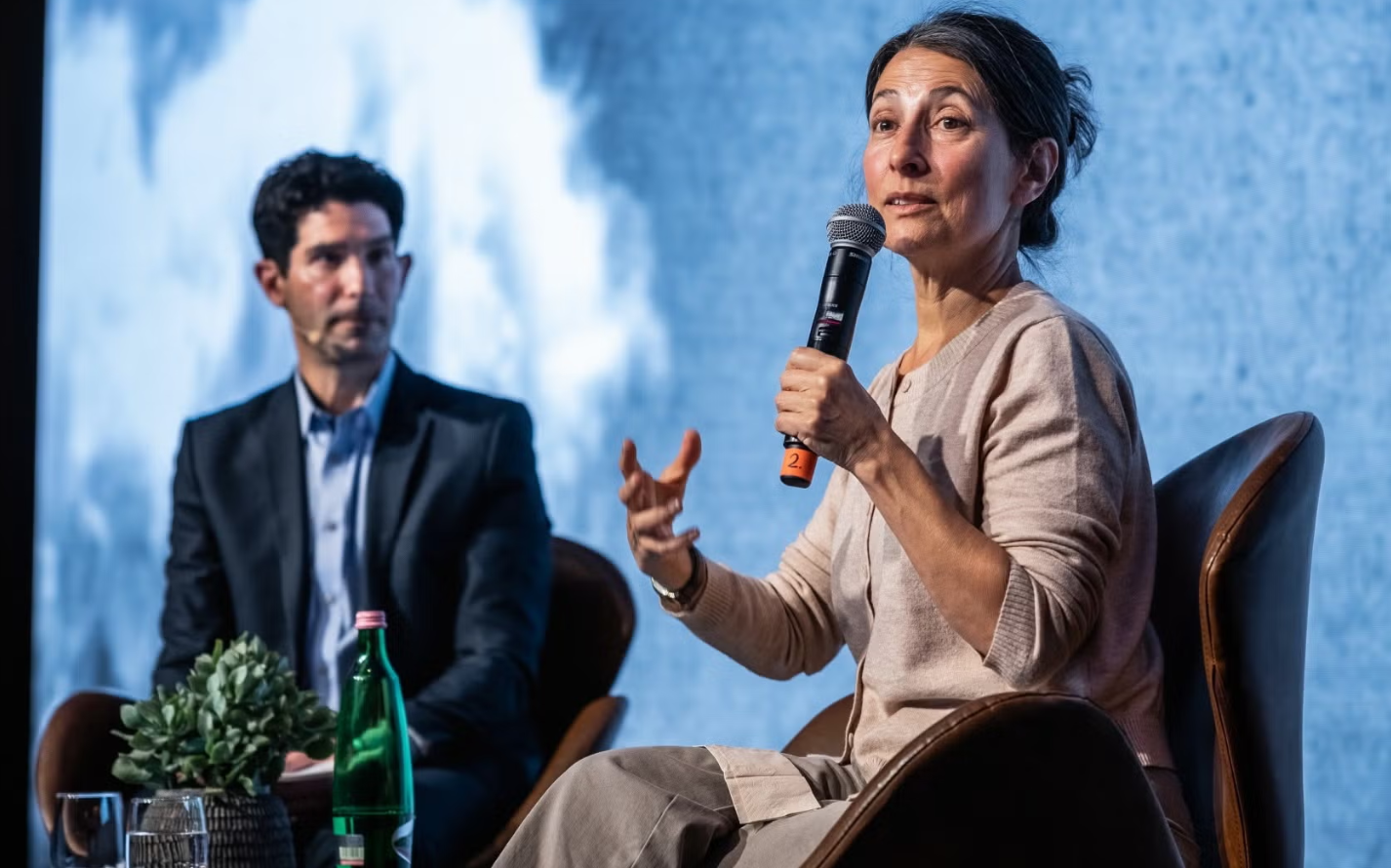
Aleeza Ben Shalom, the star of Netflix’s “Jewish Matchmaking,” said the relationships forged among council members were the initiative’s greatest achievement.
“The most powerful thing about this is the network that we created,” she said.
It was a sentiment shared by Ranit Budaie-Hyman, CEO of Meitarim, an Israeli network of integrated religious-secular schools, who collaborated with fellow council members on Mitzion Tetze Torah, a project promoting social cohesion among Israeli schoolchildren. Its educational materials, sent to 50 schools, include games introducing children to Jewish and democratic values.
One of the others in her group, Jeremy Leibler, president of the Zionist Federation of Australia, invited Budaie-Hyman to speak at a Jewish educators’ conference in Melbourne, an opportunity she said would never have arisen without the council.
The project’s name, Hebrew for “From Zion shall go forth the Torah,” reflected the group’s belief that divisions affecting Jewish communities worldwide needed to be addressed first in Israel.
“Polarization starts in Israel and affects the world,” Budaie-Hyman said.
Not everyone agreed. Other members of her wider working group argued that each Jewish community faced its own particular divisions and went on to develop a separate initiative.
Herzog, who combined the conference with a state visit to Hungary, said Israel needed to listen more closely to Diaspora Jews, telling reporters on the conference sidelines that “whatever we do or say in Israel affects Jews around the world.”
Yuval David, a filmmaker and LGBTQ activist, was part of a working group focused on relations between Jews and non-Jews.
“Being here means being with doers,” he said. “They don’t just talk about what needs to be done, they take action. They’re motivated and they motivate others.”
The group developed the Jewish & Indian Alliance, seeking to strengthen ties between Jewish communities and the vast Indian diaspora. The alliance has already organized gatherings in Los Angeles and Tel Aviv, bringing together diplomats, entrepreneurs and community leaders to explore cooperation in business, technology and education.
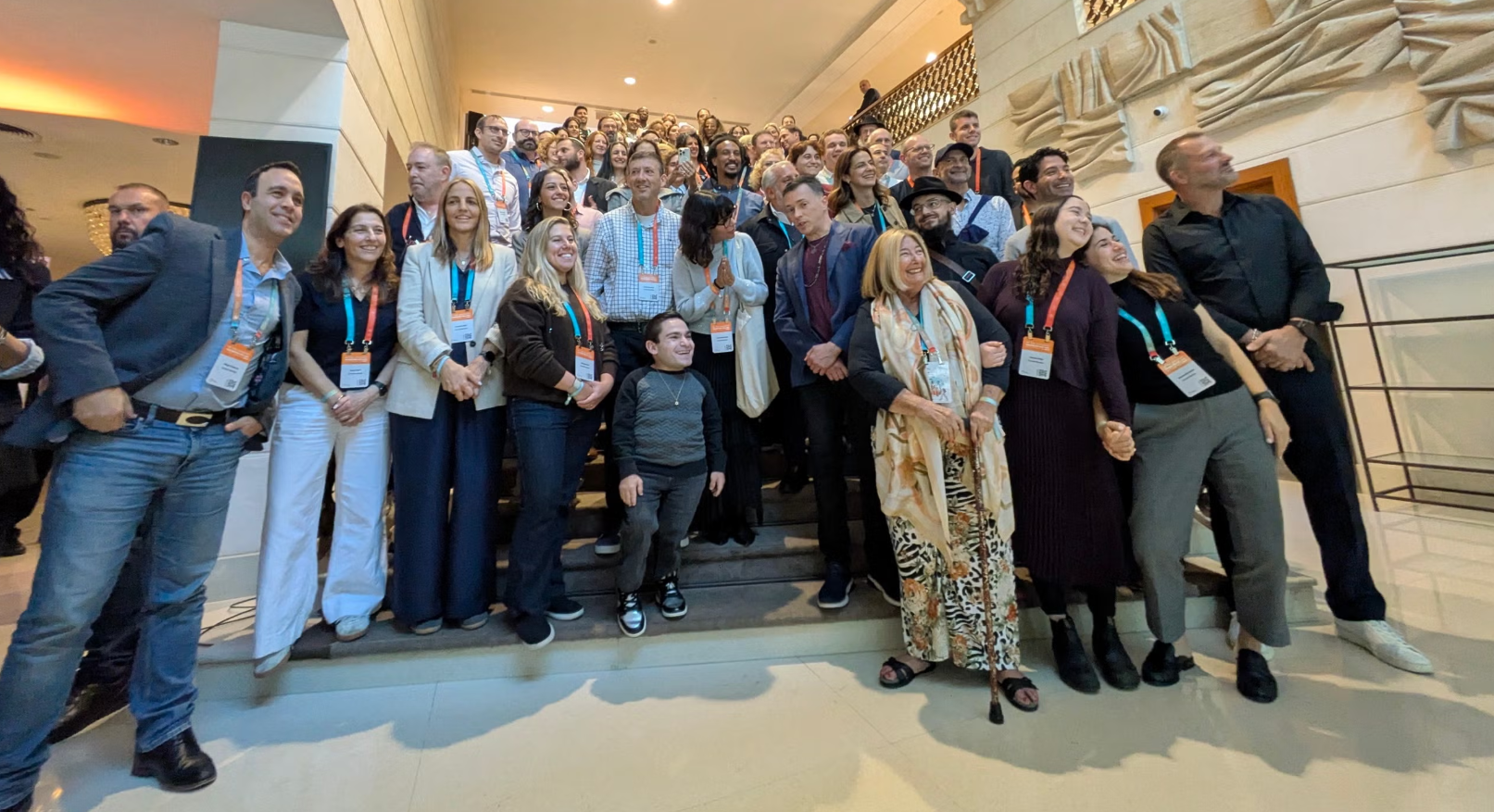
But coordinating the working groups across continents was no small undertaking. Interviews with council members and facilitators revealed the difficulties of scheduling lengthy, sometimes weekly Zoom meetings across time zones, particularly as members were participating on a voluntary basis alongside demanding professional commitments.
“Everyone is extremely busy,” Budaie-Hyman said. “But it’s very important so I feel like there’s no choice. It’s totally worth it.”
For at least one participant, pursuing the project meant giving up his day job. Joshua Buchalter left his position at an Israeli software company to concentrate on OneBayit, a nonprofit platform connecting Israelis traveling abroad with Jewish families willing to host them for Shabbat and holiday meals.
Some council members complained that the inaugural gathering in Haifa had been dominated by lectures and presentations, leaving insufficient time for networking and practical collaboration. Ben Shalom said organizers had taken that feedback seriously, significantly increasing opportunities for members to interact at the Budapest conference.
Other complaints were more fundamental. Several council members questioned whether they had been recruited to exercise leadership or to participate in a tightly managed process in which organizers ultimately determined which ideas could proceed. Frustrations included the rejection of proposals that members had hoped to pursue. One member, speaking on condition of anonymity, said the expectations had never been adequately explained.
“We weren’t told the rules of the game,” the council member said. “We asked from the beginning what the goal was and were told: Go figure it out.”
Dagan Levy pushed back, saying that some proposals had failed to pass the evaluation process, while other groups produced no projects. But she argued that projects were not the only measure of success.
“You don’t have to come up with an initiative to be a great council member,” she said.
A former technology executive, Dagan Levy compared the experience to launching a startup, where trial and error are expected. “We had failures, but I’m proud of them,” she said. “You test, you pivot, you grow.”
Nate Looney, a transgender US Army veteran and director of community safety and belonging at the Jewish Federations of North America, was among those not working on an initiative, but the uncertainty that frustrated other participants was precisely what appealed to him.
“Honestly, that was a part of what drew me to it,” he said. “They made it clear from the beginning that they’re figuring it out and the fact that they were approaching it that way versus saying, ‘we know exactly what we’re doing so jump on board,’ made me more interested.”
Organizers have promised clearer guidance for Voice of the People’s second cohort, which attracted 2,500 completed applications. The program has been shortened to 16 months, with its first four months devoted to building relationships before members vote on which challenges to address. Working groups will have three possible outcomes: launching a new initiative, organizing a campaign or developing a proposal for an existing organization to implement. Organizers also said they were working to improve how contentious discussions and ideological disagreements are handled.
Looney said he remained invested because he believed in where the initiative was headed, despite some bumps along the way.
“If you’re in innovation, your first idea is not always going to be what gets you to your moonshot,” he said. “But it gets you started on the path.”