Rain floods tens of thousands of tents in Gaza as storms hit Mediterranean coast
Gazans report thousands of families left without shelter: 'This is only the first day and we're already overwhelmed'; floods, blackouts also reported in Israel
Winter storms hit the Eastern Mediterranean coast Friday night and Saturday, bringing with them heavy rains that flooded tent camps in the Gaza Strip, leaving tens of thousands of families without shelter.
Floods were also reported across coastal Israel, causing blackouts and road closures in several cities, and sparking warnings from government authorities to stay away from areas prone to flash floods.
In war-devastated Gaza, residents reported feeling overwhelmed as rains flooded over 70,000 tents, affecting tens of thousands of displaced people and causing injuries, although no fatalities were reported.
The Hamas-run civil defense agency said it had received 1,500 distress calls from displaced residents. Three abandoned houses collapsed without causing injuries, it added.
At a tent encampment in Gaza City, some people tried to repair their tents, while others used sand to reinforce them and prevent water from entering. Some were busy getting their children out of flooded tents.
Olfat Magdoub, a Gaza resident, tried in vain to sweep water away from her tent.
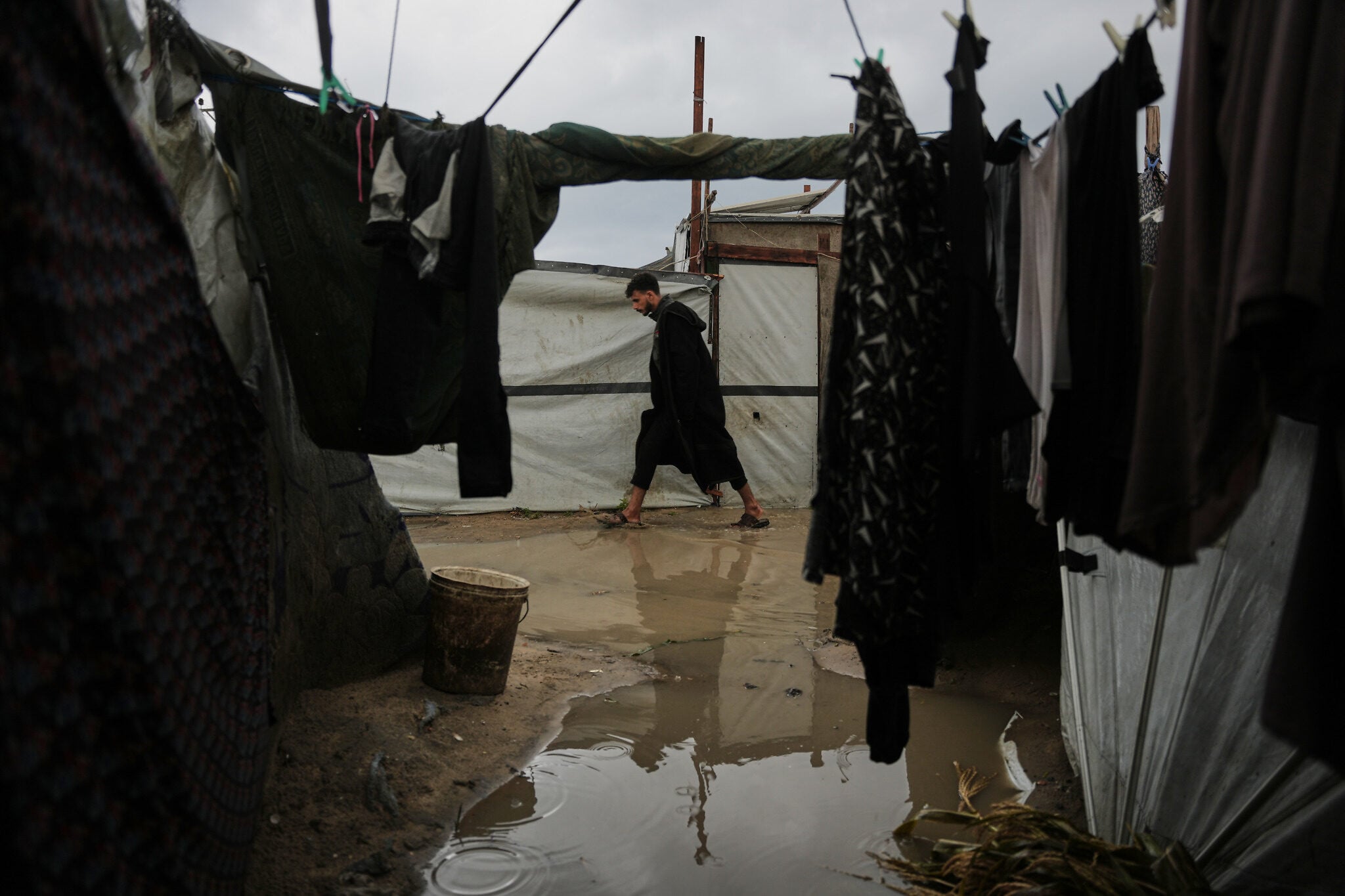
“This is the first day of rain, and of course we are already flooded. What will happen if it rains again the next day? This is only the first day and we’re already overwhelmed,” said the woman.
“Two weeks ago when it rained, I swear to God, I spent four days sleeping on blankets spread on the floor because the rainwater had flooded the bedding. Same now, the mattresses are wet, so we sleep on the ground,” said Um Muhammad al-Hersh, 45. “We were not able to save the mattresses, and all the clothes were soaked. Our suffering is repeated every winter.”
Maryam Odeh, 34, who lives with her children in Deir al-Balah, said, “We no longer know how to protect our children. My children ask me where we will sleep tonight, and I have no answer.”
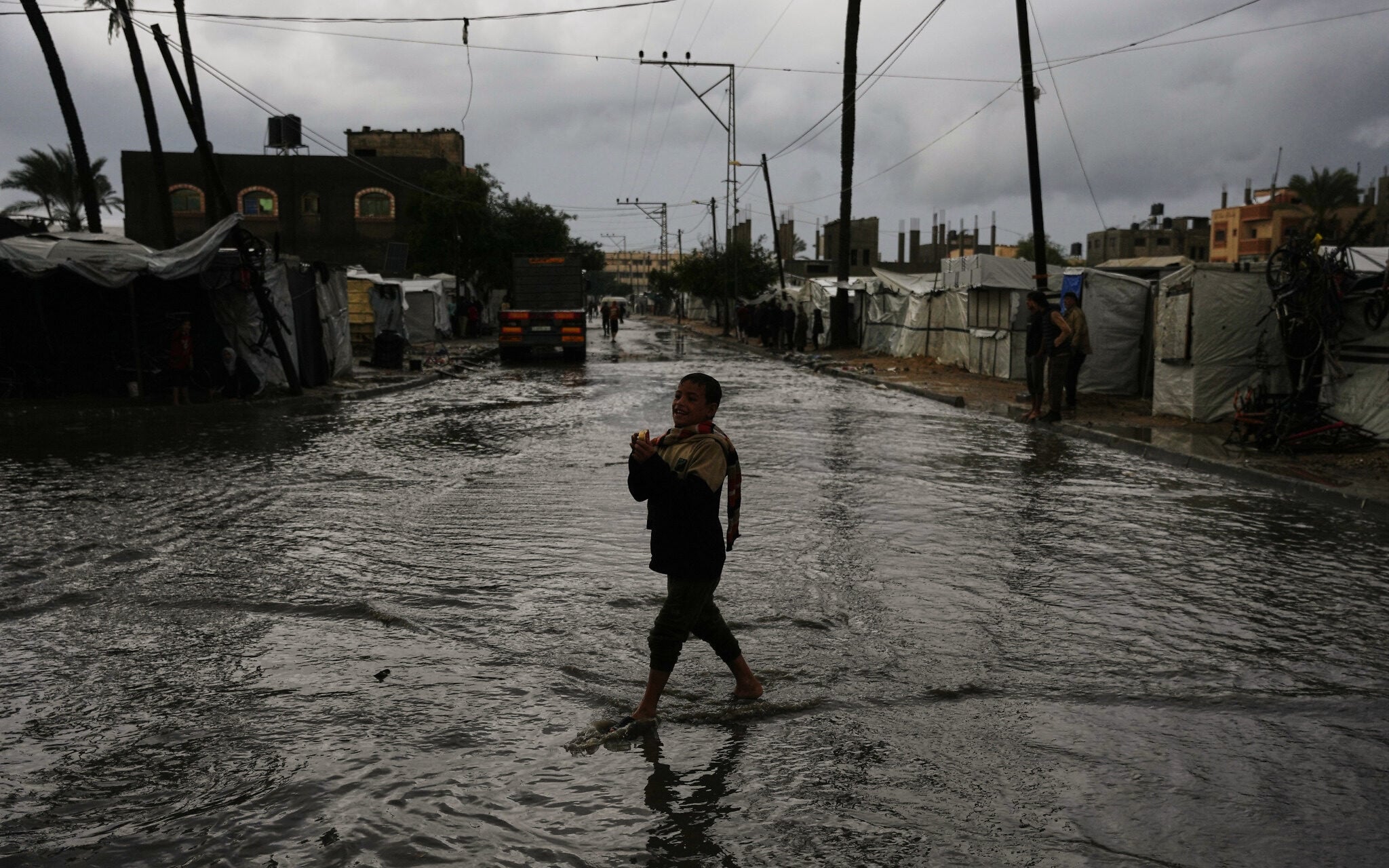
“We fear for our children not only from the flooding of the tents, but also from the cold and the widespread diseases,” added Khaled al-Najjar, 41.
A coalition of Palestinian civil society organizations warned in a statement of “the catastrophe that has come to threaten the lives of hundreds of thousands of residents,” pointing to the risk of the spread of diseases and epidemics.
The coalition, which includes dozens of local institutions and organizations, called for “pressure on Israel to allow the entry of humanitarian aid without restrictions.”
Hamas authorities urge Israel to allow entry of mobile homes
Hamas municipal and civil defense officials said they were unable to cope with the storm because of fuel shortages and damage to equipment. They said Israel had destroyed hundreds of vehicles, including bulldozers and others used to pump water, during its war against Hamas, and has since barred entry of construction equipment during the ceasefire.
Israel has said it will not allow reconstruction work to begin until Hamas agrees to disarm and relinquish control of the enclave.
Mustafa Qazzaat, a member of the Hamas-run Gaza City council and an official in the Strip’s emergency committee, said Israel has not allowed prefabricated homes to shelter the displaced in Gaza since the truce was announced, and has only permitted the entry of limited numbers of tents.
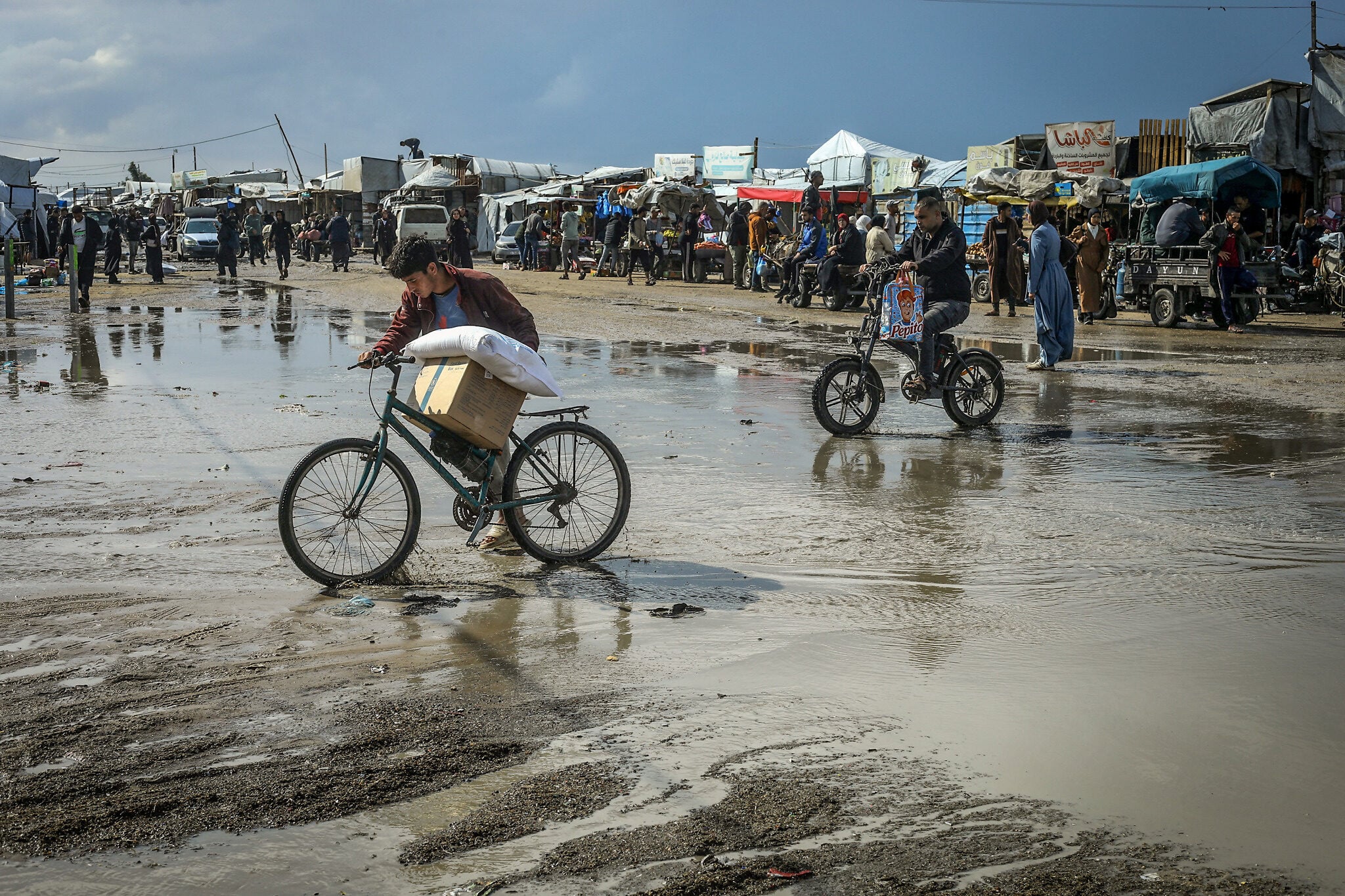
Qazzaat told AFP on Saturday that Gaza “needs 200,000 prefabricated homes urgently, in addition to the entry of heavy machinery to remove the rubble of destroyed homes and buildings, open main roads, and urgently provide electricity and heating.”
COGAT, Israel’s Defense Ministry agency that coordinates aid in Gaza, did not immediately comment on the accusations.
It said in a statement on Friday that it had stepped up efforts to improve sanitary conditions across Gaza before the heavy rain, which had been expected, in coordination with international organizations.
Floods, blackouts reported in Israel
Meanwhile in Israel, the Meteorological Service reported heavy rains across the coastal region and parts of the interior plains, causing floods in the northern town of Binyamina, which received some 50 millimeters (2 inches) of rainfall within an hour Saturday morning.
Residents in and near Gan Yavne, close to Ashdod, were cut off from electricity for most of Saturday after the electric grid in the area was damaged by the rainfall late Friday night, the Ynet news site reported.
Since Friday night, Tel Aviv has seen 40 millimeters of rainfall, Haifa 31 millimeters and Jerusalem 28 millimeters, while just 5 millimeters of rain fell in the Sea of Galilee, according to the service.
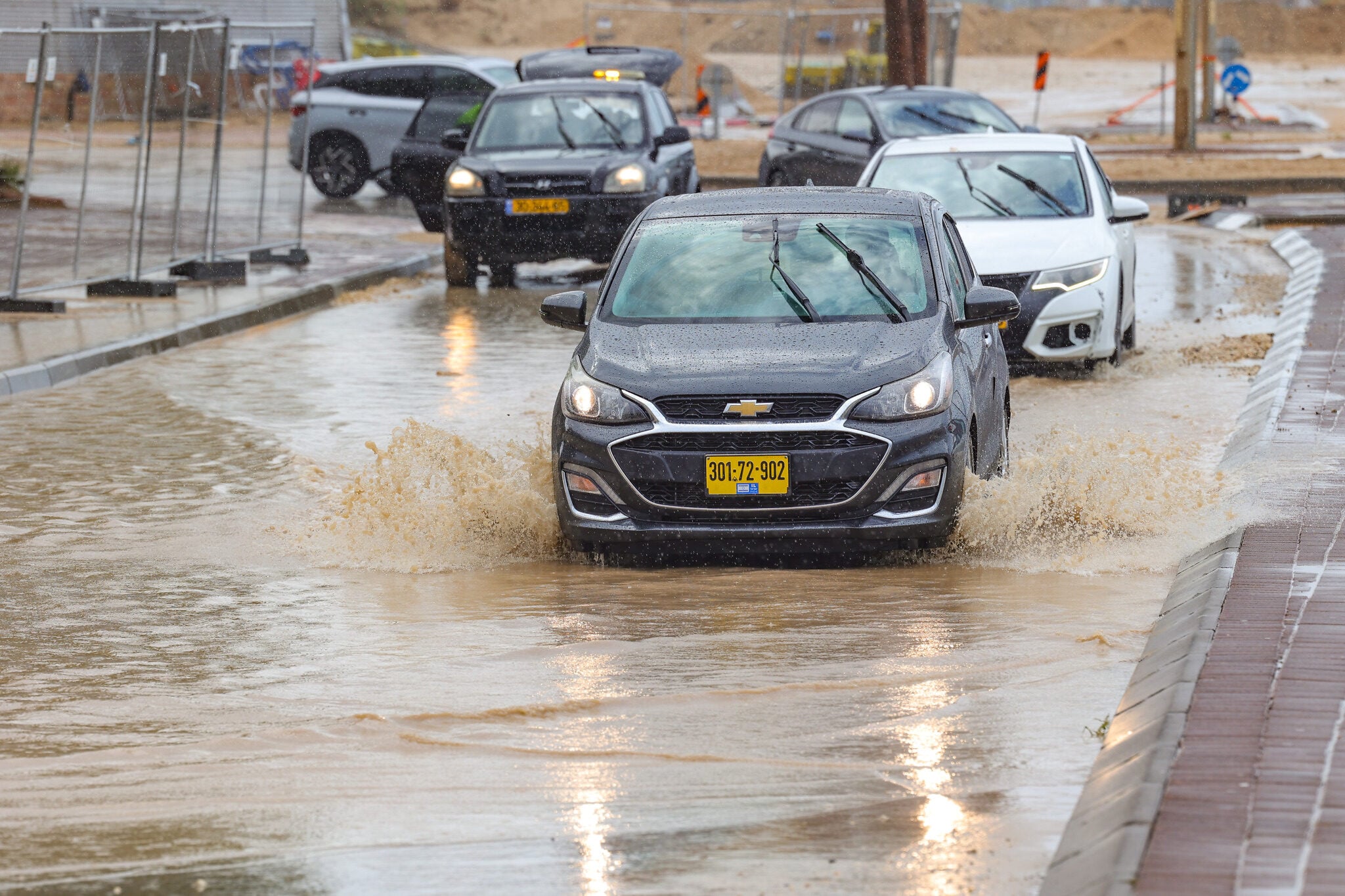
Authorities have warned of a heightened risk of flooding in parts of central and coastal Israel, especially in flash flood areas near rivers.
Police briefly closed Route 90 near the Dead Sea Saturday morning over concerns about possible floods, but reopened it later in the morning after the storm had largely passed in the area.
The Health Ministry also warned Israelis not to swim off Mediterranean coasts Saturday due to concerns that the heavy rainfall had pushed sewage into the sea.
According to the Meteorological Service, the rain was expected to continue into Saturday evening, after which it would lighten up, eventually stopping overnight.
Light rain is expected sporadically over the coming week, with temperatures dipping slightly across most of Israel.