Reagan’s shooter released from mental hospital after 35 years
John Hinckley Jr., who tried to assassinate the president in 1981, leaves DC facility as judge rules he no longer poses a danger
The man who tried to assassinate President Ronald Reagan has been released from a Washington mental hospital for good, more than 35 years after the shooting.
A spokeswoman for the District of Columbia’s Department of Mental Health said early Saturday that all patients scheduled to leave St. Elizabeths Hospital had been discharged. Hinckley was among those scheduled for discharge.
An Associated Press reporter saw a hired car pull into the driveway of the Hinckley home at around 2:30 p.m. Officers from the Kingsmill Police Department chased reporters away.
A federal judge ruled in late July that the 61-year-old Hinckley is not a danger to himself or the public and can live full-time at his mother’s home in Williamsburg.
Hinckley had already been visiting Williamsburg for long stretches at a time and preparing for the full-time transition. He’ll have to follow a lot of rules while in Williamsburg, but his longtime lawyer Barry Levine says he thinks Hinckley will be a “citizen about whom we can all be proud.”
Hinckley, who was declared not guilty on grounds of insanity, said after the March 30, 1981 shooting outside a Washington hotel that he wanted to kill Reagan to impress actress Jodie Foster, whom he became obsessed with after watching the film “Taxi Driver.”
Reagan’s family and his presidential foundation have consistently opposed Hinckley’s release.
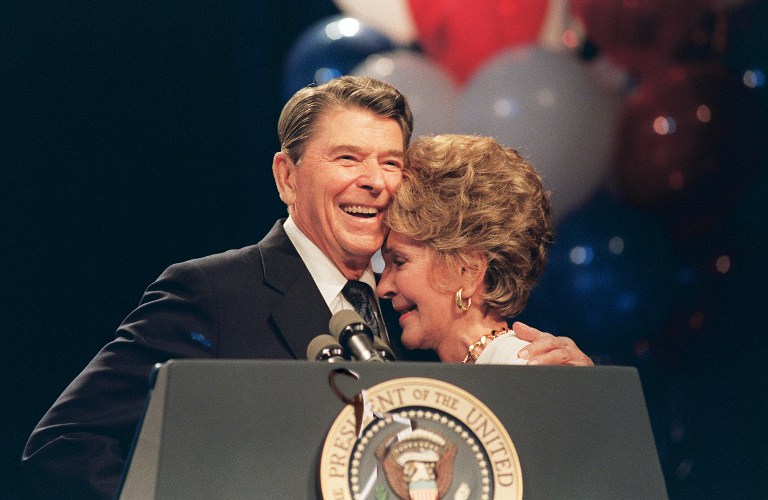
Daughter Patti Reagan Davis wrote on her website in 2015 that “I hope the doctors are right when they say that John Hinckley isn’t a danger to anyone, but something in me feels they are wrong.”
One thing troubling her, she said, was that while at St. Elizabeths, Hinckley had written to convicted mass murderers Ted Bundy and Charles Manson.
But Levine has argued since 2003 that evaluations by the hospital’s officials showed that Hinckley no longer posed any threat.
Three other men, including Reagan press secretary James Brady, were badly wounded in Hinckley’s attack.
The attempt on Reagan’s life sparked intense debate over gun violence and treatment of the mentally ill. Brady, who was left paralyzed, became a leading advocate for tougher gun controls.
When Brady died in 2014, a medical examiner attributed his death to the injuries received 33 years earlier, but no additional charges were filed against Hinckley.
The court order places dozens of detailed conditions on Hinckley’s “full-time convalescent leave” from St. Elizabeths, including a ban on contact with Foster, but said they can be phased out after a year to 18 months if he continues to make progress.
Hinckley must remain within 50 miles of his mother’s home, and cannot travel to any area where a current or former president, vice president or member of Congress is known to be.
He must return to St. Elizabeths for monthly monitoring and notify the Secret Service in advance about his intended route of travel.
He cannot post any writings or memorabilia on the internet or display them in person without authorization. He also cannot speak to the media.
The detailed conditions even include a requirement for monthly music therapy sessions with a board-certified music therapist.
St. Elizabeths, Hinckley’s home for most of the past 35 years, opened in 1855, and was the first federally-run psychiatric hospital.
Though it once housed as many as 8,000 patients — many of them indigent — the aging facility is being phased out and now holds only a few hundred.