Refugees may be greatest challenge in EU history, Germany says
Berlin calls for solidarity in managing crisis, as bloc's president says he may convene special summit
The unprecedented influx of refugees and migrants flooding into the European Union could be the bloc’s greatest-ever challenge, Germany’s foreign minister said Friday, adding Berlin expects 40,000 new migrants to arrive this weekend.
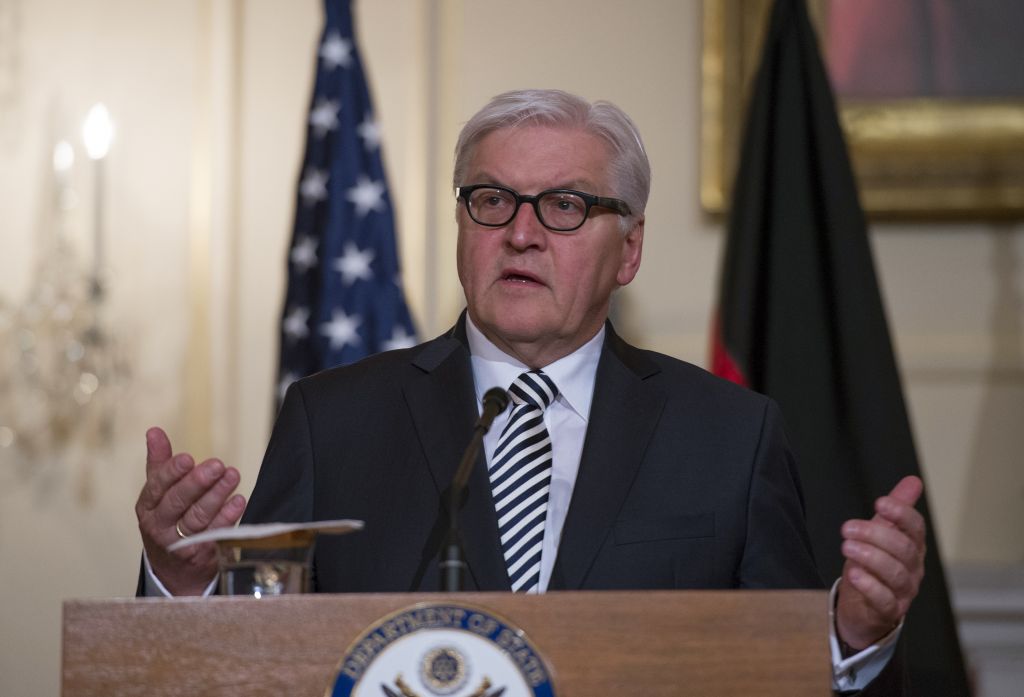
Europe’s largest refugee crisis since the end of World War II could be “the biggest challenge for the EU in its history,” said Frank-Walter Steinmeier, calling for solidarity at Prague crisis talks with eastern EU members who have ruled out binding migrant quotas proposed by the European Commission.
“If we are united in describing the situation as such, we should be united that such a challenge is not manageable for a single country,” he said, adding “we need European solidarity.”
“Germany expects 40,000 new migrants from the south at the weekend, despite the willingness of German people our possibilities are smaller and smaller,” Steinmeier told counterparts from the Czech Republic, Hungary, Slovakia and Poland.
Record numbers of people, many of them fleeing war and conflict in Syria and Iraq, continue to pour into Europe, with around 7,600 entering Macedonia in the last 12 hours.
EU President Donald Tusk said Friday he would call a summit of the 28 European Union leaders this month if their justice and home affairs ministers fail next week to agree how to share refugees throughout the bloc.
The justice and home affairs ministers are to meet in Brussels on Monday to act on EU proposals to relocate 160,000 asylum-seekers from overstretched Greece, Hungary and Italy, and for a permanent mechanism of binding quotas to deal with future emergencies.
Tusk said he had detected some signs of change among member states who up to now have been very reluctant to admit asylum seekers in the face of growing anti-immigrant sentiment.
“After contacts with member states (in the) last days, (I am) more hopeful today that we are closer to solution based on consensus and genuine solidarity,” Tusk said in another tweet.
France, which had been hostile to binding quotas, now supports Germany over the need for the permanent and mandatory reception of refugees to share the burden among all European countries.
There is new pressure for systematic and coordinated action to tackle the refugee crisis, particularly after the widely distributed photograph of a Syrian toddler lying lifeless in the surf of a Turkish beach.
However, Steinmeier failed during a meeting in Prague to convince counterparts from the Czech Republic, Hungary, Poland and Slovakia to accept the EU plan.
European Commission President Jean-Claude Juncker, the head of the 28-nation EU’s executive branch, unveiled the plans in a speech to the European Parliament in Strasbourg on Wednesday, in which he urged member states to back the proposals and said that “now is not the time to take fright.”