Rejecting normalization, Smotrich bids for right-wing boost at Saudis’ expense
Far-right finance minister’s incendiary 'camel-riding' comment seen as calculated move to energize his base and assert nationalist credentials, with little Netanyahu can do to stop him
When Finance Minister Bezalel Smotrich declared last week that the Saudis could just “keep riding camels” if a Palestinian state was a precondition for normalization with Israel, he ignited a political firestorm, offending Riyadh, infuriating Washington and embarrassing Prime Minister Benjamin Netanyahu, who is eagerly pursuing a US-brokered bridge to the Arab world’s biggest and most important player.
Even for a politician who routinely courts controversy with incendiary statements, Smotrich’s comment seemed audacious. Roundly denounced, he eventually apologized for the “inappropriate” camel jibe, but held firm on his rejection of diplomatic ties with Saudi Arabia if it meant allowing Palestinians to establish a state.
The episode, far more than a political gaffe or theater, was a strategic move that served a dual purpose for the leader of the far-right Religious Zionism party: advancing his electoral prospects while reinforcing the political realities that ultimately keep him tethered to Netanyahu’s coalition. Unlikely to do any real damage to normalization efforts or his alliance with the premier, Smotrich’s comment carried limited risk and a high likelihood of reward.
Smotrich “knows Bibi needs him,” a Knesset source said, using Netanyahu’s nickname. “He can embarrass Netanyahu and nothing will happen.”
Prof. Gideon Rahat, a senior fellow in the Israel Democracy Institute’s Political Reform Program, called the comments a “win-win for Smotrich,” allowing him to shore up his base and bolster his anti-Palestinian bona fides for right-wing voters.
Elections are currently set for October 2026, though they may be moved up if Netanyahu’s governing coalition collapses before then. If the vote were held today, polls have shown, Religious Zionism would fail to cross the 3.25-percent vote threshold to enter the Knesset.
“This is an election year, and [Smotrich] needs support looking toward the elections,” Rahat noted.
Without more support, Smotrich’s party may be forced to run on a joint ticket with rival far-right party Otzma Yehudit, led by National Security Minister Itamar Ben Gvir. Doing so would reduce Smotrich’s bargaining power in coalition talks and limit his ability to exert influence over Netanyahu and key policy decisions.
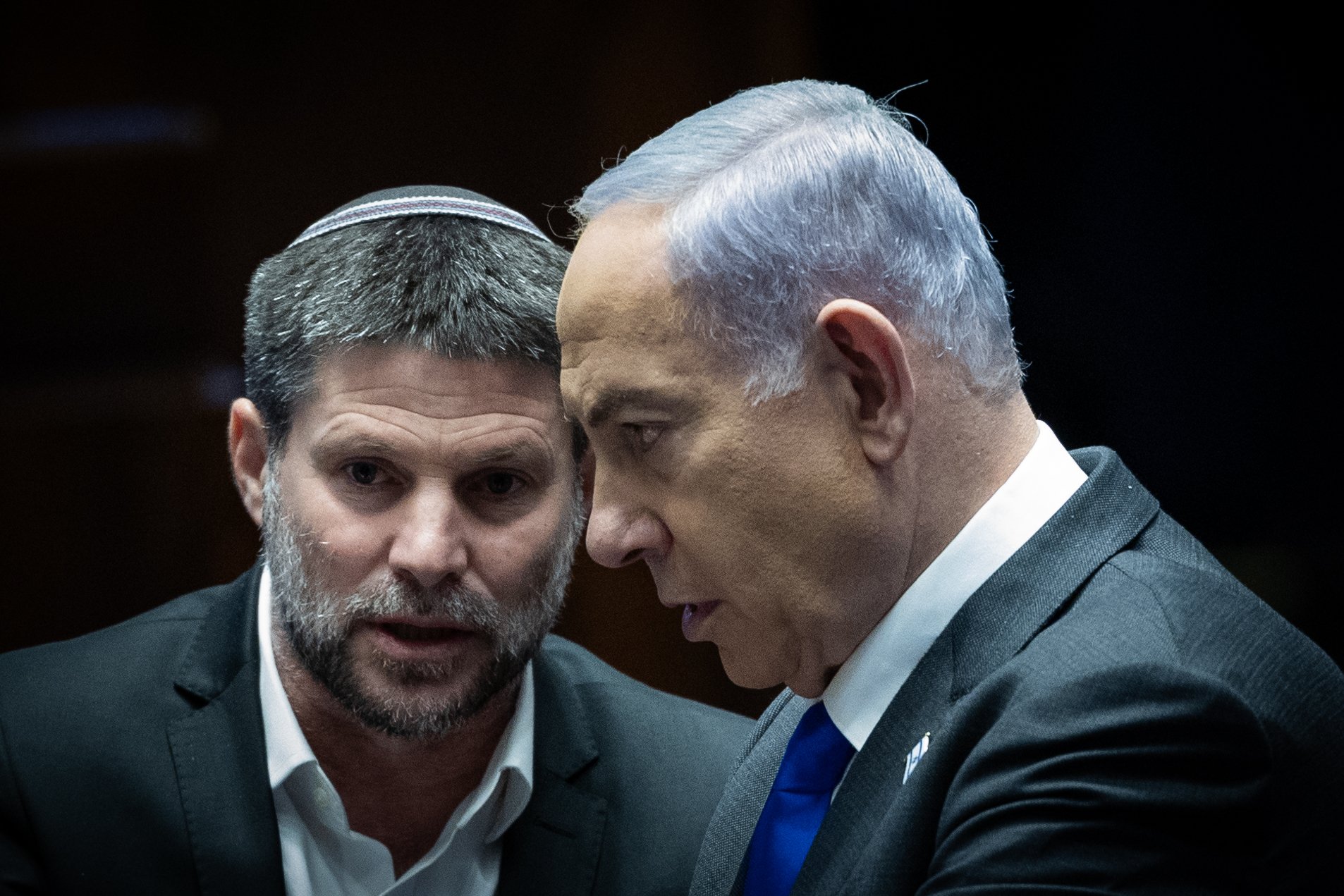
Smotrich has long positioned himself as a staunch champion of the settlement movement and proponent of annexation of the West Bank, and views Palestinian statehood, even as part of a diplomatic grand bargain, as an existential threat to that project.
Reports and comments from officials indicate that Israel will be expected to make some concessions aimed at paving a pathway toward Palestinian statehood in exchange for Saudi normalization. The issue is expected to be high on the agenda when Saudi Crown Prince Mohammed bin Salman visits US President Donald Trump at the White House later this month.
Forging diplomatic ties with Riyadh has generally been a consensus issue, with few on the right voicing criticism, giving Smotrich a unique opportunity to signal his uncompromising nationalist credentials to his supporters and energize his base.
A Knesset source close to the coalition described his remarks as a deliberate effort to “set himself apart from Ben Gvir and the rest of the right.”
“Nobody else would have made such comments — Smotrich is clearly looking to stand out,” they said. “This was a planned move. He’s using his remarks on the Saudis to distinguish himself and advance his campaign.”
Despite Netanyahu’s reported fury following Smotrich’s remarks — Yisrael Beytenu’s Avigdor Liberman described the premier as “apoplectic” — the finance minister seems to have suffered no consequences, partly because Netanyahu cannot afford to sideline him.
Netanyahu’s coalition no longer represents the Knesset majority, with the defection of the United Torah Judaism party over the lack of legislation exempting ultra-Orthodox from the military draft and the loss of Noam MK Avi Maoz.
“Netanyahu doesn’t have a coalition without Ben Gvir or Smotrich, so he will put up with them until the end,” said Yesh Atid MK Vladimir Beliak.
That political reality gives Smotrich enormous latitude. He can provoke, embarrass, and even undercut Netanyahu’s diplomatic goals without fear of retribution. The prime minister’s threats to “rein in” his ministers ring hollow.
Smotrich and Ben Gvir also engaged in similar political muscle-flexing a day earlier, backing a bill seeking to apply Israeli sovereignty to all West Bank settlements that Netanyahu had attempted to quash.
In both cases, Smotrich showed his willingness to put his ideology ahead of wider diplomatic processes.
“It was very authentic — it’s what he really thinks,” Rahat said. “He sees the world as a secondary environment to his own small messianic world. He’s very provincial in his worldview.”
A spokesperson for Smotrich did not respond to a request for comment.
For all of his public remonstrations, Netanyahu may actually privately value Smotrich’s provocations, which could allow him to appear relatively temperate while giving him room to drive a harder bargain with the Saudis.
Netanyahu “uses Smotrich’s extremism to present himself as a ‘moderate,’” charged MK Aida Touma-Sliman of the opposition Hadash–Ta’al party.
“Netanyahu can always present himself as the ‘adult in the room’ and a moderate alternative — both to Trump internationally and domestically,” Rahat said. “It actually makes him look good.”