Reporting the reported and scooping the scooped
Thursday's papers largely provide a news roundup by giving prominence to stories already covered by non-print media outlets
Two news stories take the Hebrew media by storm on Thursday: The arrest of Netanya Mayor Miriam Feirberg-Ikar on suspicion she took bribes, and the revelation that Palestinian Authority President Mahmoud Abbas was a Soviet spy in Damascus in the 1980s.
Arrested on Wednesday morning after an hours-long interrogation under caution as police ramped up a probe of suspected high-level corruption in her coastal city, Feirberg looks out at readers from the front page of every major paper.
Yedioth Ahronoth and Israel Hayom both lead with huge headlines declaring, “The city mayor arrested,” and, “The city mayor under arrest,” respectively. Haaretz goes for the slightly more wordy, “Bribery investigation in Netanya: City mayor Feirberg arrested on suspicion of taking millions.” All three, however, fail to add new information to the story, which broke first on internet news outlets nearly 24 hours before the papers went on sale.
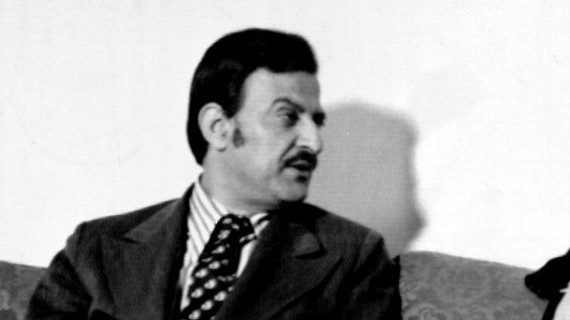
Yedioth and Israel Hayom both couple their front page Netanya investigation stories with Channel 1’s scoop from last night revealing documents purportedly showing that Abbas, code-named Krotov (mole), was involved with the Soviets while Mikhail Bogdanov, today Vladimir Putin’s envoy to the Middle East, was his handler.
Haaretz is the only major paper not to feature the story on its front page, choosing instead to relegate the Channel 1 report to page 10 with a short piece focusing primarily on the PA’s rejection of the claim.
Under the headline, “Ramallah dismisses report that Abu Mazen was a KGB agent,” Haaretz correspondent Jack Khoury summarizes the Channel 1 report in one short paragraph before detailing the Palestinian response at length.
“Palestinian officials dismissed the report, calling it yet another attempt by Israel and other countries to discredit Abbas,” Khoury writes. “Abbas didn’t respond officially to the report. However, sources close to him noted that Arab states and the US have recently been waging a campaign to pressure him to reinstate former Fatah official Mohammed Dahlan. Abbas has rejected what he termed a gross interference in Palestinians’ internal affairs.”
Instead, Haaretz leads Thursday’s paper with its own scoop, dedicating half of the front page and a double spread inside to the revelation that the attorney general recently blocked the police from conducting an inquiry against Prime Minister Benjamin Netanyahu.
The exclusive alleges that the nonprofit American Friends of Likud financed trips that Sara Netanyahu took abroad, and, while Netanyahu was head of the opposition, paid tens of thousands of dollars to his now-former chief of staff who headed the organization.
The report however fails to make clear what was wrong, legally or morally, about this form of funding, given that the NGO does not hide its aim in supporting the Likud party. Instead, the article raises questions about how a police investigation into the funding was halted by Attorney General Avichai Mandelblit.
“Although the police had seized relevant documents and recordings, Mandelblit instructed them not to pursue the case because he did not believe that it would result in criminal action against Netanyahu.” Haaretz reporter Gidi Weitz writes. “Mandelblit’s decision was controversial within both the police and the Justice Ministry. Some supported it, while others believed that the investigation should be continued because of its inherent potential. Mandelblit’s decision made it impossible for the police to take evidence from several of Netanyahu’s close associates, including the family’s attorney David Shimron.”
The Haaretz lead editorial returns readers to the political crisis from the beginning of this week with an impassioned defense of secular Tel Aviv after the decision to cancel construction work last Shabbat and an announcement by Interior Minister Aryeh Deri that he will be setting up a special committee to look into closing businesses on Shabbat as well.
“The identity of Tel Avivians and the entire country is under threat. If Deri indeed declares war on the free majority’s values, he will get a counter war. The free public in Tel Aviv will not allow anyone to make its life a misery,” the editorial declares defiantly.

It its editorial pages, Israel Hayom, which has in the past appeared to endorse Donald Trump for US president, features an analysis by contributor Prof. Abraham Ben-Zvi on the upcoming final two months of the election campaign. Ben-Zvi challenges the opinion of many commentators that Clinton goes into the final stretch with a clear advantage.
“It seems that what is perceived as the Democratic candidate’s axiomatic source of power is not necessarily a tie-breaker, and may actually be a source of trouble. Experience and familiarity with foreign affairs and defense do not necessarily point to fresh thinking, bold leadership, initiative or, above all, personal credibility,” he writes.
In its news coverage, Israel Hayom gives particular prominence to the Wikileaks announcement that the organization is planning on releasing leaked information on Hillary Cinton.
After asserting that the documents “will likely be yet another blow to the candidate’s standing,” the article rounds up the recent developments in the presidential campaigns, or at least one of them.
“Meanwhile, both presidential candidates are concentrating on promoting defense, with Republican nominee Donald Trump pledging in a speech in Philadelphia Wednesday, ‘I’m going to make our military so big, so powerful, so strong, that nobody — absolutely nobody — is going to mess with us,'” reads the report.
“At the same time, Trump’s campaign released Tuesday a letter signed by 88 generals and admirals endorsing his candidacy. The effort was initiated by Maj. Gen. Sidney Shachnow, a Holocaust survivor, and Rear Admiral Charles Williams. An NBC poll Wednesday further found that Trump leads Clinton by 19 points among members of the military and veterans,” it concludes.
comments