Smoke at Riyadh airport as Saudi capital issues first air raid alert amid renewed Yemen fighting
Despite earlier all clear, explosions head in city, flight disruptions reported; Iran-backed Houthis accuse Saudis of launching dozens of strikes at their positions in Yemen
RIYADH, Saudi Arabia — A large plume of smoke was visible near Riyadh’s main airport on Saturday after booms were heard and Saudi Arabia sent alerts overnight warning of potential danger around the capital, amid an escalation in attacks by Yemen’s Houthi group.
Reuters video and photographs showed a huge pillar of black smoke rising in the area, with the airport highway, main terminal building and other facilities in the foreground.
There was no immediate comment from the Saudi government’s media office in response to Reuters questions about the smoke and the overnight alerts.
Aircraft tracking website FlightRadar24 reported major issues at the Saudi capital’s Riyadh King Khalid International Airport, including cancellations and delays.
The airport was listed under the site’s maximum disruption index of 5.0, meaning the airport was seeing “major problems with long delays and several cancelled flights.”
The disruption follows an overnight air raid alert issued by Saudi authorities, the first since fighting in neighbouring Yemen intensified this month.
Hours after the early morning alert, residents told AFP on condition of anonymity that they heard what sounded like another round of explosions echoing through parts of the Saudi capital.
Explosions were heard in Riyadh early Saturday, AFP journalists reported, after Saudi authorities issued their first air raid alert in the capital since fighting returned to neighboring Yemen.
The Iran-backed Houthi rebels have been fighting with Saudi-backed Yemeni government forces since the country’s civil war reignited in July, when the group also declared a maritime blockade on Riyadh and began targeting its ships in the Red Sea.
This is the first time the conflict has reached the Saudi capital, further shaking a global economy already rattled by nearly seven months of war between the United States and Iran.
“The area is under a hostile aerial threat,” a message received shortly before 3 a.m. by residents of the Saudi capital warned, urging them to stay indoors.
AFP journalists then heard two explosions before the alert was lifted about half an hour later by Saudi Arabia’s civil defense agency.
Saudi Arabia is yet to comment on the threat mentioned in the warnings sent overnight to residents of several regions and has not identified where it originated from.
It comes after Riyadh accused the group of targeting Mecca on Wednesday, denouncing it as a “cowardly terrorist attack” on Islam’s holy city, which welcomes millions of pilgrims each year, both Sunnis and Shias.
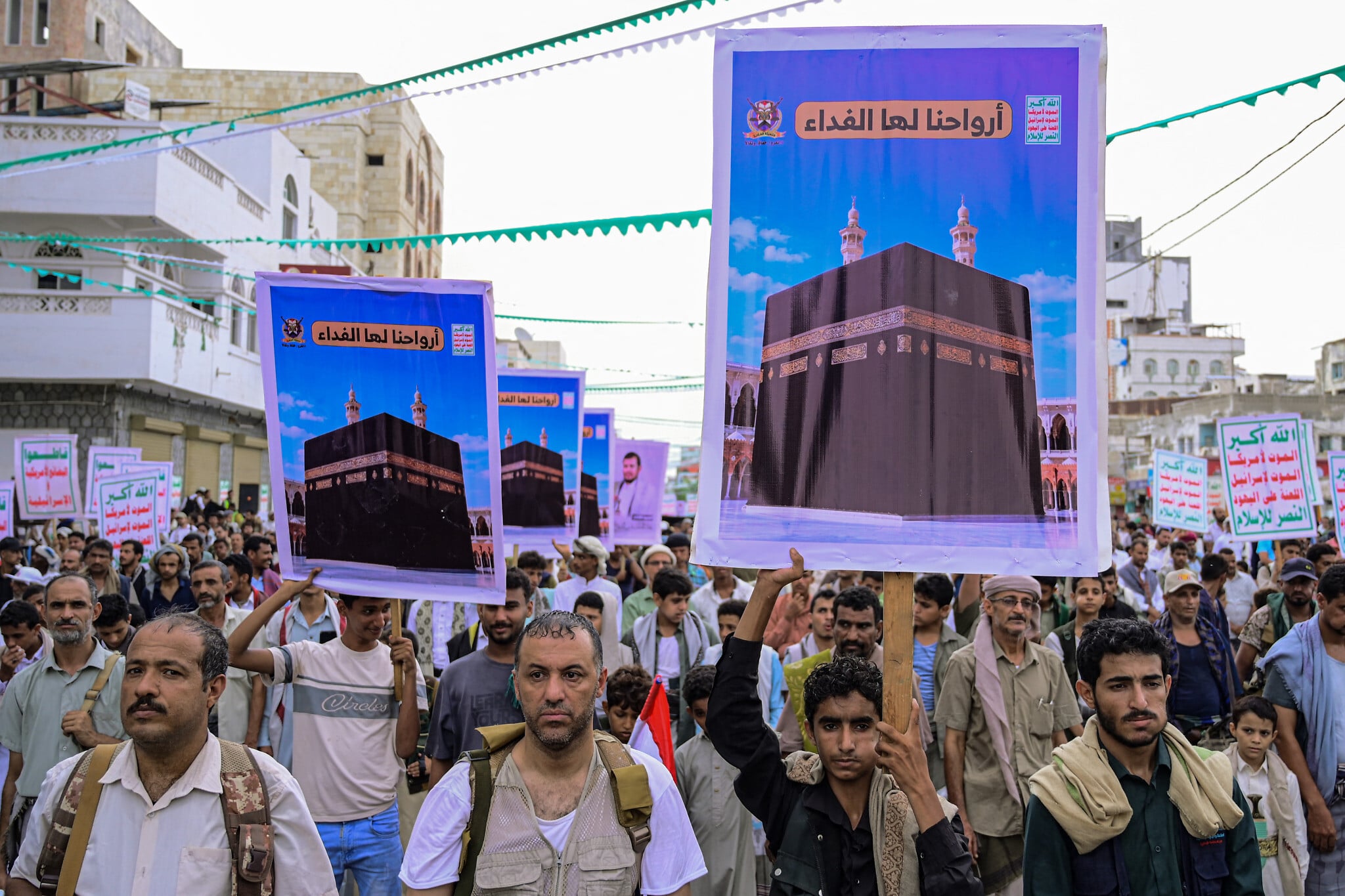
The Houthis strongly denied the accusation, calling it a “worn-out lie”.
In turn, the group reported dozens of retaliatory strikes carried out daily by Riyadh since their lightning offensive this month to take over the country’s entire Red Sea coast, giving them control over the vital Bab al-Mandab strait.
The Houthis said that Saudi Arabia had launched 26 strikes against areas under their control in the past 24 hours.
The group said that the number of Saudi strikes on its positions had reached 300 over the last week, saying they targeted areas across Houthi-held Yemen.
The war in Yemen broke out in 2014 when the Houthis seized control of the capital Sanaa and other regions, triggering in March 2015 a military intervention led by Saudi Arabia.
The fragile truce reached in 2022 between the warring parties collapsed in July, when the pro-Iranian fighters defied Riyadh’s control of Yemeni airspace by allowing an Iranian aircraft to land in Yemen.
Their recent takeover of the coastline has sparked global concern, with international maritime trade already heavily impacted by Tehran’s closure of the Strait of Hormuz since the start of the Middle East war in late February.
The Houthis, for their part, insist there is no threat to shipping in the sea lane — except for Saudi ships, from the world’s leading crude exporter.

Figures from maritime tracking firm Kpler showed that Saudi exports via the Bab al-Mandab strait had dropped since July, although five loaded ships had passed through in the last week.
The United States, which according to Axios last week refused to strike the Houthis at Saudi Arabia’s request, approved the sale of 48 F-35 fighter jets to the kingdom on Thursday.
The sale, worth $24.3 billion, is intended to help Riyadh “deter current and future threats,” the US State Department said.
The UN said Friday that the renewed fighting had displaced more than 112,000 people while nearly 3,000 others had fled across the sea to Djibouti, heaping further misery on an already struggling population.