Saudi-Palestinian solar umbrella takes heat out of Hajj
Developers team up to to build prototype parasol featuring fan, GPS people tracker and even USB ports
A Palestinian and a Saudi have teamed up to produce solar-powered sun umbrella that operates a fan, flashlight and GPS, and recharges electronic devices, to help Muslims making the Hajj (pilgrimage) to Mecca.
Temperatures at the Saudi desert site can top 40°C (104°F) in the summer — the season during which the pilgrimage will take place over the next ten years. The dates for the Hajj shift every year according to the lunar calendar; this year, it starts on September 9.
According to the Ynet news website, the idea for the umbrella, called a kafya (a traditional Arab head cover for men), came from Saudi Arabian researcher and environmental engineer Kamel Badawi. The engineer’s boyhood interest in snakes took him to the Hajj as a volunteer for many years to help out with snake-related incidents.
“We started our idea from the Hajj,” said Badawi’s partner, Palestinian consultant Manal Dandis. “In Mecca, there are no adapters for electricity and there are three or four million people who need to charge their mobile phones.”
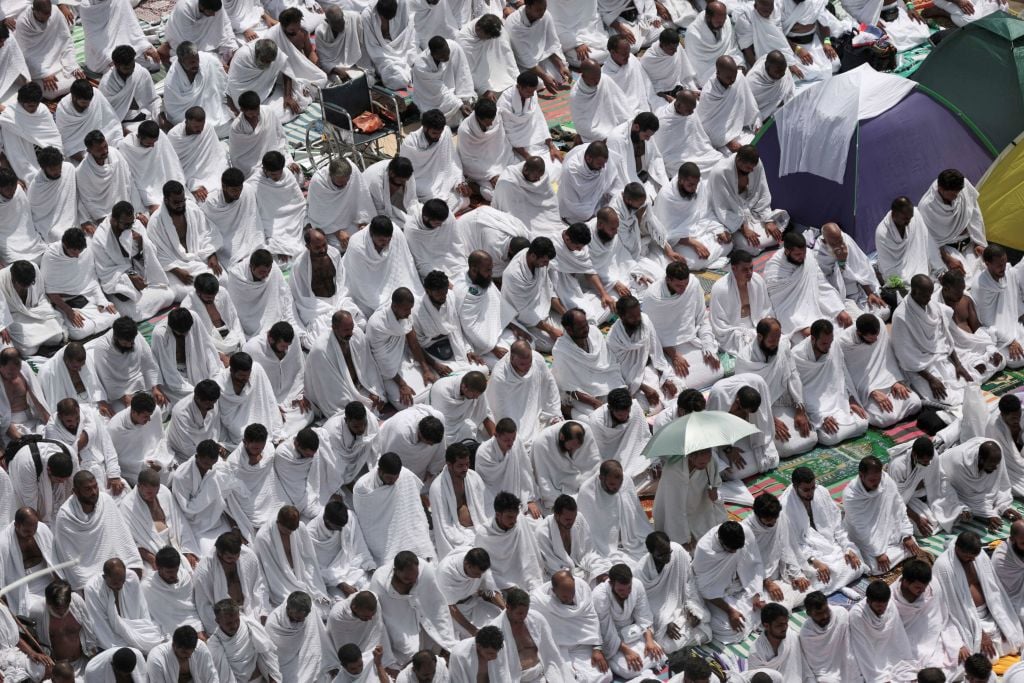
Pilgrims all wear white to the Hajj and are crammed together so that finding people from a distance can be challenging. The GPS system is aimed at enabling members of a group to wander off and find their fellow pilgrims when they return, as well as to locate and quickly reach people in distress.
With millions of people converging on Mecca from all over the world for an obligatory visit that is one of the Five Pillars of Islam, those in charge of the crowds must contend with crushes, illness and disease, as well as dehydration and heat exhaustion, particularly among the elderly and the weak.
Badawi and Dandis are now hoping that an international company or government body will help them turn their prototype into a commercially available product attractive to pilgrims as well as the general public.