Security cabinet holds emergency meeting over escalating tensions
Ministers discuss security measures at Temple Mount, Halamish terror attack, violent Palestinian protests
The security Cabinet met on Sunday night to try to find a way to reduce tensions over the Temple Mount, amid widespread unrest in Jerusalem and the West Bank and following a brutal terror attack in which a Palestinian killed three family members at a Shabbat meal.
The cabinet was said to be reviewing the continued use of the metal detectors put in place at the flash-point holy site after the killing of two Israeli officers by Arab assailants who emerged armed from the Temple Mount. A previous meeting on Thursday night decided to leave the detectors in place, reportedly against the advice of the IDF and the Shin Bet security services.
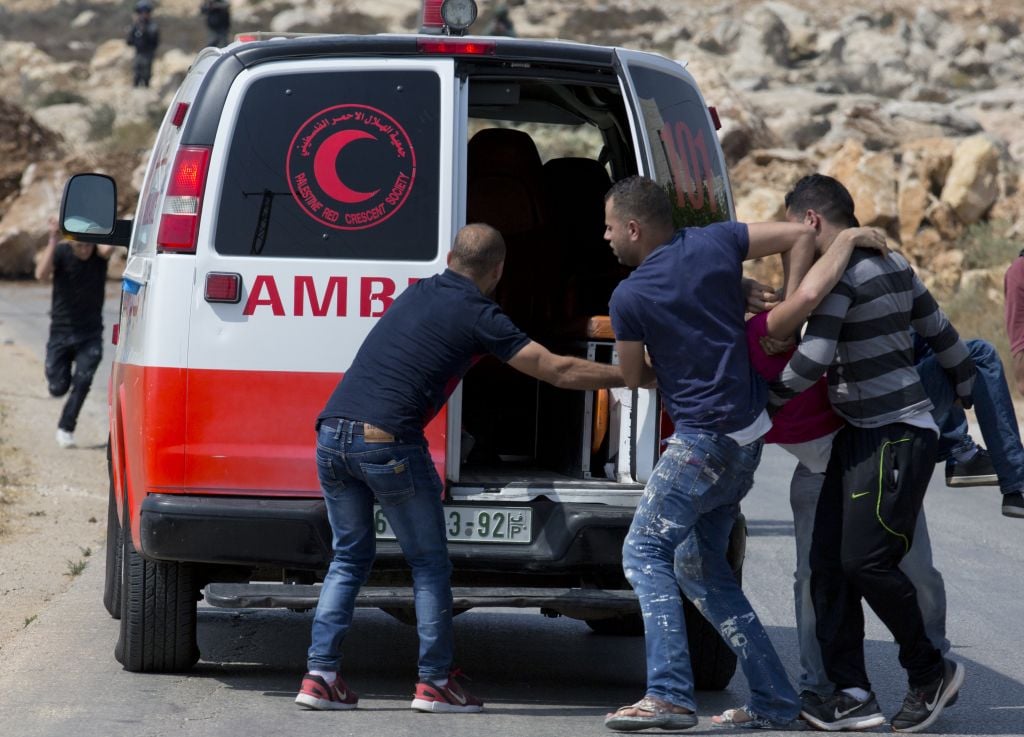
Since metal detectors were installed a week ago, five Palestinians have been killed and hundreds injured.
On Friday night, three members of the Salamon family celebrating the birth of a grandson were murdered in their home at the Halamish settlement by a Palestinian terrorist.
Palestinian political figures and Muslim religious leaders have fanned the flames by alleging that Israel is trying to break a fragile status quo and expand its control at the contested Jerusalem holy site under the guise of security. Israel vehemently denies this.
Public Security Minister Gilad Erdan, an outspoken supporter of the security measures, on Sunday raised the possibility that the metal detectors might be removed, provided an alternative is found.
He said security measures at the 37-acre esplanade, with eight entry gates for Muslim worshipers, were insufficient before the shooting attack.
“We need different security measures and means for checking (those entering) there,” he told Channel 2 news.
Erdan said it was “certainly possible that the metal detectors will be removed” if police recommend a different security program, but added that he was currently “not aware of such a program.”
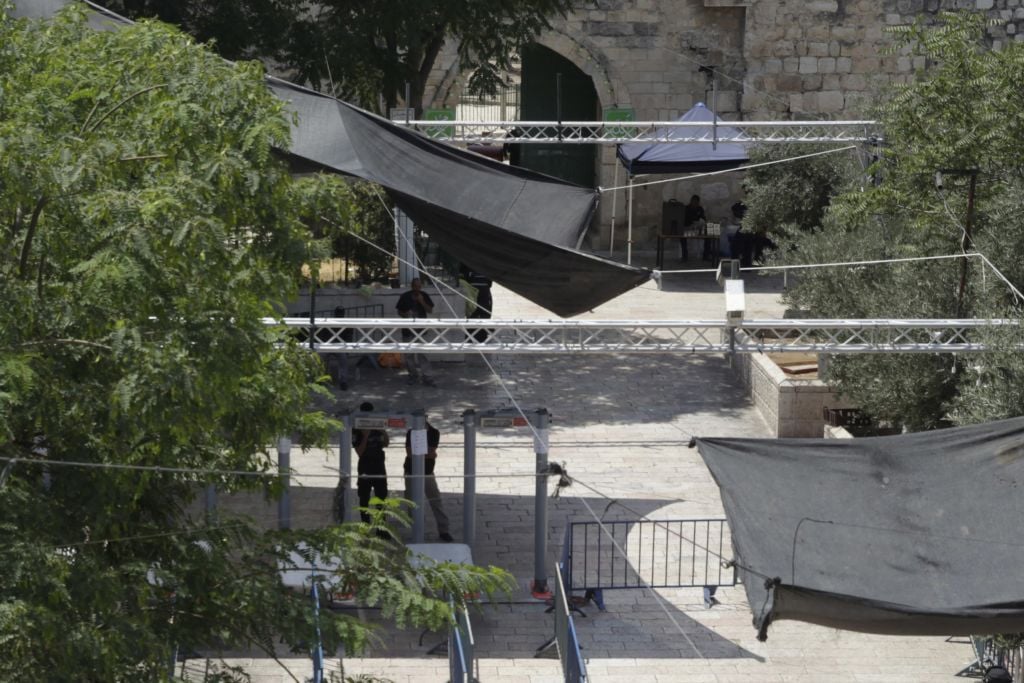
Police overnight Saturday-Sunday installed new surveillance measures near the Lions Gate of the Old City of Jerusalem, the main access point for Muslim worshipers to the adjacent Temple Mount compound.
According to Hebrew media reports, the camera can identify suspects carrying weapons without the use of metal detectors. Those spotted behaving suspiciously may then be checked by police with a hand-held metal detector.
As of Sunday afternoon, the metal detector gates at the heart of the controversy were still in place. However, police said, not all worshipers seeking to enter the compound are required to pass through them. Would-be entrants are assessed on a case-by-case basis.
However, Muslim leaders signaled earlier Sunday that they would reject any new proposal that leaves additional security measures in place.
The top Muslim cleric of Jerusalem, Mohammed Hussein, told Voice of Palestine radio that he demands a complete return to the security measures before the shooting attack.
And the Waqf on Sunday said in a statement that it would not accept any new Israeli security measures at the Temple Mount.
“We confirm our total rejection of the electronic gates and all new occupation measures that will lead to a change in the historical and religious status quo in Jerusalem and its holy sites, especially the Al-Aqsa Mosque,” the statement said.
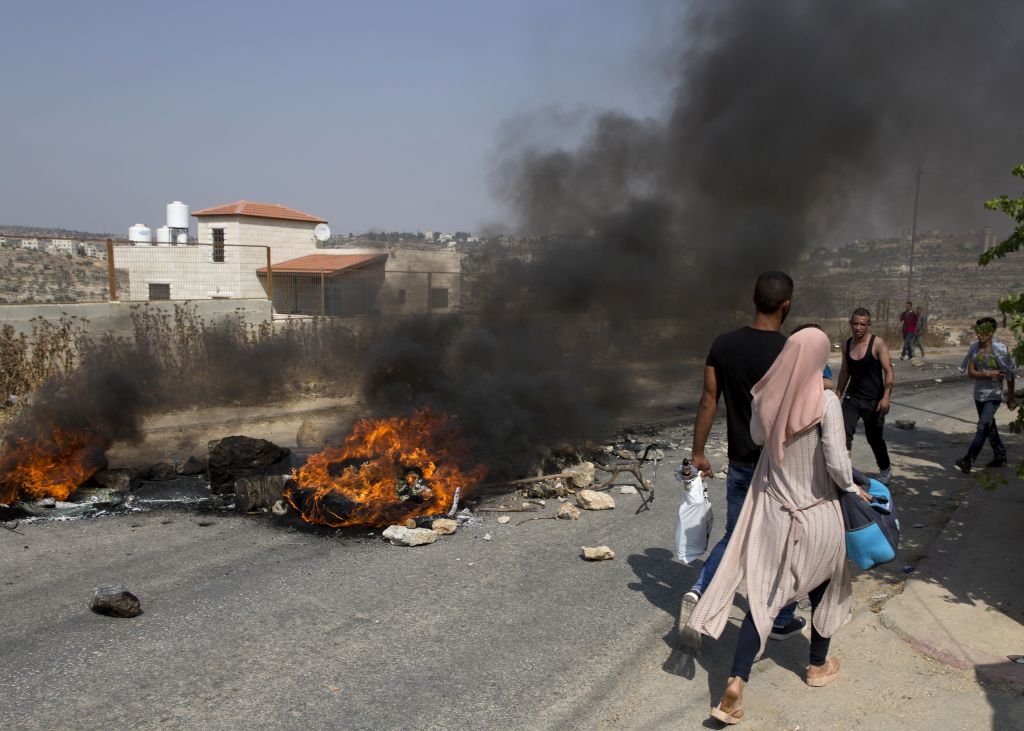
Disputes over the shrine, revered by Jews and Muslims, have set off major rounds of Israeli-Palestinian confrontations in the past.
On Friday, several thousand Palestinians clashed with Israeli security forces in the West Bank and in Jerusalem after noon prayers — the centerpiece of the Muslim religious week.
Three Palestinians were killed in clashes with Israeli forces on Friday during riots over the Temple Mount metal detectors, and two more were killed Saturday, including one who died when a petrol bomb he was planning to throw at Israeli security forces exploded prematurely.
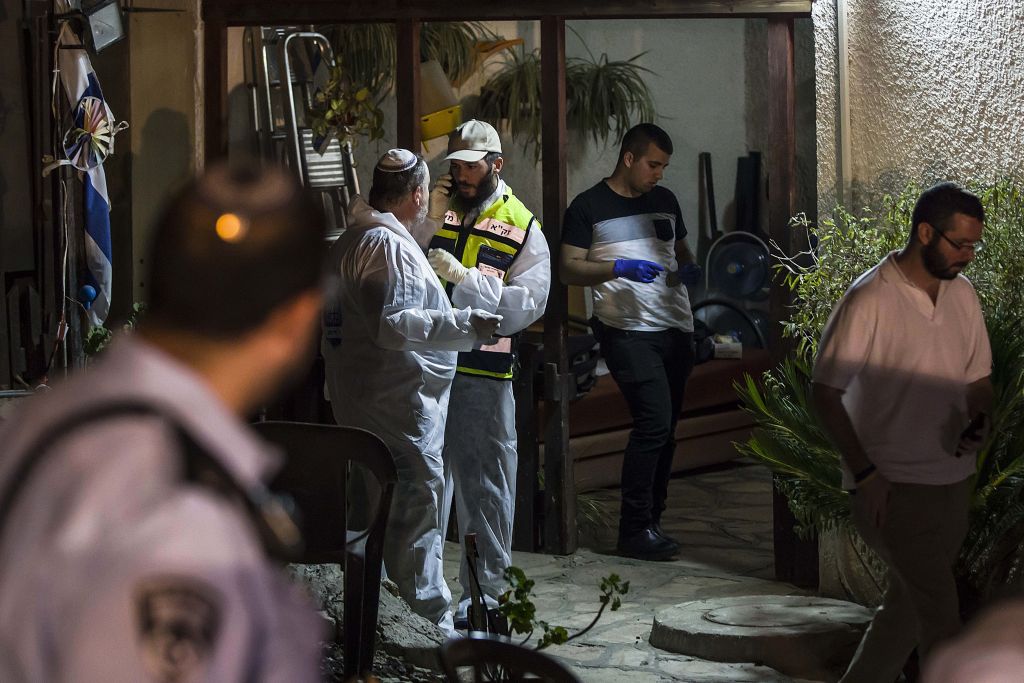
Late Friday night, a 20-year-old Palestinian stabbed and killed Yosef Salomon, 70, and his adult children, 46-year-old Chaya and 36-year-old Elad at their Halamish home. The elder Salomon’s daughter-in-law escaped to a separate room to shelter her young children.
Prime Minister Benjamin Netanyahu denounced the attack as “an act of terror, carried out by an animal who was incited with unfathomable hatred.”
At his weekly Cabinet meeting Sunday, Netanyahu said the killer’s home would be demolished swiftly in retribution and those who incited and glorified his act would be dealt with.
Meanwhile, Palestinian President Mahmoud Abbas confirmed that an earlier decision to freeze ties with Israel on “all levels” also included a halt to security coordination. Abbas has said the freeze would remain in effect until the metal detectors have been removed.
The official Palestinian news agency Wafa quoted Abbas as saying that “when we made these decisions, we took a firm and decisive stance, especially with regard to security coordination.”