Seven women set to take rabbinical exams after Rabbinate pledges equal conditions
Chief Rabbinate commits to equal testing conditions after the first-ever women's sitting in April was delayed; interest in test is growing among women, religious rights group says
Seven women are set to sit for the Chief Rabbinate’s rabbinical exams on Wednesday after the Rabbinate committed to providing them with the same testing conditions as men, according to religious rights group ITIM.
It will be the second time women in Israel have been permitted to take the exams, after the High Court of Justice ordered the Rabbinate to allow it last year after a years-long legal battle.
ITIM secured the written commitment on Sunday after petitioning the court to clarify how the exams would be administered after the Rabbinate appeared to place a series of obstacles for the first cohort of female exam takers.
In April, three women approved to take the exams for the first time sat for them, but encountered an unexpected delay. Their exams were held at a different location from the men’s, and the process was held up over a “technicality”: No proctor was present to answer their questions.
ITIM filed an emergency motion with the High Court, and at 2:55 p.m. — five minutes before the court’s deadline — the women were told that Chief Rabbi Kalman Ber would answer their questions by telephone.
“That’s something they should have been aware of beforehand,” ITIM head Seth Farber told The Times of Israel. The organization petitioned the court again last week to ensure the exams would be properly administered this time.
“I admit that last time I was naive, and I thought nothing would go wrong,” Farber said. “This time, we’re doing the work beforehand to make sure something like that doesn’t happen again.”

Although the Rabbinate has committed to providing equal conditions to the men’s testing environment, Farber noted that it did not say that it would offer accommodation for pregnant and nursing women during the exam, which can take five to six hours to complete. At least one woman scheduled to take the exam is nursing, he noted.
Certification exams administered by the Israel Bar Association do offer such accommodations, he pointed out. ITIM has no fundamental objection to holding the women’s test in a different place than the men’s test, as long as it takes place as planned, Farber added.
“We aren’t seeking special leniencies—only equal recognition for our learning and equal access to professional leadership roles,” said Rabbanit Chamutal Shoval, Director of the Women’s Institute of Halakhic Leadership at the modern Orthodox Ohr Torah Stone (OTS) educational network. “High-level halakhic study by women is a reality, and equal access to testing is a matter of basic fairness.”
Male and female applicants must pass at least six out of seven exams to receive rabbinic certification, covering major areas of Jewish law like kashrut, niddah (family purity laws), Shabbat, mourning, and marriage laws.
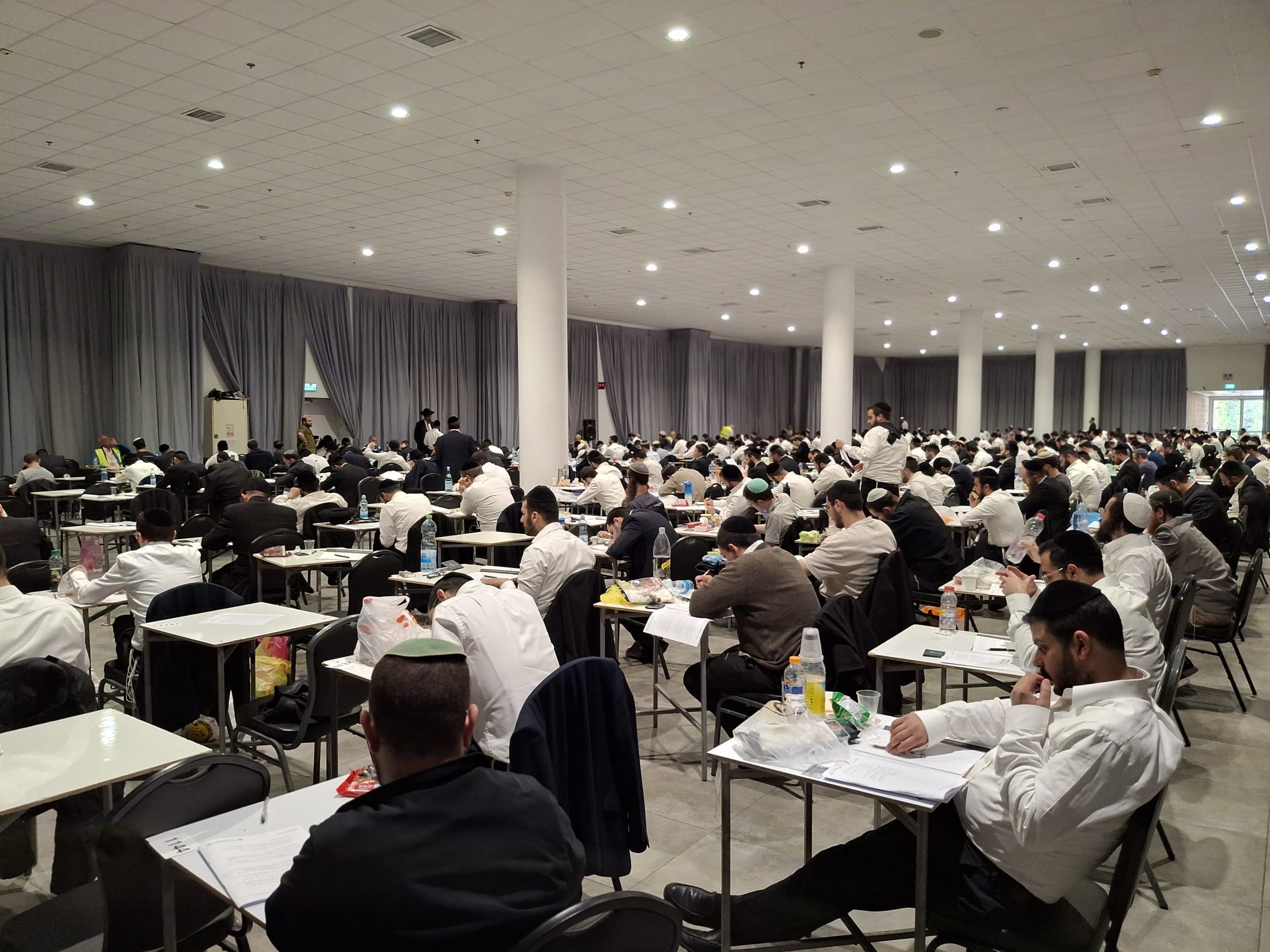
Last year, the Court ruled that the Rabbinate must allow women to take rabbinical tests on the basis of gender equality. The petitioners, which included ITIM and other rights groups, as well as several female Torah scholars, did not ask for the right to be granted rabbinical ordination, and the Court’s ruling did not cover the issue.
Despite ongoing gaps, “the momentum has turned” for women who wish to take the rabbinical exam and receive the same certifications and benefits as their male counterparts, Farber said.
The number of women taking this week’s test is more than twice as many as those sitting for the exam in April, “and I anticipate that it will continue to double again each time” in the near future, Farber said.
The law does not state that women are entitled to be ordained as rabbis within Israel, but the certification is considered equivalent to an academic degree for teaching positions, and it is a prerequisite to apply for specific public jobs.
Interest in studying for the rabbinical exams has been growing strongly, Farber said. Four institutions — Matan, Midreshet Lindenbaum, Migdal Oz, and Ein HaNatziv — have already opened programs training women for the exams, with a fifth, Midreshet Roni, expected to launch a program this winter, he noted.
“We hope the Rabbinate will recognize that this is a growing phenomenon and address it with respect and dignity,” Farber said.