Shapiro: ‘Biggest aid package in history’ to be finalized soon
Following 9/11 commemoration, US envoy says new US-Israel defense deal, America's largest ever, will be concluded 'in the very near future'
A new US military aid package to Israel — said to be the largest in American history — is expected to be finalized in the very near future, US Ambassador to Israel Dan Shapiro said on Sunday.
Speaking at a counter-terrorism conference shortly after a 9/11 memorial ceremony in Israel marking 15 years since the deadliest terror attack on US soil, Shapiro said the new agreement would be in place until 2029 and would constitute “the US’s biggest aid package to any other country in history.”
The deal, he said at the Interdisciplinary Center Herzliya’s International Institute for Counter-Terrorism, “would be finalized in the very near future.”
US and Israeli officials have been in talks for months to hammer out a memorandum of understanding that would increase US military aid to Israel for the next 10 years, due to be renewed before 2018.
The current aid package stands at $3 billion annually, and Israel has asked that the amount for the next 10-year deal be raised to $3.7 billion each year, according to reports.
In addition to the extra $700 million per year, Israel is also reportedly asking that the memorandum include a separate deal for missile defense spending, which could raise the total amount to more than $4 billion annually.
The US Congress in the past has provided the Jewish state with extra missile defense spending on a provisional basis, totaling up to $600 million in recent years.
The aid package is seen in Israel as key to helping it maintain its qualitative military edge over potential threats in the region, including from an emboldened Iran flush with cash after many nuclear-related sanctions were ended over the past year in a deal signed with world powers.
For the US, Israel is a rare island of stability in a region in turmoil, as well as an ally on non-nuclear security issues in the region, including cyber warfare and efforts to rein in Islamist terror groups. Missile defense technologies developed in Israel using US funds are available to US defense contractors involved in the development. Some of these Israeli-made technologies are set to be deployed to protect US troops and allies in other global trouble spots.
The US has either jointly developed or financed all three tiers in Israel’s missile defense program — Iron Dome (short-range missile interceptor), David’s Sling (medium range) and Arrow (long range).
One key area of dispute in the aid talks, according to past reports, is America’s demand that a larger amount of the funds be spent on American-made products. Currently, Israel can spend 26.3 percent of US military aid buying from its own domestic defense companies.
The US also reportedly wants to remove a clause in the memorandum that allows Israel to spend $400 million a year on “military fuels.”
In April, more than 80 of the 100 sitting US senators signed a letter calling on President Barack Obama to increase foreign aid to Israel and immediately sign an agreement on a new package.
Prime Minister Benjamin Netanyahu has hinted he may wait to negotiate with Obama’s successor, who takes office in January 2017, to try and secure a better deal.
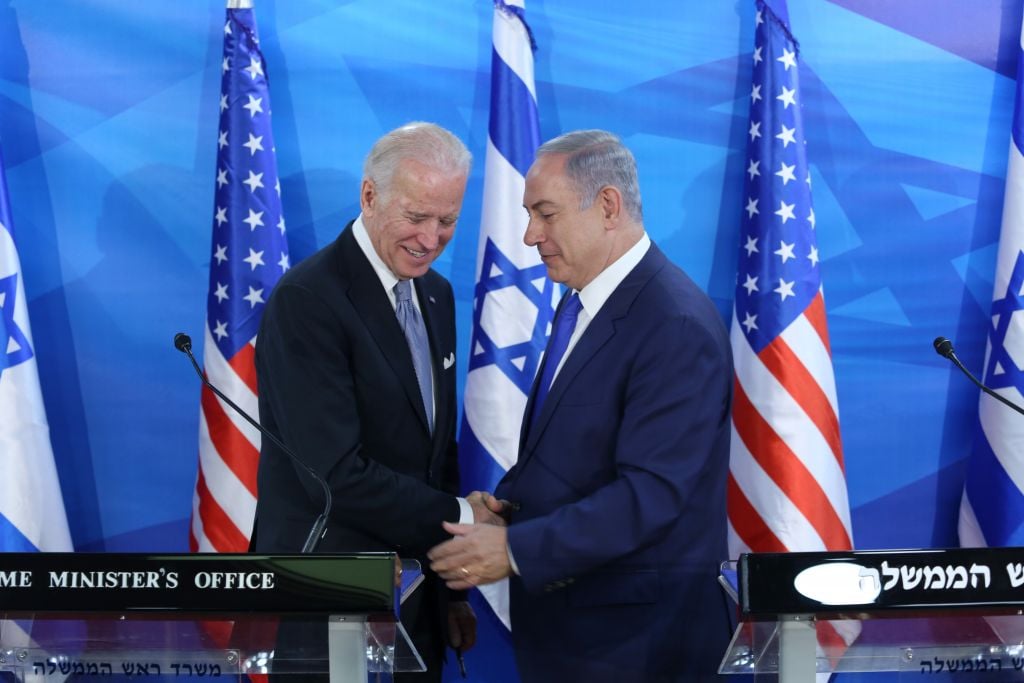
In March, US Vice President Joe Biden reportedly warned Netanyahu that the aid package will be less than what Jerusalem seeks, but offered reassurances the amount would reflect the security needs of the country.
During Biden’s meeting with Netanyahu, described by an Israeli official as “friendly, cordial and warm,” the vice president urged the prime minister to accept the offer, assuring him the agreement could always be amended at a later date.
“In the past we’ve known how to make adjustments to agreements after they’ve been signed,” he said, according to Channel 10, which cited senior Israeli officials.
In November, Israel was said to have completed its “shopping list” of desired American military materiel, which reportedly included a request for V-22 Ospreys, planes believed capable of reaching Iran.
Israel also reportedly sought the V-22s from the US in 2012 when contemplating a strike on Iran’s Fordo enrichment facility, but budgetary restraints took the Ospreys off the negotiating table.