Shas chair Deri said seeking to resign as party leader after poor election result
Council of Torah Sages expected to meet this week to discuss request, though source close to Deri says they're unlikely to allow him to step down at this time
Shas chairman Aryeh Deri has asked the ultra-Orthodox party’s Council of Torah Sages to let him step down as party leader, according to Hebrew media reports on Wednesday, after he led the party to its worst election result in decades last week.
The council was expected to convene later Wednesday to discuss Deri’s request, some reports said, although Ynet reported the meeting would not take place until Friday because one council member was abroad.
Deri’s future as the leader of Israel’s ultra-Orthodox Sephardic party has been in question since Shas won only six seats in last week’s election, down from 11 in 2022 and its worst result since 1992.
Since then, Deri has not appeared in public, and Channel 13 and Kan news reported that senior figures within Shas, including its senior spiritual leader, former chief rabbi Yitzhak Yosef, were looking to replace him.
It was not clear from the reports whether Deri’s alleged request to resign was prompted by pressure from the party, or whether it was an independent choice.
According to Channel 12, the Council of Torah Sages, the party’s rabbinical leadership, was expected to make one of three decisions in response: It may allow him to resign both as a member of Knesset and as the party’s chair; it could let him resign only as a lawmaker but stay on as party chair; or it could refuse his request entirely.
An unnamed source close to Deri told the news outlet that the assessment was that he would stay on as party leader, as the council “simply will not allow him to step down from the party’s leadership at this stage.”
Shas, in response to the reports, said the claim that Deri had informed the Council of Torah Sages of his intention to resign was “incorrect.”

Beyond not being seen in public, Deri has also reportedly declined to speak to Prime Minister Benjamin Netanyahu or other political figures outside of his own party since Shas’s dramatic losses on October 27.
Netanyahu nevertheless issued a statement of support for the Shas leader on Monday, saying he “contributes greatly to Israel’s security, in the cabinet,” and praising him for having “stood firm for years in the face of the unrestrained attacks by the media and the left, who want to crush Shas.”
Following Netanyahu’s statement, Shas announced that it would recommend Netanyahu to President Isaac Herzog as the lawmaker who should be tasked with forming the next government.
It did so despite Deri’s declaration that the party would not join or support the next government unless it passes legislation preserving sweeping military service exemptions for Haredi yeshiva students, something that Netanyahu’s government failed to do during its four-year term.
The matter of draft exemptions for Haredim is believed to be a key factor behind dwindling support for Shas.
Historically, traditional non-Haredi Mizrahi Jews have made up a core part of Shas’s voter base, along with Israelis from poor and working-class backgrounds. However, the party’s push for blanket military exemptions for ultra-Orthodox men appears to have alienated that part of its voter base, with some localities recording a significantly lower percentage of votes for Shas in 2026 compared to 2022.

In Netivot, a traditional Shas stronghold, the party received 28.9% of the vote share, down from 42.5% in 2022, according to the Central Election Committee breakdown of votes by locality. In Ofakim, another stronghold, the party dropped from 23.12% of the vote share in 2022 to 14.7% in 2026.
The party also recorded losses in ultra-Orthodox towns, including in Bnei Brak and Modiin Illit, with a roughly five percent drop in vote share in both.
A veteran politician with two criminal convictions under his belt
Deri, 67, is Shas’s longest-serving leader, having served as chair between 1990 and 1999, and again from 2013 until the present.
His first term as party chair ended in 1999 after he was convicted of bribery, fraud, and breach of trust for taking bribes as interior minister. He was handed a three-year prison sentence, of which he served 22 months.
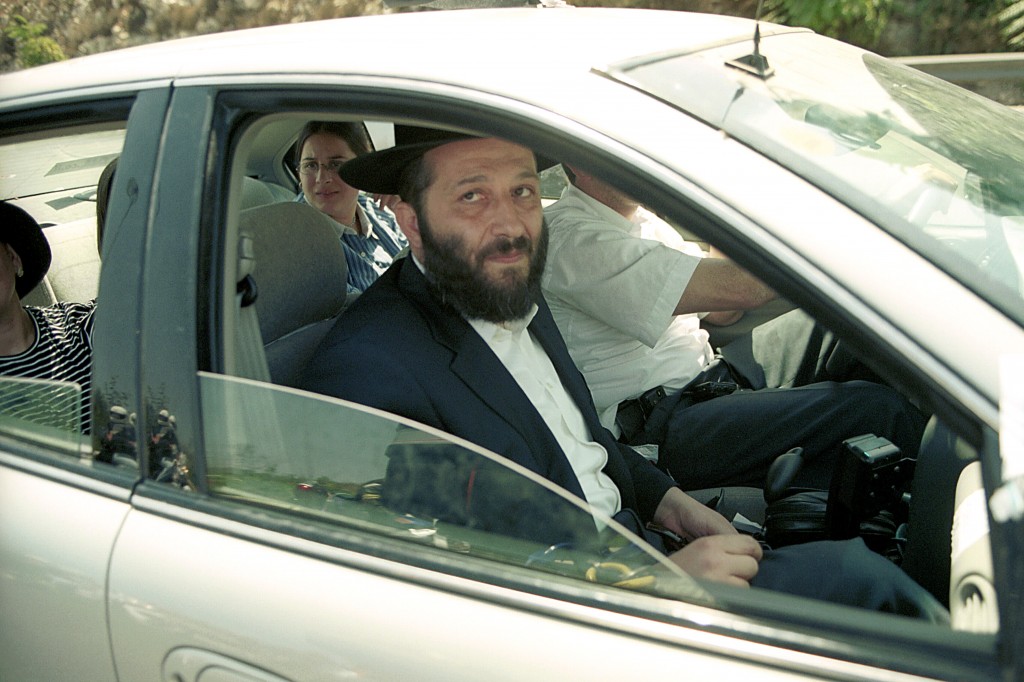
He returned to politics ahead of the 2013 Knesset election, and reclaimed the leadership of Shas shortly before the 2015 election, ousting Eli Yishai, who had led the party in his absence.
He then returned to his Interior Ministry post in 2016 after a court ruled that his prior conviction did not disqualify him from the position.
But in 2022, Deri was convicted once more, this time for tax offenses, and, after entering a plea deal, was handed a 12-month suspended prison sentence and a fine of NIS 180,000.
He resigned from parliament ahead of the sentencing in order to dodge a conviction of moral turpitude that would have barred him from office for several years.
Netanyahu then tried to appoint him to lead both the interior and health ministries, but the High Court of Justice shot this down in January 2023, calling his appointment as a minister “unreasonable in the extreme” due to his criminal convictions.