Snow-covered Jerusalem, north battle day of disruptions on roads and in schools
Some areas of capital see six inches of snow; schools shut in some parts of north, West Bank, with delayed start in Jerusalem; man dies of hypothermia in Kiryat Gat
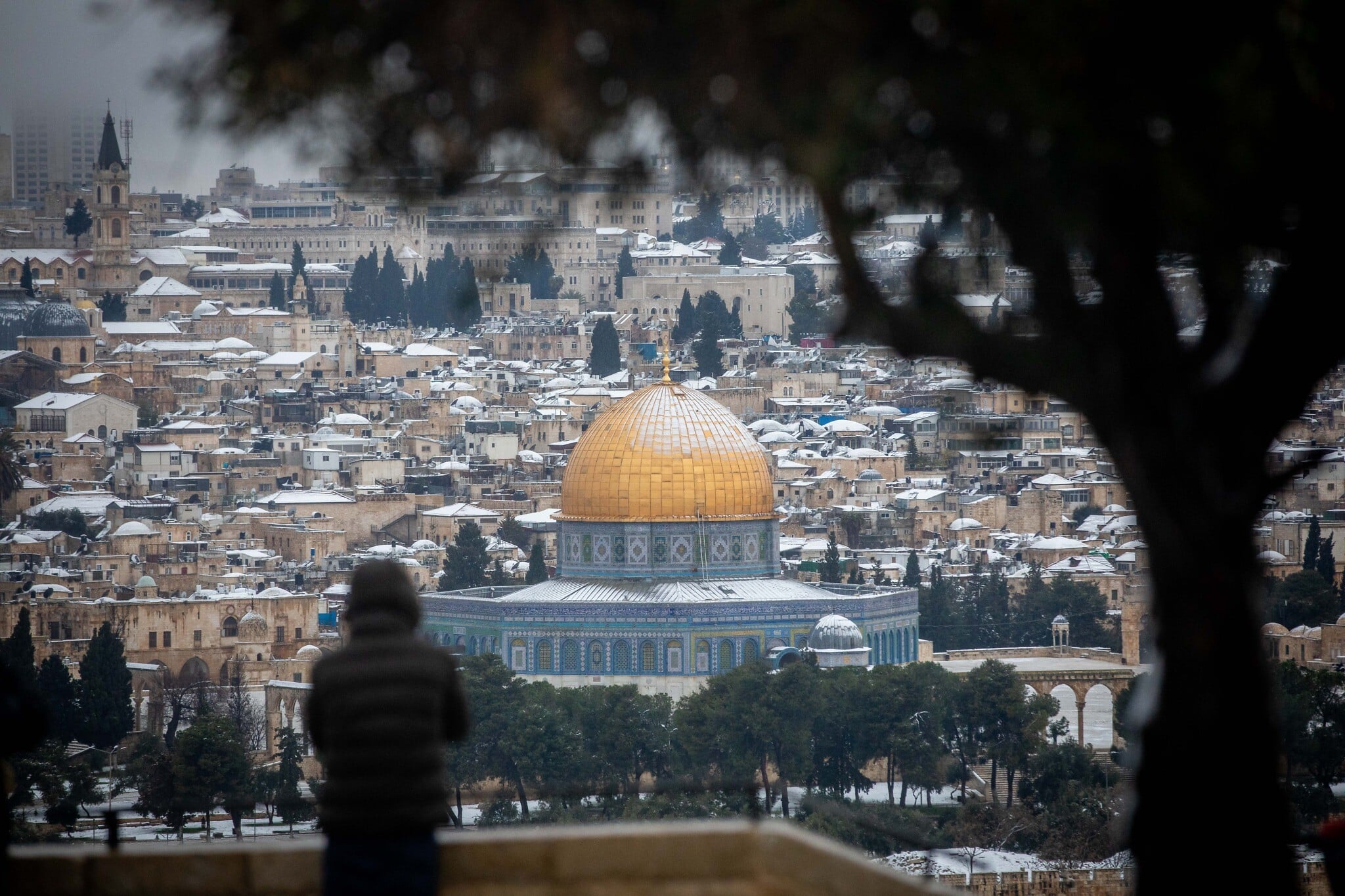
Residents of Jerusalem and the surrounding area as well as parts of the north of the country woke up to a winter wonderland on Thursday morning, as snowfall brought disruption to the traffic and education systems.
The south of the country also saw plunging temperatures and there was even a light dusting overnight in Mizpe Ramon in the Negev Desert in the south of the country.
A man died of hypothermia overnight in the southern town of Kiryat Gat.
Emergency services said they found him in the street and were unable to revive him.
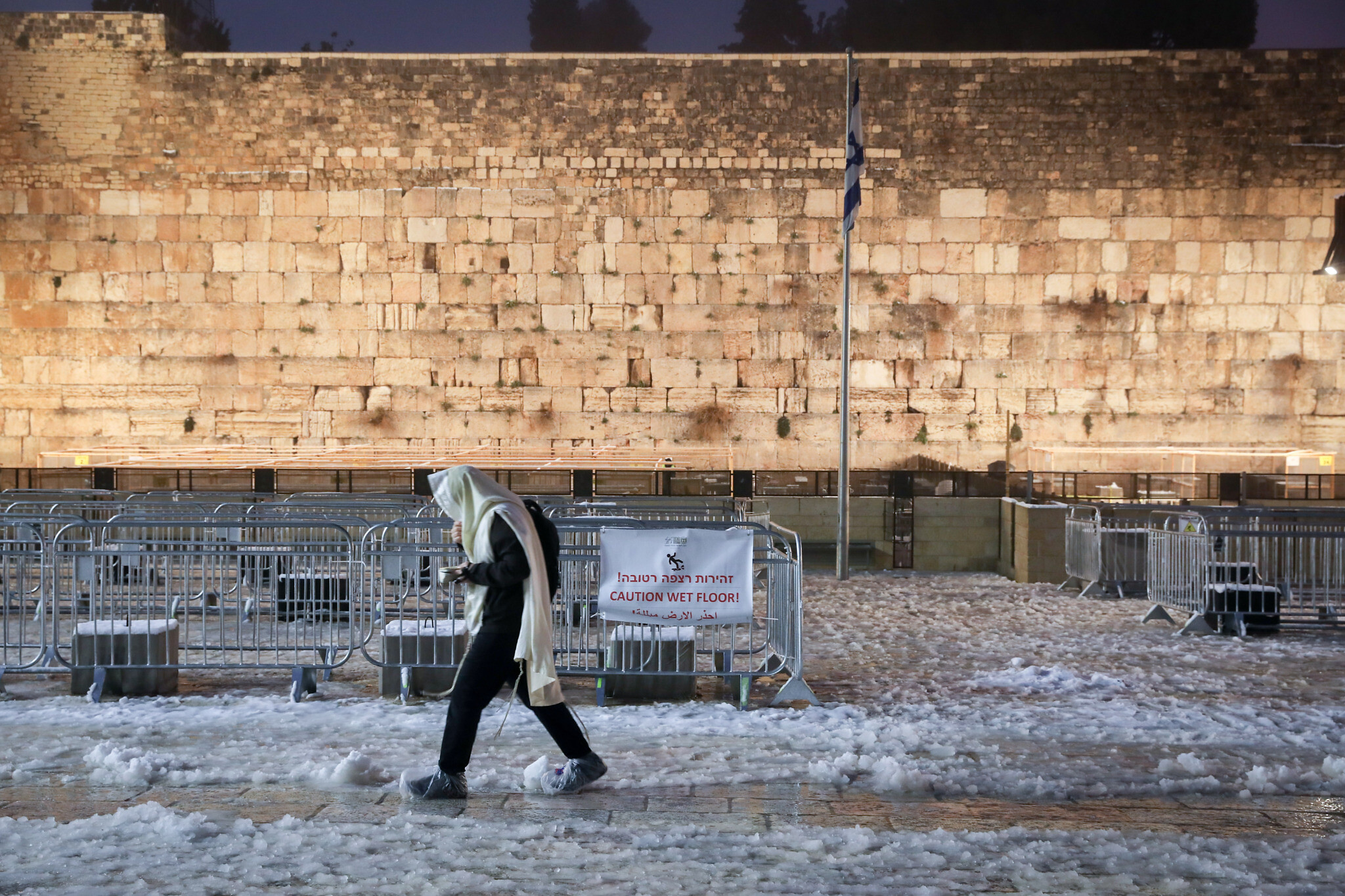
According to estimates by the Jerusalem municipality, some areas of the capital saw accumulations of up to 15 centimeters (six inches) of snow.
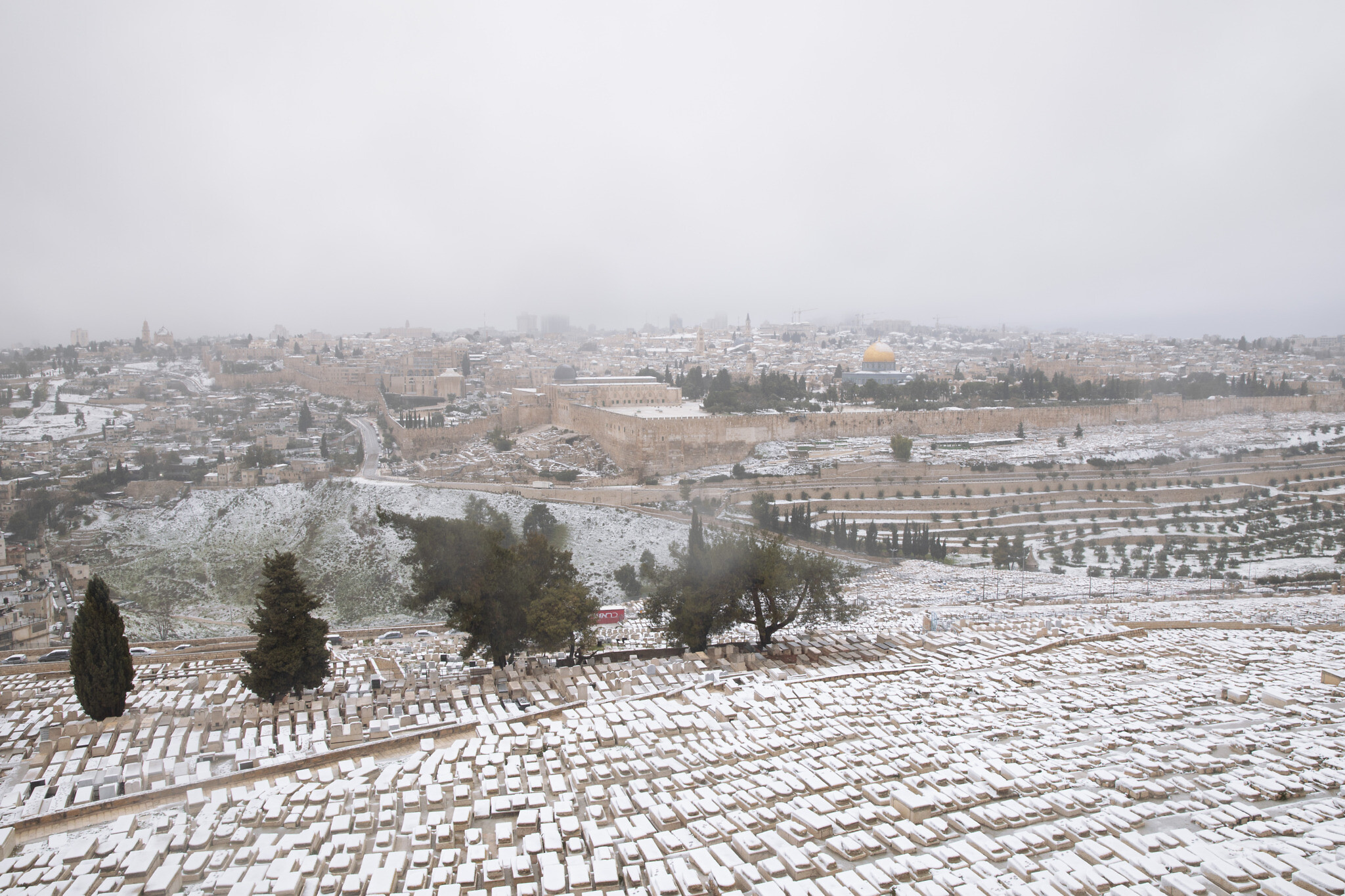
The city deployed 250 snowplows and bulldozers to clear roads, with priority given to routes to hospitals and more elevated neighborhoods.
The clip below shows Jerusalem’s Gazelle Valley park on Thursday morning.
Jerusalem Mayor Moshe Lion announced that schools will be open in the city, but not until 9 a.m. The education system is largely shut anyway in Jerusalem as part of the country’s third pandemic lockdown.
Some schools in the Golan region and in the city of Safed in the north were canceled due to snow, as well as in the West Bank settlements of Elon Moreh, Yitzhar, Itamar, Har Bracha and Migdalim.
Route 1, the main highway into Jerusalem, was closed overnight but reopened to traffic on Thursday morning. Public transportation was set to begin in the capital at 9 a.m. The light rail was running as usual.
However, roads in some parts of the north and the West Bank remained closed and police warned that others, particularly in Jerusalem, could be blocked if they were deemed to be dangerous due to icy conditions.
Some intercity buses routes were stopped in the north and in high-elevation parts of the West Bank, and passengers were asked to check with local services before leaving home.
The storm, which hit Israel early Wednesday as heavy snow fell in the Golan Heights, continued throughout the night, dusting parts of the country in white from the north to the south, while other areas saw heavy winds and rain.
Some northern areas saw as much as 40 centimeters (1.3 feet) of snow accumulating.
The storm was expected to weaken on Thursday, with any precipitation mainly turning to rain; however, temperatures will remain cold and there could be strong winds, especially in the north and along the coast.
Israel’s central mountainous region, including Jerusalem, gets snowfall every few years.
In 2013, a major blizzard knocked out power in several neighborhoods after blanketing the city with up to 30 centimeters (1 foot) of snow. That same storm socked higher elevations south of the city with up to 90 centimeters (3 feet) of snow, in what was deemed a once-in-a-century event.
After the country went through its wettest November last year since 1994, the weather has since been mostly sunny and unseasonably warm, with occasional rainstorms.