Survey: Israelis feel more Middle Eastern, less connected to Europe in wake of Oct. 7
Hebrew University poll finds stronger Israeli identity, growing skepticism of EU and wide gap with Europeans over where Jews are safest to live
Three years after the October 7, 2023, attack, Israelis are undergoing a profound reassessment of their national identity, security and geopolitical orientation, according to a public opinion survey released by Hebrew University on Monday.
The 2026 Hebrew University-European Forum (HU-EF) Barometer found a strengthened sense of Israeli identity among Jewish Israelis and a widening gap between Israelis and Europeans on perceptions of Jewish safety. Israelis are also increasingly skeptical of European political institutions, and tend to view their country as more Middle Eastern than European, the survey found.
The poll, led by Hebrew University professor Gisela Dachs, was based on online surveys conducted by market research firm Kantar across Israel, Germany, Great Britain, France and Poland.
“The Barometer captures a moment of profound reassessment,” Dachs said in a statement. “Three years after October 7, Israelis are not only rethinking questions of security and identity, but also their relationship to Europe and the political forces shaping it.”
Among Jewish Israelis, the events of the past three years, including the wars with Hamas and Iran, appear to have reinforced a sense of Israeli identity, with 48% reporting that their Israeli identity has grown stronger, compared to only 10% who said it weakened. Among Arab Israelis, by contrast, 37% said their sense of Israeli identity was weakened, compared to 18% who said it was strengthened.
Perceptions of where Jews are safest varied widely between Israelis and Europeans. A 71% majority of Israelis believe Israel is safer for Jews to live in than Europe. Among European respondents, only a minority in Germany (27%), Great Britain (24%), France (25%) and Poland (35%) took a similar view.
Meanwhile, Israelis said they see themselves as more Middle Eastern than European. Asked to define the cultural and political character of their country, 42% of Israeli respondents described Israel as more like a Middle Eastern country, compared with just 18% who viewed it as European. Among Arab Israelis, 50% now view Israel as Middle Eastern, more than three times as many as in 2022.
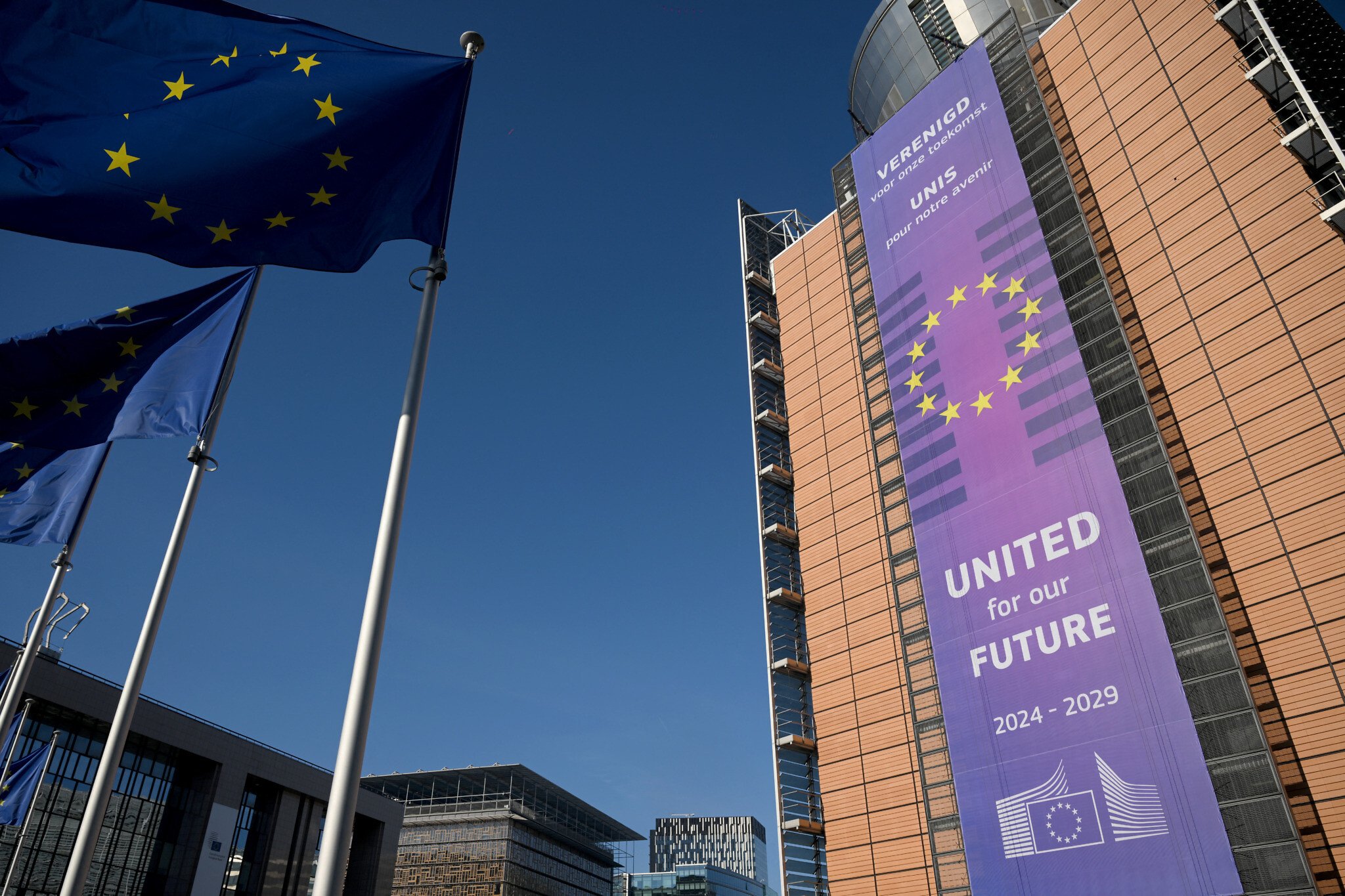
Israelis are increasingly skeptical of the European Union, with 35% disagreeing with the statement that “the EU is, in general, a success.” Only 27% said they see the EU as a success, compared to 57% in 2022.
Looking ahead, Israelis hold a grim view of European Jewish life: 69% predict that the situation for Jews in Europe will worsen, as opposed to only 53% in 2022. Pessimism rose steadily among older age groups, the report noted.
When asked which European countries they consider friends of Israel, Israeli respondents chose Germany (43%) and Hungary (37%). Poland came in a distant third at 21%.
Asked which countries they perceive as most antisemitic, Israelis overwhelmingly pointed to France and Spain, with 54% each. Great Britain was a distant third at 29%.
Regarding the rise of far-right political parties in Europe, some 44% of Jewish Israeli respondents said they favor maintaining ties with these groups, while an additional 31% approve of such diplomatic ties provided those parties explicitly support Israel. About 47% said they were worried about the rise of Germany’s far-right Alternative for Germany (AfD) party, compared to 55% in 2024.
The survey sampled 1,000 representative participants each in Germany, Great Britain, France, and Poland, alongside a sample in Israel comprised of 502 general sector participants, 250 Arab respondents, and 251 Ultra-Orthodox participants. Surveys were conducted in May 2026 in Israel and in June and July 2026 in Europe. The sampling error is 3.1% in each country, the report said.