Suspected IS chemical weapons stockpile uncovered in Mosul — report
Iraqi officials say terror group's plan to launch non-conventional weapons was interrupted by offensive to retake the city
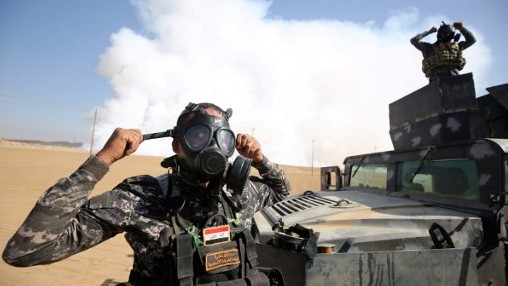
The Islamic State had plans to launch chemical or biological weapons in Iraq, but were interrupted by coalition forces driving the jihadist group from the embattled city of Mosul, Sky News reported Saturday.
The weapons, many with Russian markings on them, and makeshift launchers were discovered by French commandos working with Iraqi troops sweeping parts of the city retaken from Sunni jihadist group.
The report said the weapons that were found in an abandoned warehouse along the Tigris River likely originated from Syria.
Senior Iraqi officials told Sky the area was contaminated by “poison,” but did not elaborate further.
Unidentified substances found in large refrigerated cargo carriers at the warehouse were undergoing testing, the report said. Sky news reporters said the warehouse had a strong smell of chemicals and they were warned the whole area was contaminated.
The official said IS’s plans to use the weapons were interrupted by the launch of the ongoing coalition offensive to retake Mosul from the jihadist group four months ago.
Reports of IS either using or seeking to use non-conventional weapons have surfaced numerous times over the last three years. In November, the London-based IHS Markit analysis group, said IS jihadists have used chemical weapons at least 71 times since 2014 in Iraq and Syria.
The IHS also said that Mosul was likely the group’s center for chemical weapons production, and concluded that chlorine and mustard gas were being produced.
In September, US-led coalition warplanes destroyed a factory near Mosul suspected of being used by IS to make chemical weapons. Observers have repeatedly alleged IS has used chemical weapons, and the Pentagon has confirmed the jihadists have deployed chlorine and sulfur mustard devices.
Last year, the executive body of the global chemical arms watchdog condemned Syria and Islamic State jihadists for using toxic weapons.
The leading body of the Organization for the Prohibition of Chemical Weapons also voiced concern about “gaps and discrepancies” in Syria’s 2013 declaration about the size of its toxic arms stockpile.
A resolution, adopted by a rare majority vote, “condemns in the strongest possible terms the use of chemical weapons in the Syrian Arab Republic,” the OPCW said in a statement.
It pointed to findings by a recent joint UN and OPCW investigation which concluded that “the Syrian Arab Armed Forces and the so-called Islamic State … have been involved in the use of chemical weapons.”
As the Mosul operation enters its fourth month, Iraqi forces have retaken about a third of the city that has been under tight IS control for more than two years. While Iraqi officials initially pledged the city would be “liberated” last year, the fight is likely last many more months.
Agencies contributed to this report.