Swiss museum reaches deal to keep Gauguin work sold by Jews fleeing Nazi Germany
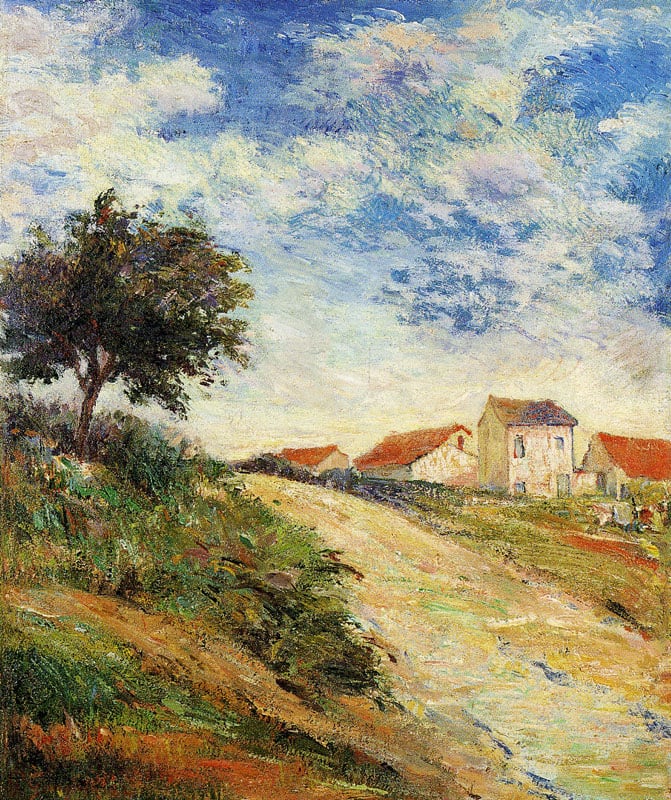
French master's 1884 'The Street' is one of five originally Jewish-owned works removed by Kunsthaus Zurich that were looted or sold under duress and swept up by German arms dealer
A painting by French post-Impressionist master Paul Gauguin whose Jewish owner sold it under duress after fleeing Nazi Germany will remain in a Swiss museum under a deal announced Tuesday.
The 1884 painting, “The Street,” is part of the vast art collection of the late German-Swiss arms tycoon Emil Buehrle, who oversaw a company that supplied the Axis powers, including Nazi Germany, according to the eponymous foundation that controls his collection.
The Foundation E.G. Bührle collection has ignited controversy over accusations that he acquired many of the pieces in questionable circumstances during World War II.
The previous owner of the Gauguin piece, German Jewish businessman Richard Semmel, sold it at auction in Geneva in 1937 to support himself and his wife after being forced to flee Nazi persecution, according to the foundation.
After World War II, Douglas Cooper, a British army officer and art connoisseur, was asked by the Allies to investigate the disappearance of thousands of artworks.
In a report that was declassified in Washington in 1975, Cooper identified Bührle as the largest Swiss buyer of art taken by the Nazis.
Bührle, who died in 1956, left a vast collection of hundreds of pieces, including works by Picasso, Van Gogh, Monet, Renoir, Cezanne, Rembrandt and Degas.
Bührle’s foundation and the museum housing its collection, Zurich’s renowned Kunsthaus, have faced claims that many of the paintings were looted during the Holocaust or acquired from Jews forced to sell them under duress.

The Kunsthaus hired experts to trace the works’ origins, and last year announced it was removing five paintings over concerns about Nazi looting, including “The Street.”
But it has now reached a deal with Semmel’s heirs to continue displaying the painting, the foundation said.
The parties “agreed on a settlement due to Semmel’s life circumstances and his emigration as a result of Nazi persecution,” it said in a statement.
The painting will remain in the Foundation E.G. Bührle Collection and can continue to be exhibited at the Kunsthaus Zurich.
Details of the agreement were not released.
Semmel’s heirs are the granddaughters of a woman named Grete Gross, an old acquaintance from Berlin who cared for him in his later years until his death, childless and impoverished, in New York in 1950.