Tanglewood, Bernstein’s playground, turns 75 with new repertoire — and audiences
34 composers with close ties to the music center -- including Israeli Shulamit Ran -- were commissioned to present new works in honor of the anniversary
BOSTON — The summer of 1963 was a memorable one for Shulamit Ran. For eight weeks, the young composer and pianist was immersed in advanced musical studies, accompanied by the rolling hills of the Berkshires. Based in rural Western Massachusetts, she was far from the desert climate of her native Israel.
Ran, who was a scholarship student at the Mannes College of Music in New York, was among a handful of highly accomplished and promising young musicians accepted into the Tanglewood Music Center, the prestigious summer music academy held in tandem with the Tanglewood Music Festival, the summer home of the Boston Symphony Orchestra.
Launched as the Berkshire Music Center in 1940 by Serge Koussevitzky, the BSO’s Russian-born Jewish conductor from 1924 through 1949, its first season included a 22-year-old Leonard Bernstein, composer Lukas Foss and Sarah Caldwell, who went on to become a noted opera conductor. Bernstein returned only a few years later as a teacher.
“It was quite extraordinary,” Ran recalled half a century later. “As a young person, I was thrown into a world that was quite startling,” she said, referring to her exposure to the leading figures in 20th century music.
Among Ran’s teachers that summer were Foss and Aaron Copeland. Composer Gunther Schuller, the groundbreaking composer and educator who died earlier this summer, gave a series of talks that were deeply meaningful, she said.
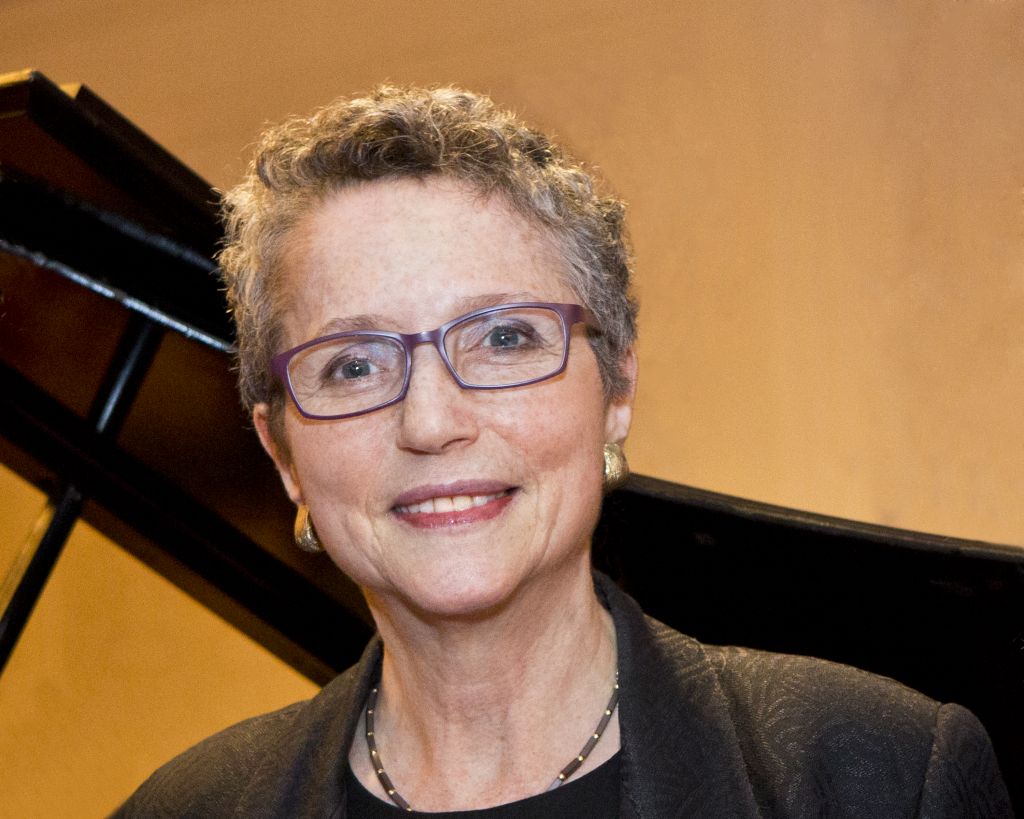
“It was a good time to be there,” Ran said in a phone conversation with the Times of Israel.
Over the years, Ran, a Pulitzer Prize winning composer, orchestra leader and distinguished teacher at the University of Chicago, maintained an ongoing relationship with the TMC.
In 2008, she came full circle, returning to the center as a member of its faculty.
This summer, in honor of the TMC’s 75th anniversary, Ran is among 34 composers with close ties to the TMC commissioned to present new works celebrating the prestigious institution. Others include John Harbison, Michael Gandolfi, and former Boston Pops conductor John Williams.
‘It was a good time to be there’
While the BSO has performed Ran’s music, this is her first commission for the orchestra, in a notable year that has ushered in Andris Nelsons as the BSO’s new music director, following James Levine, who stepped down in 2011.
“Birkat Haderekh,” Blessing for the Road, a chamber work for clarinet, violin, cello and piano, will be performed on Friday afternoon, July 24, as part of the TMC’s Festival of Contemporary Music (July 20 through 27).
Ran’s composition defies constricting categories such as happy or unhappy, she said. “It has undercurrents of apprehension, moments of veiled trepidation mingled with hope and anticipation,” she elaborated in a follow up email.
While she did not name the piece in advance, the music “alludes to a traditional blessing for the road, as someone embarks on an unknown journey,” she wrote.
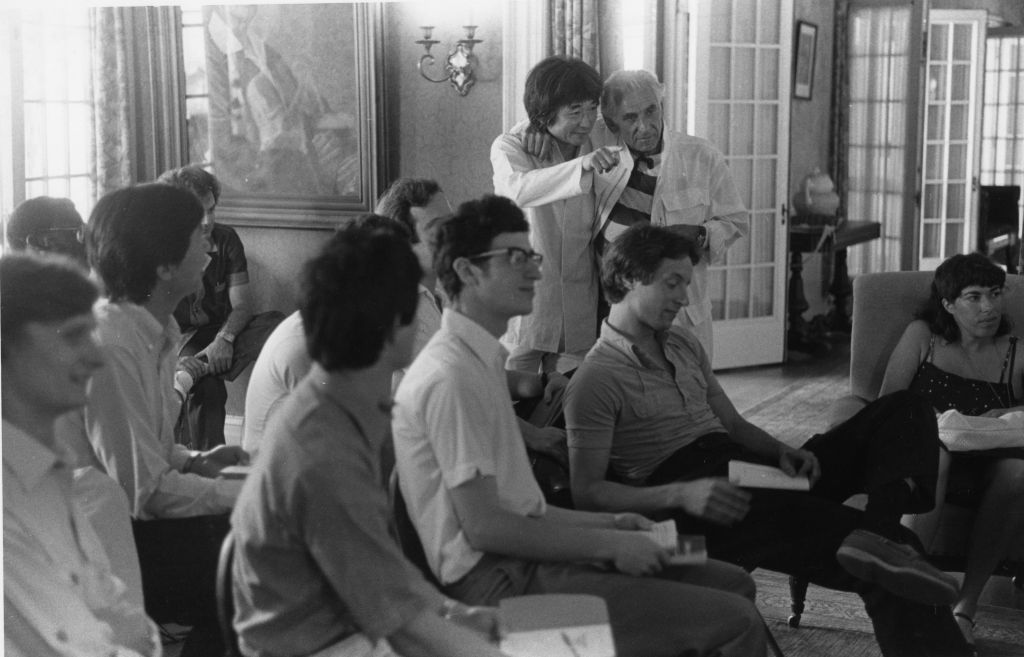
That same weekend, overflowing with a musical embarrassment of riches, also includes a world premiere commission by American composer and pianist Yehudi Wyner, whose “Sonnet for Soprano and Ensemble,” will be performed on Saturday, July 25 at 6 pm.
Written for soprano Lucy Shelton, a long time faculty of the TMC’s vocal program, Wyner’s composition is set to a poem by Elizabeth Bishop, the late US poet laureate whose work Wyner admires.
Wyner, the ever-prolific 86-year-old Pulitzer Prize and Grammy Award winner, who also taught for many years at Yale and at Brandeis University, was a member of TMC’s chamber music faculty from 1975 through 1997.
In separate conversations, Ran and Wyner emphasized the extraordinary level of musicianship among TMC’s students – the “cream of the crop,” Wyner noted.
The Tanglewood Music Center is the only summer program that operates under the auspices of a major symphony orchestra
A key reason is that the TMC is the only summer program that operates under the auspices of a major symphony orchestra, according to Ellen Highstein, the Edward H. Linde Tanglewood Music Center Director.
On a daily basis, the TMC’s fellows interact on a professional and personal level with the BSO’s musicians and guest conductors, she pointed out. The word “alchemy” is used often by observers to describe the creative culture that is sparked by the bonding between the Tanglewood fellows and the BSO musicians.
Highstein credited Koussevitzky for his unique vision of offering a program that goes beyond instrument training and also involves considerable cross disciplinary work, including a long-time collaboration with the Mark Morris Dance Company. Fellows are working at the “big picture” level of musicianship.
“The emphasis is on collaboration and making music as a community. No day is like any other day. It all has to be created afresh,” said Highstein.
Since its founding, more than 10,000 musicians have participated in the TMC’s various program. The BSO estimates that 20 percent of the members of American symphony orchestras and 30 percent of all first-chair players studied at the Center.
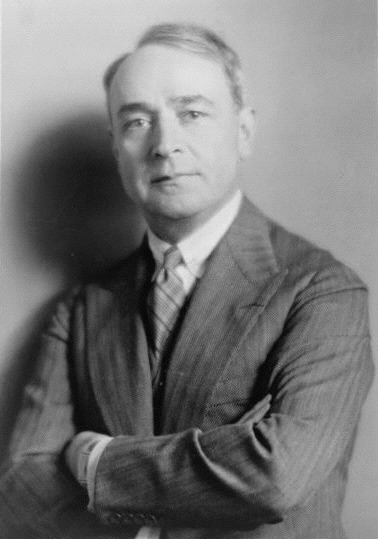
Their names include a “who’s who” of musical giants: Seiji Ozawa, Phyllis Curtin, Christoph von Dohnanyi, Charles Dutoit, Lorin Maazel, Winton Marsalis, Zubin Mehta, conductor of the Israel Philharmonic, Dawn Upshaw and Michael Tilson Thomas.
No figure looms quite as large over Tanglewood and the TMC as Bernstein. “He was such a strong presence here,” and his music is played frequently, season after season, Highstein reflected. Bernstein taught and performed at Tanglewood nearly every summer for fifty years.
The TMC anniversary commissions will be performed throughout the Tanglewood Festival season and reflect a panorama of both its history and the breadth of its aesthetic range, Highstein said.
Highstein, Ran and Wyner each emphasized that Tanglewood’s commitment to promoting contemporary music is a critical component to keeping the TMC vital.
Its emphasis on new music dates back to Koussevitzky, Highstein said. “He believed we owed it to the future to have a present,” she said.
“You get the sense that it hasn’t missed a beat of what’s important,” Ran said. “It’s a place the brings together people that matter to the development of music of our time. It’s both a mirror of what is going on and what pushes people further.”
The Tanglewood Music Center offers composers an enviable experience, Wyner said.
“It’s the ideal society for musicians to be among performers as wonderful as these young people and our veteran colleagues, working together,” Wyner marveled. “I don’t know what there is left.”