Tel Aviv market slide points to investors betting on election deadlock
Tel Aviv Stock Exchange research shows stocks typically sag before votes that end in stalemate, unlike those that result in stable governments, but it all evens out within months anyway
As Israelis prepare to head to the polls on October 27 in a race too close to call, investors are bracing for a deadlock that could trigger yet another round of elections.
After gains for most of this year, Israeli markets have fallen sharply since early October, with the latest polls suggesting neither the current coalition nor the main opposition bloc can win an outright majority on its own.
Polls capture voter intent at a single moment, but they are often unreliable. Markets are forward-looking barometers of investor sentiment and price in future expectations and probabilities of different outcomes, but they can also get it wrong. To add to the complex picture, stock prices also factor in interest rates, inflation, growth, corporate earnings, geopolitics, and global market trends — making it unclear how much the recent declines can be attributed to the election alone.
Using historical data of the past 10 Israeli elections since 2003, researchers at the Tel Aviv Stock Exchange examined whether market losses in the first week of October were an indicator that investors were pricing in a deadlock, indicating belief that a second election round is inevitable.
“With the election just around the corner, uncertainty over whether it will produce a decisive result or another round of voting remains high,” Nissan Avraham, macroeconomist at the Tel Aviv Stock Exchange’s research unit, told The Times of Israel. “The Israeli market is showing weakness, which is consistent with declines ahead of previous elections, especially those that didn’t yield a clear outcome needed to form a stable government.”
For the week ending October 9, which formed the basis for the research, the Tel Aviv stock market closed in negative territory, while underperforming main global financial markets. The TA-125 Index fell by 3.6 percent last week, the TA-35 Index declined by 3.7%, and the TA-90 Index lost 3.3%. During the same period in the US, the S&P 500 Index rose by 1.2%, the Nasdaq-100 Index added 0.25%, and the Dow Jones Index gained 0.9%, as Wall Street hit a record high.

From the start of the month, the TA-125 Index retreated 1.3%, and the TA-35 Index declined 1.1%.
“With elections two weeks away, it is far from certain that a stable coalition will be formed,” said Leader Capital Markets macroeconomist Jonathan Katz. “It appears that the probability of an opposition-led coalition with the outside support from only one Arab party has decreased.”
Recent polls show neither the current coalition led by Prime Minister Benjamin Netanyahu, nor the main opposition bloc, receiving enough seats in the Knesset to form a government on its own. Parties differ on their willingness to accept support from Arab parties, ultra-Orthodox parties, or Netanyahu in order to reach a majority.
“A stalemate scenario with opposition bloc unwilling to rely on both Arab parties could result in another round of elections,” said Katz.
When this has occurred in the past, Israel has been thrown into cycles of repeat votes, including a period from 2019-2021 in which the state held four rounds of elections before forming a government, which itself only lasted until late 2022, when the current coalition was elected.
TASE’s research found that historically, in the three months before inconclusive elections, the TA-125 fell an average of 5.3%, compared with an average decline of 0.2% before elections that led to the formation of a stable government.
Avraham cautioned that the pattern doesn’t necessarily mean markets predicted the outcomes, but it suggests that uncertainty tends to weigh on stocks before votes that end in stalemate.
“Experience shows that the market tends to price in the concern of an indecisive outcome even before election day, and that may help explain the market declines in early October,” said Avraham. “Therefore, election day itself may not necessarily come as a major surprise for investors, even when a government is not formed.”
The TASE research also found that the gap in market returns between decisive and deadlocked elections narrows quickly after the vote. On average, by three months after a vote, almost no difference remained, and after five months, returns were nearly identical. In the year following an election, the TA-125 Index yielded an average total return of 16.4% over the researched period.
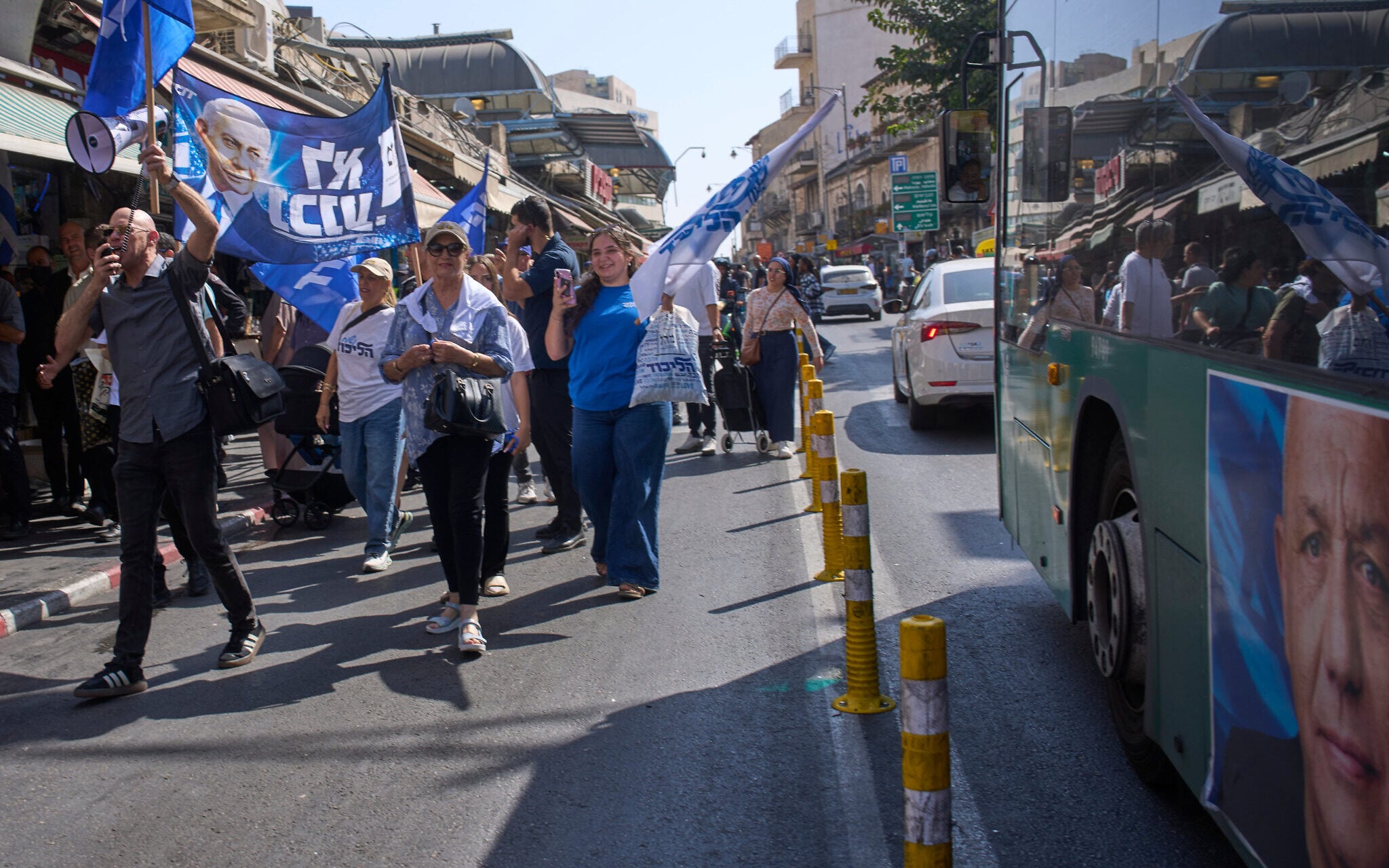
Prof. Yossi Yagil, vice president of Western Galilee Academic College, has reached similar findings in studies he has conducted looking at the relationship between elections and stock markets in Israel over more than 60 years.
“Historically, stock market returns in Israel were higher on average after elections than pre-elections,” said Yagil. “It implies that the election and, more particularly, the formation of the government after the election puts an end, or a reduction to, long uncertainty that was there before.”
Similarly, Avraham pointed out that the exchange’s analysis suggests that the key factor for investors is not who wins but how much certainty the election provides.
“On the day after the election, the question will be not just who won, but whether the result is decisive enough to reduce uncertainty, with a government that advances a clear economic policy and strengthens investor confidence,” said Avraham. “Over the long run, as past experience shows, the fundamentals of the Israeli economy, and not only the election results, will continue to drive the market.”
Times of Israel staff contributed to this report.