Temple Mount killers aimed to set the Middle East ablaze
Arab Israeli trio selected the most resonant site in the region; they expected to die, and to trigger much more bloodshed
Shafia Jabarin, uncle of Muhammad Hamad Abdel Latif Jabarin, one of Friday’s Temple Mount terrorists, said later Friday that nobody in the family knew anything about the planned attack. “It was a complete surprise.”
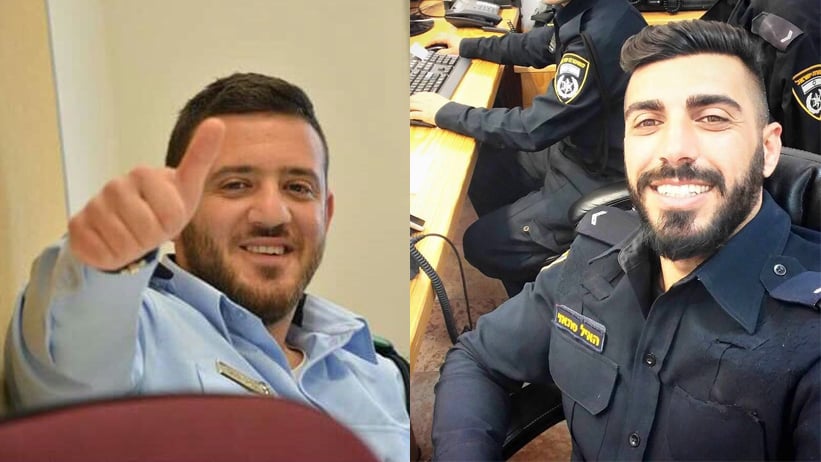
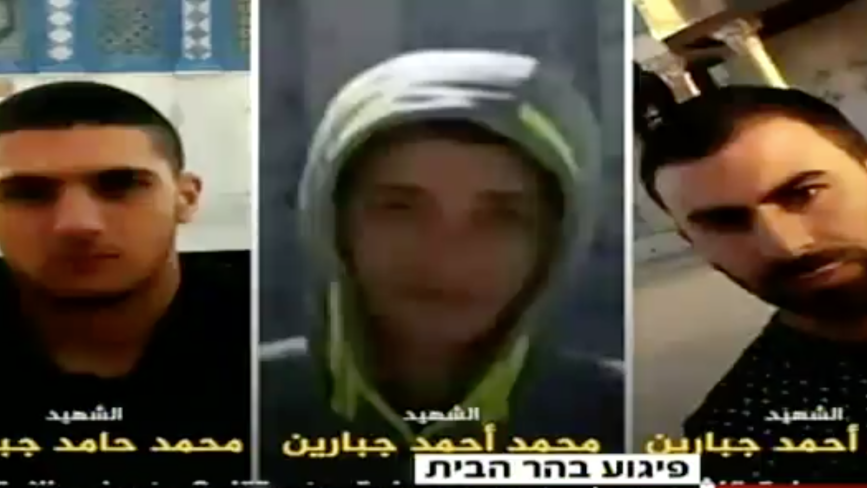
The problem is that the Israeli security establishment — the Shin Bet, the police — also knew nothing ahead of time about the murderous plans of the three Arabs Israelis from Umm al-Fahm who killed two Druze policeman at the Mount. The trio, aged 19, 20 and 30, managed to stay under the radar of Israeli intelligence. They were able to strike without warning, and once again to fatally jar the exposed nerves of Israelis as regards the country’s Arab citizens.
The attackers capitalized on their great advantage: As Israelis, they carried blue identity cards, and were able to gain free access to the Temple Mount, undisturbed by roadblocks and checkpoints.
Getting guns was no problem, either. In the Arab sector, emphatically including their local Wadi Ara region, weapons are readily available — either stolen from the IDF, or home produced.
They selected the most resonant site, on the most resonant day of the week: The Temple Mount complex, on the day of Friday prayers.
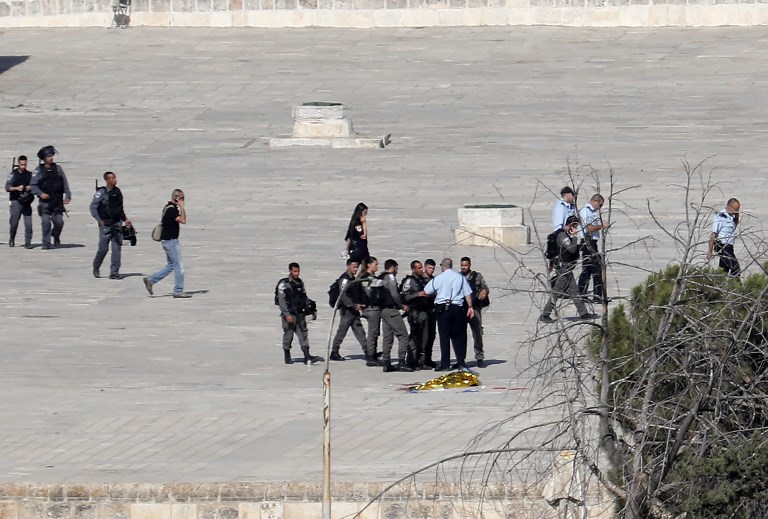
The trio were inside the complex — as their relatives later confirmed, and as their own selfies attested — before they ventured out to open fire, fatally, on a group of police officers.
They knew that a shooting attack at the most incendiary spot in the Middle East would be likely to prompt a major escalation.
They anticipated that a shooting spree at the Temple Mount compound, which would end with their deaths too, would gain massive media coverage — and knew that previous such incidents had set in motion a still more bloody chain of events.
And indeed, very soon after their attack, social media was flowing with footage from the scene, including of Israeli Border Police shooting one of the attackers, apparently injured, as he sprung up and lunged at cops with a knife.
It’s hard to establish at this stage whether the attack was organized by a specific terrorist group. All options are open — including an Islamic State-inspired attack, a locally organized strike, or a Hamas attack with or without the involvement of the Northern Branch of Israel’s Islamic Movement. Umm al-Fahm is a familiar stronghold of Raed Salah’s Northern Branch.
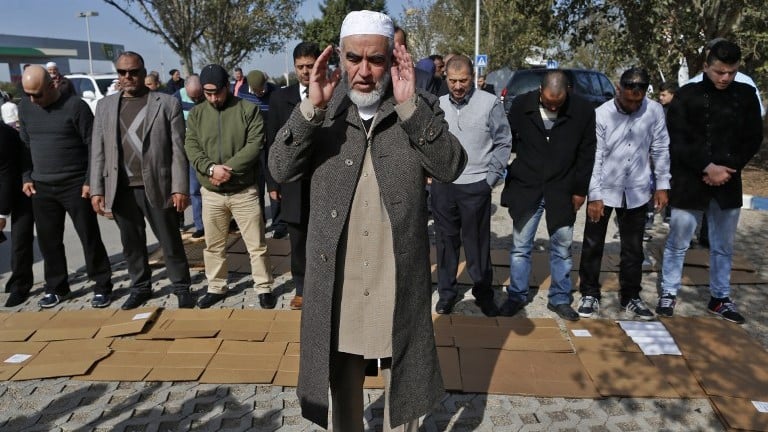
This group is now banned, and that has complicated its activities, but its activists have now gone underground, which makes it harder for Israeli intelligence to keep track of them.
The possibility of the involvement of an overseas entity such as Hezbollah — in orchestrating or encouraging the attack — also cannot be excluded. Hezbollah has utilized Arab Israelis in the past (including Qais Obeid). And its efforts to recruit among Israeli Arabs are relentless.
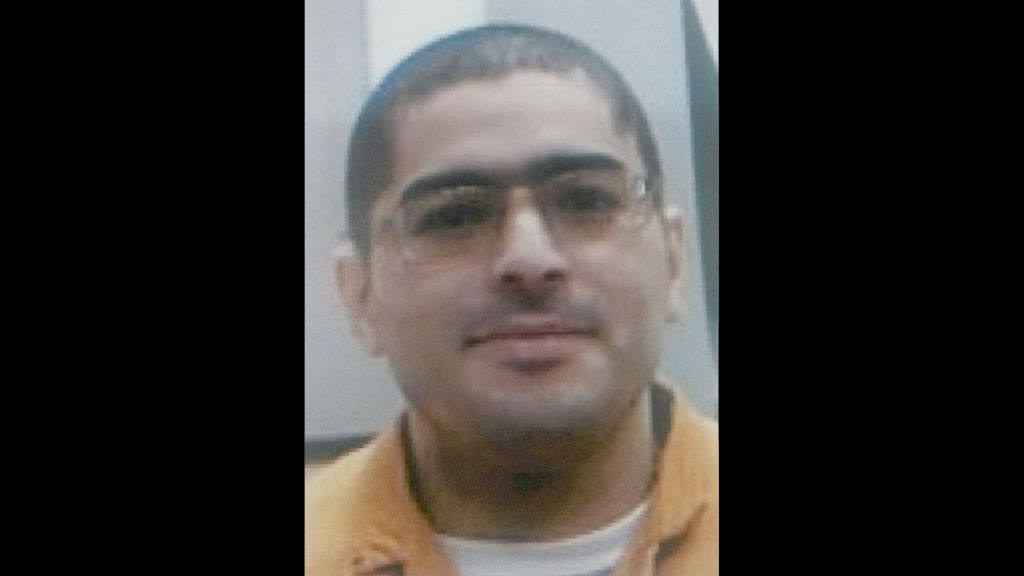
This plainly was not, however, an attack in the style of Nashat Milhem, who opened fire on Dizengoff Street in Tel Aviv on January 1, 2016. Milhem sought to survive that attack, and managed to flee before he was eventually tracked down.
Friday’s trio came to the Temple Mount ready to die. They were also apparently more religious than Milhem. And their intentions were wider: Not a self-contained shooting spree like Milhem’s, but an attack, at the incendiary Temple Mount, intended to set the Middle East ablaze.