The bully and the schemer
Trump and Netanyahu may deserve each other. But in the battle against Iran and its proxies, and in the struggle for the democratic, law-abiding, Jewish-majority Israel, we need better
This Editor’s Note was sent out earlier Wednesday in ToI’s weekly update email to members of the Times of Israel Community. To receive these Editor’s Notes as they’re released, join the ToI Community here.
Out of office, defeated by Joe Biden, the then-former US President Donald Trump turned on one of his closest allies, Prime Minister Benjamin Netanyahu. Interviewed by Israeli journalist Barak Ravid months after his November 2020 defeat, Trump bitterly and falsely denounced Netanyahu for having been the first world leader to congratulate Biden on a victory that Trump has never stopped disputing.
“The first person that congratulated [Biden] was Bibi Netanyahu, the man that I did more for than any other person I dealt with,” railed Trump. “I haven’t spoken to him since. Fuck him.”
Now, it’s happening again.
Trump hasn’t stopped talking to Netanyahu. Anything but. They’re on the phone all the time. And the president hasn’t used the f-word to tell the prime minister their partnership is over and he can go to hell.
But he has confirmed calling Netanyahu “fucking crazy” in a recent phone call over Israel’s efforts to stop the Hezbollah terror group’s relentless rocket and drone attacks on northern Israel.
He has repeatedly belittled Netanyahu by publicly declaring that the prime minister of Israel “will do whatever I want him to do” when it comes to the battle against Iran and its terrorist proxies.
And on Tuesday, he punched the premier below the belt by suggesting that Netanyahu might not run in the national election three to four months from now. “I don’t know, he’s had an amazing career. Does he want to continue?” he mused to ABC’s Jonathan Karl. “Because, you know he’s a wartime prime minister.”
Most Israelis, 61 percent according to an opinion poll published earlier Tuesday, don’t want Netanyahu to run again either.
As prime minister for over 15 of the past 17 years, he is widely blamed for failing to prevent the October 7, 2023, Hamas invasion and massacre, the single deadliest day for Jews since the Holocaust. He is bitterly resented by many for failing to resign in its aftermath. And he is consistently opposed by most of the country in refusing to countenance the establishment of a state commission of inquiry, the only body empowered to subpoena witnesses and get to the bottom of what went wrong, because he knows it would almost certainly recommend his departure from public life.
But Netanyahu has given absolutely no public intimation that he might voluntarily depart the scene — notably declining to so much as respond to an effort by President Isaac Herzog to have his lawyers enter substantive talks on a plea bargain to resolve his endless corruption trial, since any such deal would likely require he step down. (The premier’s Likud on Wednesday stated that Netanyahu would indeed be running for reelection.)
Political survival
In fact, he is currently intensifying his efforts to bolster his election prospects — to the horror of some parts of the electorate and the delight of others.
He is attempting to resurrect his relations with the two ultra-Orthodox parties, by blitzing legislation through the Knesset to financially reward their constituencies, having narrowly failed to muster a parliamentary majority that would enshrine the outrageous exemption from military service of ultra-Orthodox males.
He and his far-right thug of a police minister, Itamar Ben Gvir, have failed to tackle spiraling demonstrations by ultra-Orthodox men against the IDF’s sporadic efforts to arrest draft dodgers.

Those protests plumbed new and dangerous depths last week when an organized mob of dozens of ultra-Orthodox extremists attacked the home of the deputy head of the Supreme Court, Noam Sohlberg, smashing windows and vandalizing the entrance at Sohlberg’s home, with him and his wife inside. Sohlberg is an Orthodox, conservative justice, who happens to live in a West Bank settlement, but who has had the temerity to order the enforcement of sanctions against ultra-Orthodox draft dodgers. Making a mockery of their purported Jewish observance, more ultra-Orthodox mobs went out this past Shabbat to try to storm police stations where some of those detained for attacking Sohlberg’s home were initially processed.
Kowtowing to the far-right, as he has done ever since returning to office at the end of 2022, Netanyahu has also failed to crack down on a rising tide of settler attacks on Palestinians, which now routinely includes violent Shabbat ventures into Palestinian areas.
He and his coalition henchmen are advancing legislation to constrain and oversee Israeli media, with clauses directly benefiting his pet, poisonous pro-government Channel 14.
He last week engineered the election of his own personal lawyer, Michael Rabello — who has helped Netanyahu with political negotiations, and represented him and his wife in various legal matters — to the post of state comptroller. This is an independent watchdog position, responsible to parliament, that is meant to oversee the work of the prime minister and government, as well as monitor election campaign financing. When the rival candidate, a conservative former Supreme Court justice, failed by one vote to defeat Rabello in the legally mandated secret ballot of Knesset members, Netanyahu had coalition members video their votes in the second round runoff, to weed out those who had betrayed him, and Rabello’s victory was belatedly, appallingly secured.
His support for ultra-Orthodox non-service, and his government’s increased funding of that community, is anathema to much of the electorate. So, too, his indulgence of far-right lawlessness in the West Bank. Yet Netanyahu still has a fighting chance of winning the election, set for September or October. That’s partly a function of Israeli demographics — the ultra-Orthodox community is Israel’s fastest-growing, and reliably turns out in huge numbers on election day — and of the characteristic disunity in the Zionist opposition.
Netanyahu has also been betting that, three years after the Hamas invasion, the sheer passage of time will have dimmed public memories of that horrific onslaught. And if not, then at least that success in the ensuing wars against Hamas, against Hezbollah, and against their state sponsor Iran, would enable him to credibly claim that the tide has turned, and that Israel, under his indefatigable leadership, has won what he insists Israel must officially call “the War of Revival.”
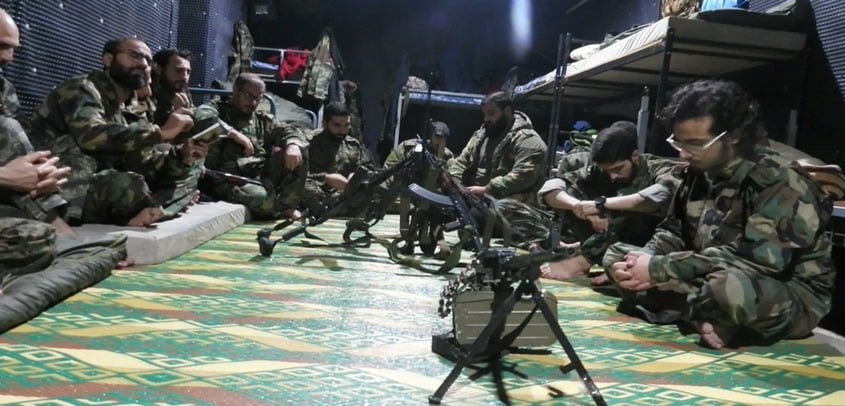
But Hamas has revived, has unsurprisingly refused to disarm, and is merely biding its time before it next targets Israel. Hezbollah, degraded in 2024, rebuilt right under Israel’s nose, and has killed 30 Israeli soldiers and three civilians, and fired over 8,000 rockets at northern Israel and at IDF troops in southern Lebanon since entering the war in support of Iran on March 2.
And the Iranian regime itself, which Trump and Netanyahu set out to drastically destabilize on February 28, has survived despite the initial assassination of many of its leaders, faced down the United States, assumed control of the Strait of Hormuz, and left Trump plainly desperate for a deal to end the war with none of its key goals achieved.
Threats, bluster, capitulation
Which brings us back to Trump’s renewed dissing of Netanyahu.
Like any playground bully, the US president is turning on what he perceives as a weak and vulnerable target, while obsequiously cozying up to what he sees as more dangerous aggressors.
While publicly declaring that Netanyahu will do what he’s told, he repeatedly praises the mass-murdering leaders of Iran as reasonable, rational and “very smart,” and on Sunday even hailed the new leader, Mojtaba Khamenei, for his “bravery” in ostensibly managing to lead Iran despite having been “pretty badly injured” in the war’s initial Israeli air strikes.
The self-styled great deal-maker appears to be catastrophically out of his depth in negotiating with Iran, employing a non-strategy that might best be described as a mixture of threats, bluster and capitulation. He is seeking assurances that the regime won’t seek nuclear weapons as though any such pledges are of value, relenting on the imperative for a complete, permanent halt to Iranian uranium enrichment, and lately asserting that removing Iran’s stockpile of near-weapons-grade uranium is not really necessary because it is “entombed.”
All this as he implores Tehran to agree to an initial framework deal to get Hormuz reopened, while pushing off all the nuclear weapons-related issues for later negotiations — negotiations in which he would have little leverage because he will have signed an accord committing to the permanent end of the war.
Israel weakened
These developments are potentially disastrous for Israel, leaving an emboldened Iranian regime with a path to the bomb and a heightened motivation to pursue it. In the past few days, moreover, Trump’s demands and utterances have already significantly weakened Israel.
He fumed at Israel for targeting Hezbollah in Beirut on Sunday in what was an extremely mild IDF response to escalating Hezbollah fire.
And when Iran asserted patronage over Lebanon by firing missiles at Israel later that same day, Trump declared that he would be phoning Netanyahu “right now” to tell the prime minister not to hit back at Iran — essentially attempting to tie Israel’s hands following a missile attack on its home front by an enemy state that Israel had not targeted.
The prime minister semi-defied that pressure from Trump, with two waves of fairly mild military strikes on Monday. But he called off a third, more powerful attack after Trump reportedly warned him that “you better be careful, or you will be on your own very soon” in a potentially escalating conflict with Tehran. (IDF chief of staff Eyal Zamir confirmed to troops on Tuesday that the Israeli military had made preparations “for a much more significant and severe blow” against Iran, and would still carry it out if the opportunity arose.
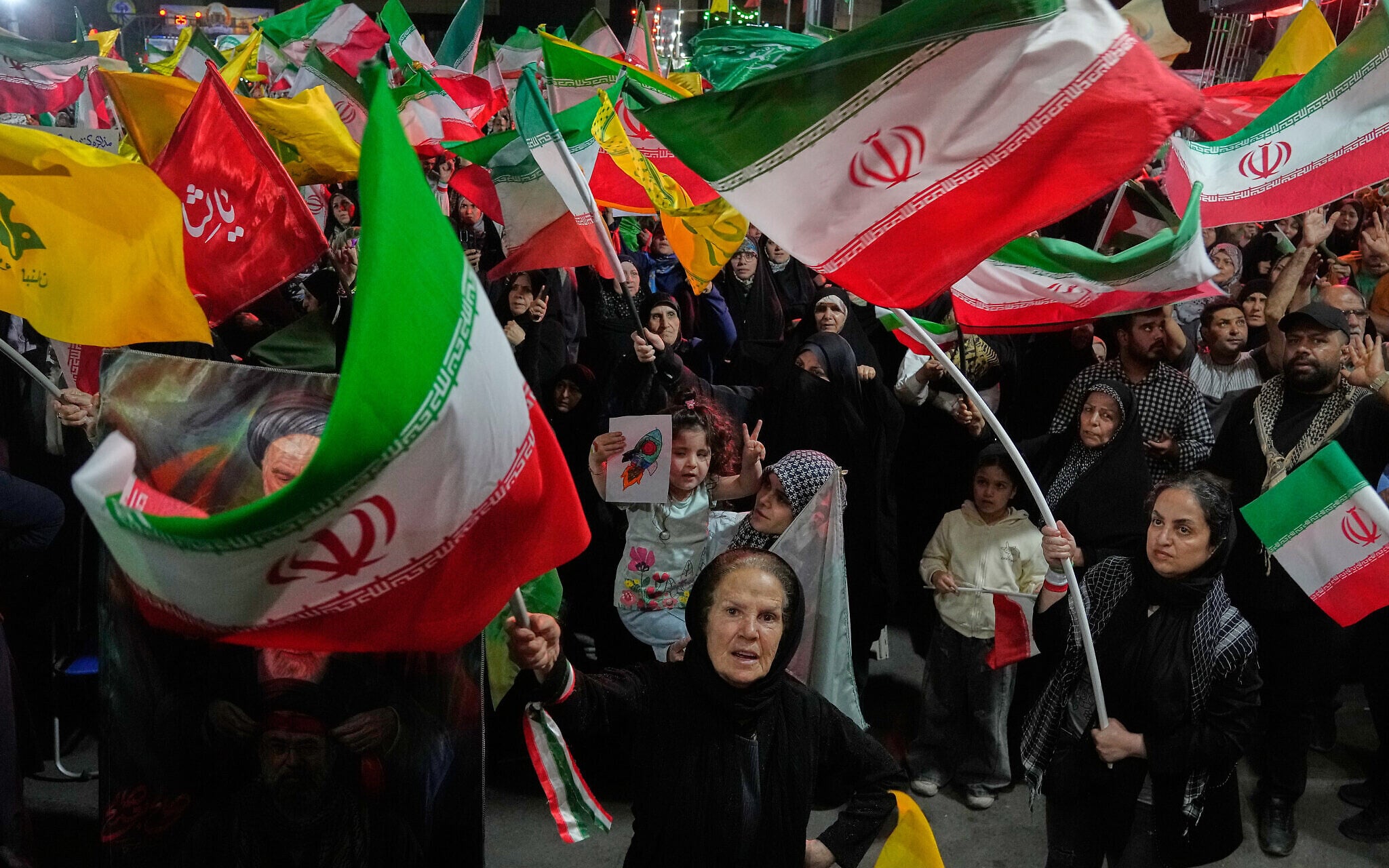
The president of the United States publicly seeking to restrain a key ally that has just been attacked by their mutual enemy would have been music to the ears of the patiently rapacious regime in Tehran. Netanyahu’s reluctant compliance with Trump’s demand not to carry out the more potent response that Israel’s military and security chiefs had determined was necessary badly weakens Israel’s deterrent capacity against the regime, which had been so potent after last year’s war and in the initial phases of this one. It also sent a debilitating message to allies and potential allies of Israel in the region.
In a brief and pallid three-minute address to the nation on Monday evening, Netanyahu asserted that “Iran and Hezbollah are weaker than ever, and we are stronger than ever.” That’s certainly not true in the case of Hezbollah. Iran may currently be militarily weaker than it was on February 28, but it is confident, rebuilding its missile program, and intent on using its leverage over Trump to retain its nuclear weapons program. And Israel, though militarily potent, is publicly constrained by its most important ally.
The same Monday poll that showed most Israelis think it’s time for Netanyahu to go also found that most Israelis — hitherto so broadly supportive and appreciative of Trump — no longer believe that Israel’s security is a central consideration for the US president. And that survey was taken before Iran fired on Israel and Trump attempted to prevent an Israeli response.
Trump, bullying Israel and appeasing Iran, and Netanyahu, ducking responsibility and doing whatever it takes to try to survive politically, are harming both their countries’ interests right now, even as their personal relationship frays again. We deserve, and need, better.