The intifada that wasn’t, unless your name is Abbas
The wave of Palestinian terrorism and violence that started a year ago has claimed many lives on both sides, but the only lasting strategic threat is to the rule of the Palestinian leader
Sixteen years have passed since the outbreak of the Second Intifada, the Palestinian uprising that in many senses destroyed the chances of peace and created the great break in trust between the Israeli and Palestinian peoples.
A year has passed since the outbreak of the “Jerusalem Intifada” (as Hamas calls it) or the “lone-wolf intifada,” as others do.
It’s hard to find many parallels between the Second Intifada’s dozens of suicide bombings, shootings and tumultuous demonstrations and this latest one that has since sputtered out, characterized by stabbings carried out by mainly young Palestinians acting on their own with no organization.
Perhaps even using the same term for both is a mistake.
While the former created a dramatic change on the ground in relations between the Palestinian Authority and Israel, as well as the IDF’s deployment in the West Bank, the knife and car-ramming attacks of the past year did not have a profound effect on Israeli-Palestinian ties.
Trust — already at a low point — certainly deteriorated further, and along with it the chances for peace. But any significant changes created by the lone wolf intifada occurred inside Palestinian politics and had little effect on relations with Israel.
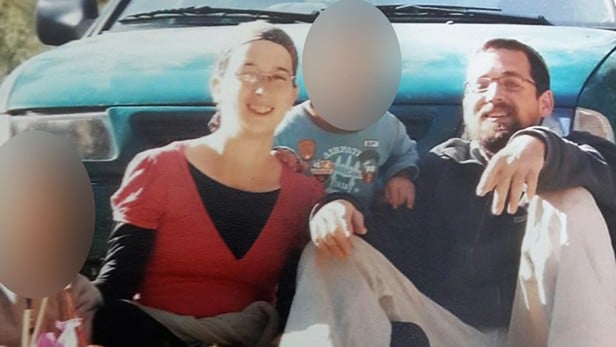
Palestinians, and particularly Hamas supporters, mark the start of the wave of violence with the October 1, 2015, attack in which Hamas terrorists murdered the Henkin couple in a shooting near the West Bank settlement of Itamar. Since then, 35 Israelis and four foreign nationals have been killed by Palestinian assailants
But it was an attack that took place two days afterward, in Jerusalem’s Old City, that better represents the current intifada.
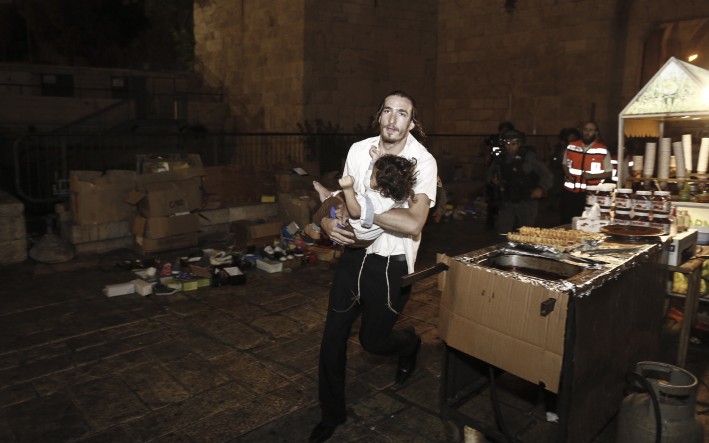
On October 3, a terrorist by the name of Muhannad Halabi murdered two Israelis, Aharon Banita and Nehemia Lavi, in what began as a stabbing attack. Halabi then took a gun from one of the injured men and began shooting, until police at the scene shot him dead. In Palestinian eyes, he became the first martyr of the so-called Jerusalem Intifada — a hero to much of the Palestinian public.
A month afterward, at a protest outside Jerusalem’s al-Quds University in Abu Dis, I saw hundreds of young Palestinians proudly wearing a shirt bearing Halabi’s image.
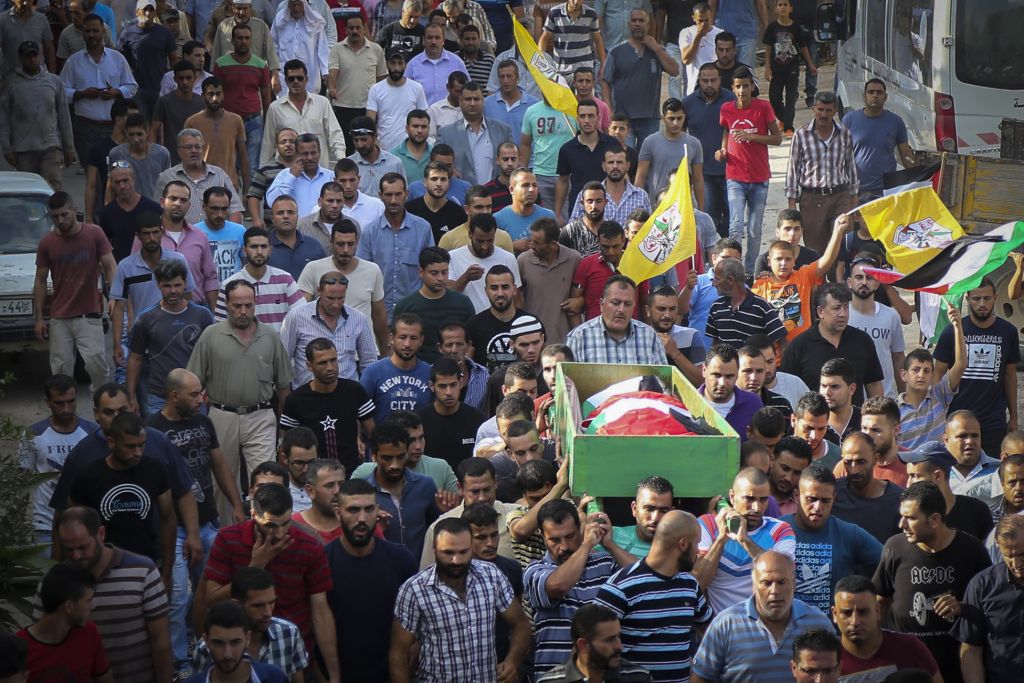
Last week, Hamas published statistics describing the wave of violence: 249 Palestinian were killed by Israel, it claimed, 160 of them during attacks and attempted attacks and 89 during demonstrations.
Of the 160, it said, 111 were killed during stabbings, 24 in vehicular attacks, 14 in shootings, 10 in shooting and stabbings and one in a suicide bombing.
The number of dead was highest in the unofficial capital of the intifada, Hebron — 76. Jerusalem comes next with 40, then Ramallah with 35, Jenin with 21, Nablus with 16, Bethlehem with 15, Tulkarem with five, Salfit with four, Qalqilya with two and just one from Jericho.
If you add the hundreds of young Palestinians arrested in the past year allegedly on their way to carry out attacks, or those arrested before leaving home by Israeli and Palestinian security forces, the numbers of those involved in the terror and violence soar higher.
Yet this was an intifada in which most of the Palestinian public didn’t take part. The masses didn’t go out into the streets; most stayed home.
Even in the most tempestuous days of October and November 2015, only a few thousand participated in protests around the West Bank, a small fraction of the area’s estimated 2.4 million Palestinians.
And unlike in the Second Intifada, relations between Israel and the PA didn’t change significantly. Security cooperation continued and in some ways improved, and aside from a few rare cases, PA security forces didn’t carry out attacks. The delicate fabric of economic cooperation remained intact, and with a series of electricity, mail, cellphone and Gaza gas pipeline deals, actually improved.
Hamas efforts to fan the flames of violence therefore failed miserably. But the group scored a major victory, nonetheless, in internal Palestinian politics — by making PA President Mahmoud Abbas and his Fatah party seem even less popular in the West Bank.
According to every poll conducted in recent months, West Bank residents want to see Abbas resign from office and a change in leadership. Unsurprisingly, in this contact, local Palestinian elections scheduled for October have been postponed. If there were elections today in the West Bank between Fatah and Hamas, the latter would win (while in Gaza the opposite would be the case). Abbas’s public opinion standing has never been worse, and in many ways Fatah officials are already preparing for the day after Abbas.

Abbas’s participation on Friday in former president Shimon Peres’s funeral certainly won’t help his standing either. He garnered almost unprecedentedly bitter criticism for the appearance, including a death wish from Mahmoud al-Zahar, one of the leaders of Hamas in Gaza, an exceptional expression even in the context of the relentless Hamas-Fatah rivalry.
Even the man responsible for the PA’s public relations, Usama Mansour Abu Arab, who knows the Israeli side and the PA’s connections with it well, wrote a Facebook post condemning Abbas’s arrival at Mount Herzl cemetery; he was then arrested by PA security.
Abbas spoke in Bethlehem Saturday and vowed that the PA would make a bid to receive full UN membership. He appeared tired and worn out, and as far as the public is concerned, the promise was just lip service.
Meanwhile Hamas waits in the wings, as do Abbas’s rivals in Fatah, foremost among them Mohammad Dahlan.
Last week Dahlan postponed an event in Cairo for his supporters. The Egyptian government had backed the gathering, spitting in the face of Abbas. In retribution, the PA prevented Dahlan’s wife Jalila from entering the Gaza Strip, and Abbas fired four members of Fatah who support Dahlan.
For Dahlan and others in Fatah and Hamas, these petty moves matter little. To them, Abbas’s era is already over, even if the end is not official yet. The lone-wolf intifada has hastened the process. The only unanswered questions are when will it conclude, and who will succeed him?