The October 7 battle for Sderot still rages in the minds of its survivors
Residents of embattled Gaza border city recall moments when Hamas terrorists invaded, gunning people down in the street, but vow to stay in their hometown
SDEROT (JTA) – Shalom Aida was at home when the first air raid siren sounded at 6:29 a.m. on October 7, 2023, but he wasn’t initially fazed.
Rocket sirens were a common occurrence in his city of Sderot, which is less than a mile from Gaza at its closest point.
It wasn’t until he heard gunshots that Aida, a retired police officer, realized that dozens of heavily armed Hamas terrorists had infiltrated Sderot and were gunning down any civilian, soldier or police officer they came across.
By the time he arrived at a police station, “it was a battlefield,” he said. The sight almost paralyzed him.
“The entire street in front of the station was full of bloodied people. Police, civilians, dead or dying. Hamas kept firing.”
One of the police officers killed that day was Aida’s cousin. Many others were his friends.
Three years later, he is still haunted by the memories.
“Sderot seems quiet now, but it’s not quiet or peaceful inside our heads,” he said as he watched groups of visitors walk around the Sderot Memorial and Heroes Park. It is located at the site of the police station, which was destroyed on that day and rebuilt elsewhere.
Despite the ongoing trauma of October 7 and its aftermath, Aida said he wouldn’t dream of moving elsewhere.
“I never once thought about leaving,” he said, shocked by the notion. “The best people in the world live in Sderot.”
Not all residents of the “Gaza Envelope” who experienced the horrors of October 7 returned home when the government gave the all-clear, after ordering them to evacuate for their own safety. But the vast majority of Sderot’s approximately 37,000 residents, who had already lived through two decades of rocket barrages from Gaza, returned to the city within months.
Once, it was a struggling development town where successive governments sent immigrants who had just arrived from the Middle East and the former Soviet Union.
It generated domestic and international headlines over the last two decades, as it became the first city hit by Hamas rockets as early as 2001, and remained one of the places the Gaza-based terror group has most frequently targeted.
International dignitaries, including then-UN secretary-general Ban Ki-moon in 2009 and then-senator Barack Obama during his 2008 presidential campaign, visited Sderot.
Initially a city without adequate protective shelter for its residents, it became the only place in Israel where every single apartment and bus stop has its own bomb shelter.
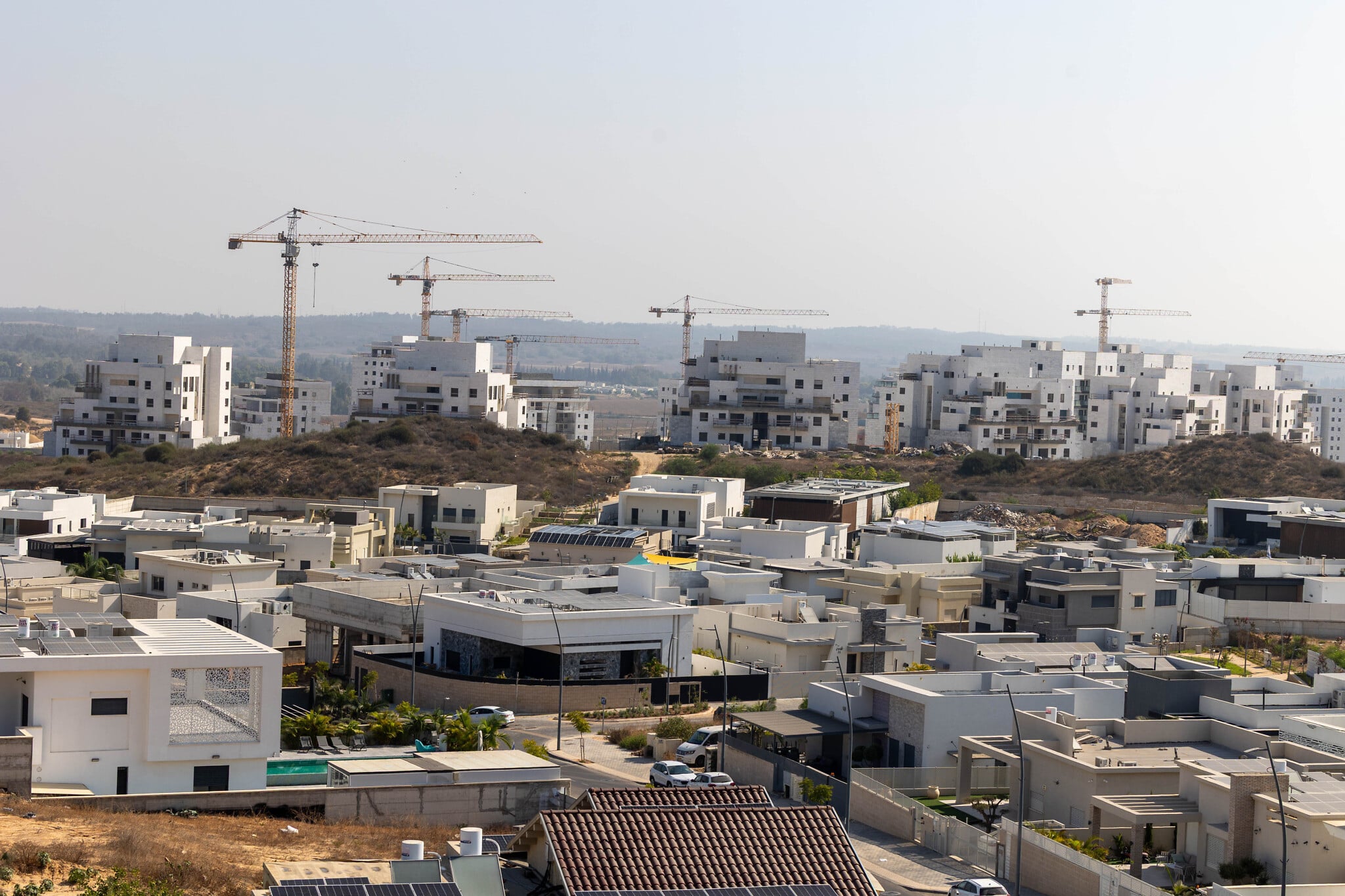
Despite it all, the city has prospered: gleaming new apartment buildings, parks and a sprawling mall greet visitors as they enter.
“If you were to input all the data about Sderot into OpenAI, the 25 years of rockets and October 7 and the bomb shelters, it would say this must be a ghost town. But that’s not the reality here,” said Ilan Abecassis, a retired educator and now tour guide who has lived in the city all his life.
Rather than shrinking, he said, the city’s population has grown by about 5,000 people since the Hamas-led invasion and massacre.
“I know it’s counterintuitive, but the more they try to destroy us, the stronger we become,” Abecassis said. “In the Torah, a new pharaoh sees the Israelite population growing and enslaves them. But the Torah tells us, ‘The more they afflicted them, the more they multiplied and grew.’ We are like those Israelites.”
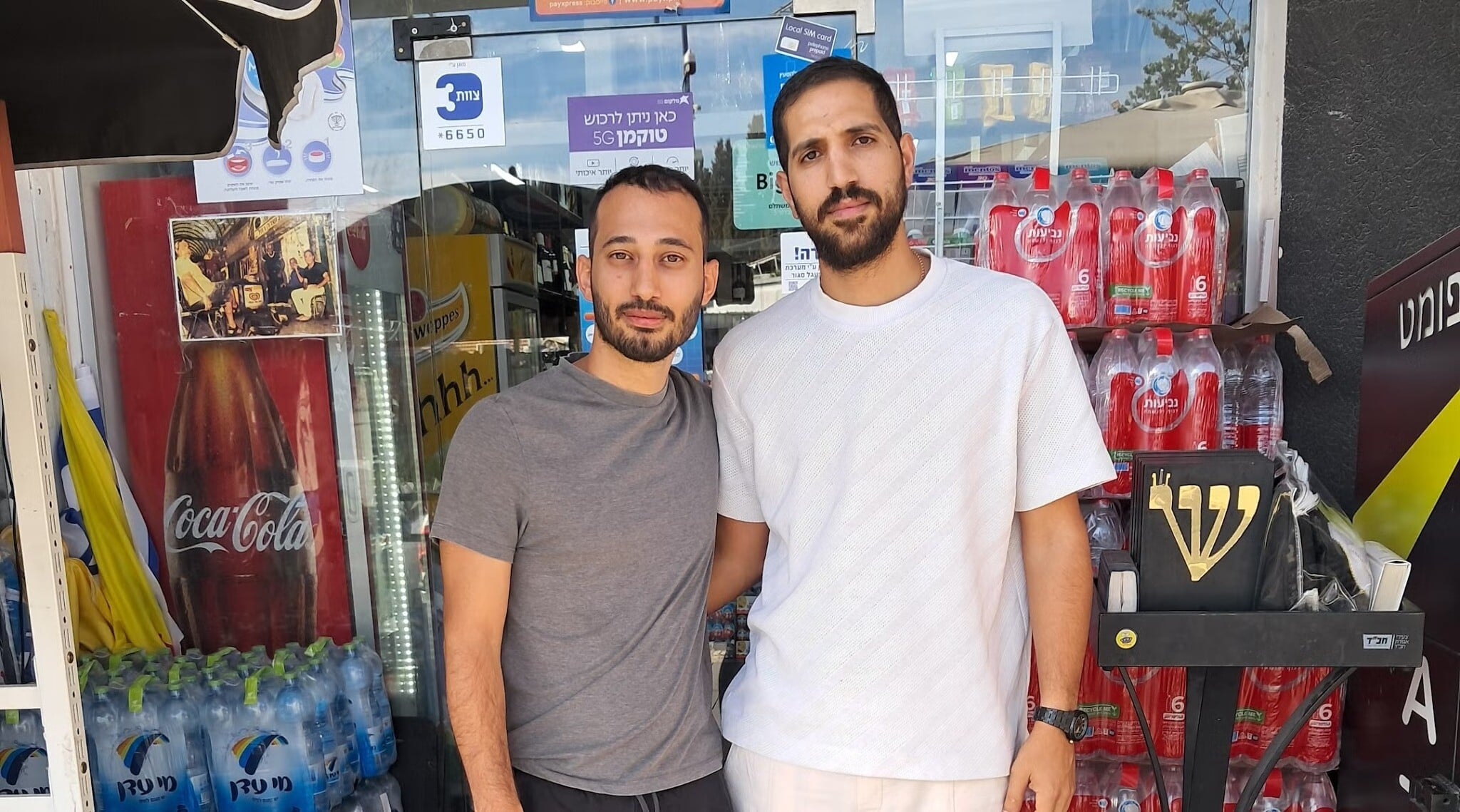
Arie Yagudaev, 30, from Sderot, and his cousin Eitan Izayev, 28, who lives in nearby Kibbutz Nir Am, said they are also committed to staying, even after they encountered terrorists in the street on October 7.
Drinking strong coffee outside his family’s grocery store in Sderot, Izayev recounted how he had begged his cousin to pick him up from the kibbutz, which terrorists were trying to infiltrate, so he could help defend loved ones in Sderot. Along the way, they picked up two teenage girls, survivors of the Nova music festival.
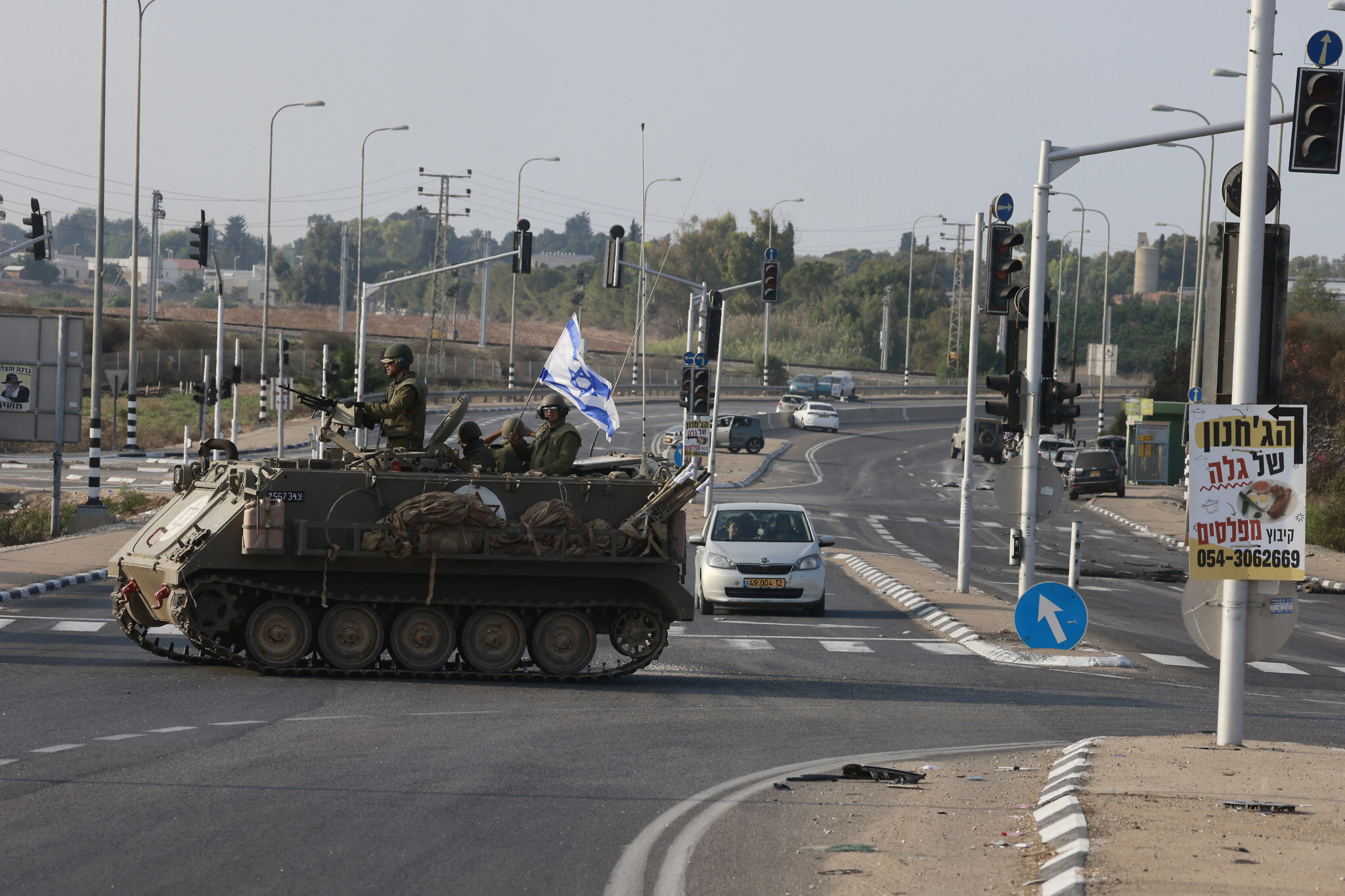
“As we approached the roundabout into Sderot, we saw some pickup trucks ahead of us,” Izayev recalled. “We thought the men in the bed of the truck were IDF soldiers. But when the terrorists saw us, they shot at us nonstop.”
“One of the bullets shattered my car’s back window. It’s a miracle we survived,” Yagudaev said. Even though he suffered from PTSD every night as an evacuee in an Eilat hotel room, he said, “I wanted to go home.”
“It wasn’t just because the hotel room was cramped,” he said. “Leaving Sderot and Israel is exactly what the terrorists want. We’re not going anywhere.”
One Sderot restaurant owner, who was born and raised in Sderot but moved to Kibbutz Nir Am several years ago, feels the same way.
“Not to return would be rewarding Hamas for its terrorism,” said the restaurant owner, who requested anonymity because of his ongoing stints in the IDF reserves.
As it was, he and his wife and baby spent almost a year in a small Tel Aviv hotel room before returning to their kibbutz two years ago. It wasn’t an easy homecoming, he said. For one thing, IDF soldiers had lived in their empty house, and it needed major repairs. Returning to the area also triggered traumatic memories from the Hamas attack.
“For 22 hours I stood outside our house to protect my wife and newborn baby,” he recalled, sitting at a table in his restaurant. “Eventually we decided to flee in our car with just the clothes we could throw into a trash bag. We placed the baby under the seat of the car, hoping to protect him.”
Once the owner of three restaurants, he now owns only one. He needed to sell the two popular restaurants he owned at another kibbutz because he couldn’t operate them from Tel Aviv. Back then, the Gaza border was an active war zone.
Although the Gaza border is much more secure due to the territory the IDF holds in Gaza, “it’s not quiet on the border,” he said. “We live one kilometer from Gaza. Every day we hear the choppers and the shooting.”
Still, he and his wife have no plans to leave.
“My parents live here, my grandparents live here,” he said. “On October 7 I saw an apocalypse, bodies on the ground. I knew 100 people who were killed or kidnapped. The ground beneath us is soaked with their blood. I can’t leave.”