Three years after October 7, Israel’s citizens and its leaders are worlds apart
The tragic story of Ambassador Leiter’s family reflects a society united in crisis, yet fundamentally betrayed by politicians who actively evade responsibility for their failures
Yechiel Leiter, Israel’s ambassador to the United States, has spent the past week and a half sleeping at Jerusalem’s Shaare Zedek Medical Center. He has been keeping vigil beside the bed of his son, IDF reservist Neria Leiter, who was seriously wounded in a terror attack last Wednesday at a checkpoint on Route 443, a major highway traversing the West Bank.
At the beginning of this week, the ambassador also saw his daughter, Sarah, leave the hospital. She had arrived there in her ninth month of pregnancy to visit her wounded brother — and ended up giving birth to her daughter in the building.
Since rushing back to Israel from Washington, Leiter has been beside himself. Last weekend, he shuttled back and forth between the intensive care unit where his son remains in serious condition, and the maternity ward, where he met his newborn granddaughter for the first time.
Extended family members and acquaintances are visiting constantly, praying in the hospital’s synagogue and waiting desperately for good news.
Amid this blend of joy and profound sorrow, one can spot the familiar face of Lt. Col. Yair Atias, the deputy commander of the IDF’s Givati infantry brigade. Atias is the proud father of the newborn baby girl, but under the current circumstances, he finds it difficult to smile.
During the height of the war in Gaza, Atias commanded Givati’s Shaked Battalion, which saw fierce combat and suffered devastating casualties. Recognizing his leadership, the military was supposedly slated to promote Atias to command the elite Duvdevan undercover commando unit. In the end, however, the IDF inexplicably passed him over, reportedly choosing another candidate for the prestigious role — the grandson of a highly prominent former politician. Atias has instead been promoted within Givati.
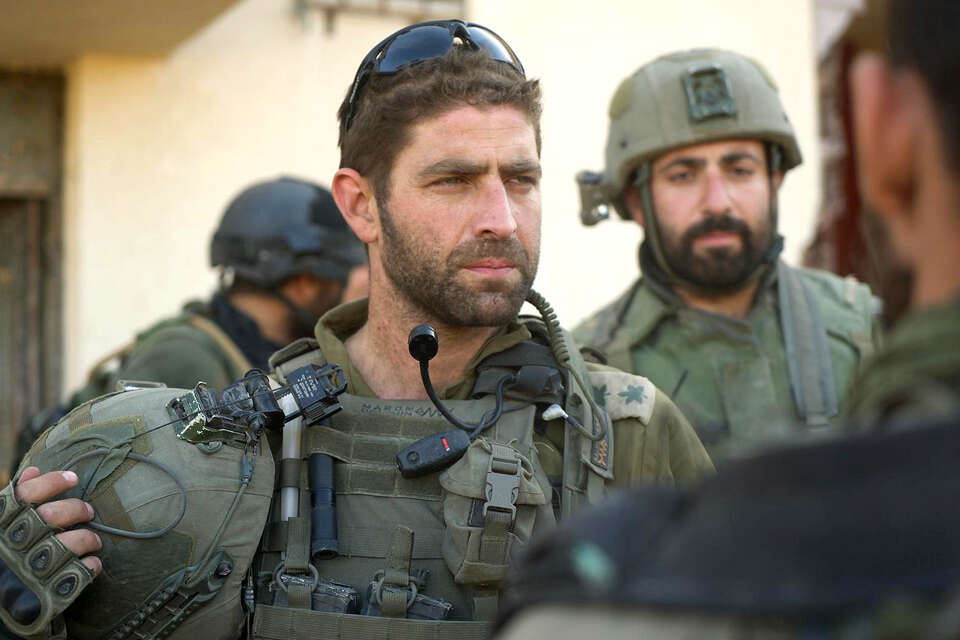
The Leiters have already made the ultimate sacrifice. Another son, Maj. (res.) Moshe Yedidya Leiter, was killed in November 2023 by a massive explosion from a booby-trapped Hamas tunnel shaft in the northern Gaza town of Beit Hanoun. Speaking at his funeral, his father said through tears that he hoped this would be the last eulogy he would deliver at the grave of a child.
Yechiel Leiter is a father of eight, seven of whom are living. “Ambassador Leiter’s family represents the public that serves and sacrifices for the State of Israel and for all of us. I very much hope for Neria’s full and speedy recovery,” prominent Israeli columnist Nadav Eyal posted on X last week.
The tragic story of Leiter’s family extends far beyond a private ordeal. It vividly encapsulates everything that has happened to Israel since the Hamas massacre of October 7, 2023. Israeli society climbed to the eighth floor of Shaare Zedek Medical Center, and in a certain sense, three years later, it is still stuck there — tightly united in grief, yet bitterly divided at the exact same time.
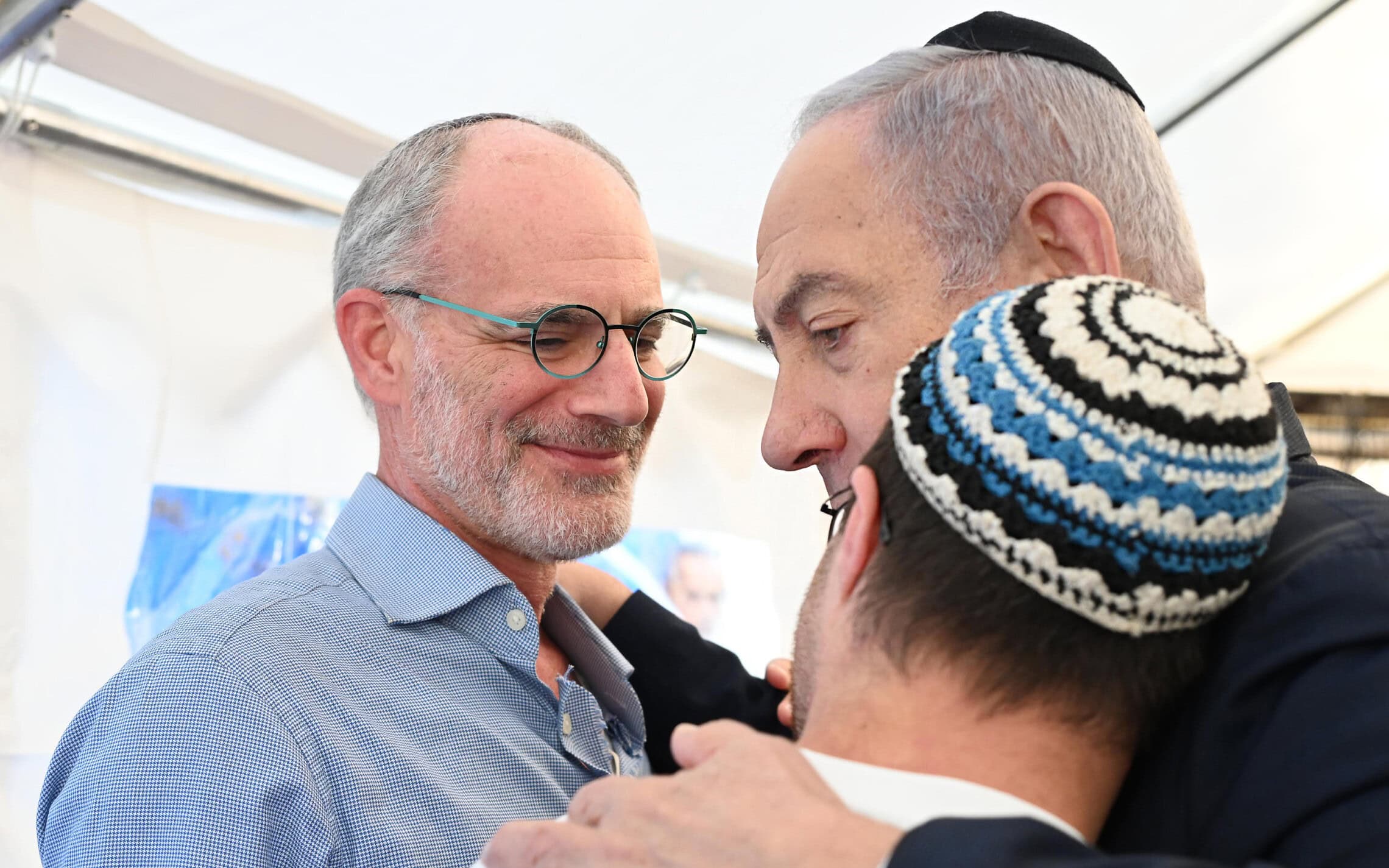
The Leiter family, from the West Bank settlement of Eli, is deeply identified with the hardline ideological right. The ambassador is a dedicated representative of the Netanyahu government. But in that hospital corridor, I encountered people from every conceivable corner of Israeli society who had come to offer support and encouragement. That is exactly what happens in times of national trauma. But temporary solidarity cannot conceal the deep fractures beneath the surface.
On the eve of the massacre three years ago, the country was tearing itself apart over the government’s judicial overhaul. Today, it is divided between those who risk their lives in military service and those who evade it. The gravest disaster Israel ever experienced only sharpened this systemic discrimination.
Since the war began, societal gaps have widened exponentially: between religious and secular Israelis, between ultra-Orthodox who refuse to serve and religious Zionists who disproportionately die in battle, between supporters and opponents of Prime Minister Benjamin Netanyahu, between Jews and Arabs, and between left and right.
Above all, this war exposed an unbridgeable gulf between the government and its citizens.
It is the gulf between a government fundamentally obligated to provide basic security, and residents left utterly helpless for hours in the face of a brutal assault by Hamas terrorists; between dogmatic senior army commanders who, seemingly paralyzed, failed to deploy rescue forces to Gaza border communities, and the grassroots civilian volunteers who grabbed their own weapons, risked their lives, and drove south to save whomever they could.
It is the inconceivable distance between a self-interested, corrupt, and arrogant leadership, and ordinary citizens who are vastly more capable and principled than the people governing them.

To a large extent, it is the glaring hypocrisy between families like the Leiters — who send their sons to bleed for the country — and a leadership that insistently passes legislation encouraging tens of thousands of young ultra-Orthodox men to evade the battlefield.
Battalion commander Atias, Leiter’s son-in-law, delivered a now-famous motivational speech in October 2023 to hundreds of Givati soldiers agitating to go into Gaza and fight. Atias demanded first and foremost that his troops uphold strict moral, Jewish, and humane standards — in stark contrast to the extremist politicians who remained safely behind the lines, embroiling the country in reckless, inflammatory rhetoric.
“Our mission is to destroy Hamas,” Lt. Col. Atias told his soldiers. “We will fight and remain human beings of the highest standard. We are the cutting edge of the State of Israel and the spearhead of the people of Israel.”
The war also laid bare the gulf between an irresponsible political and military establishment that ignored every advance warning, and the lower-ranking soldiers who saw the truth.
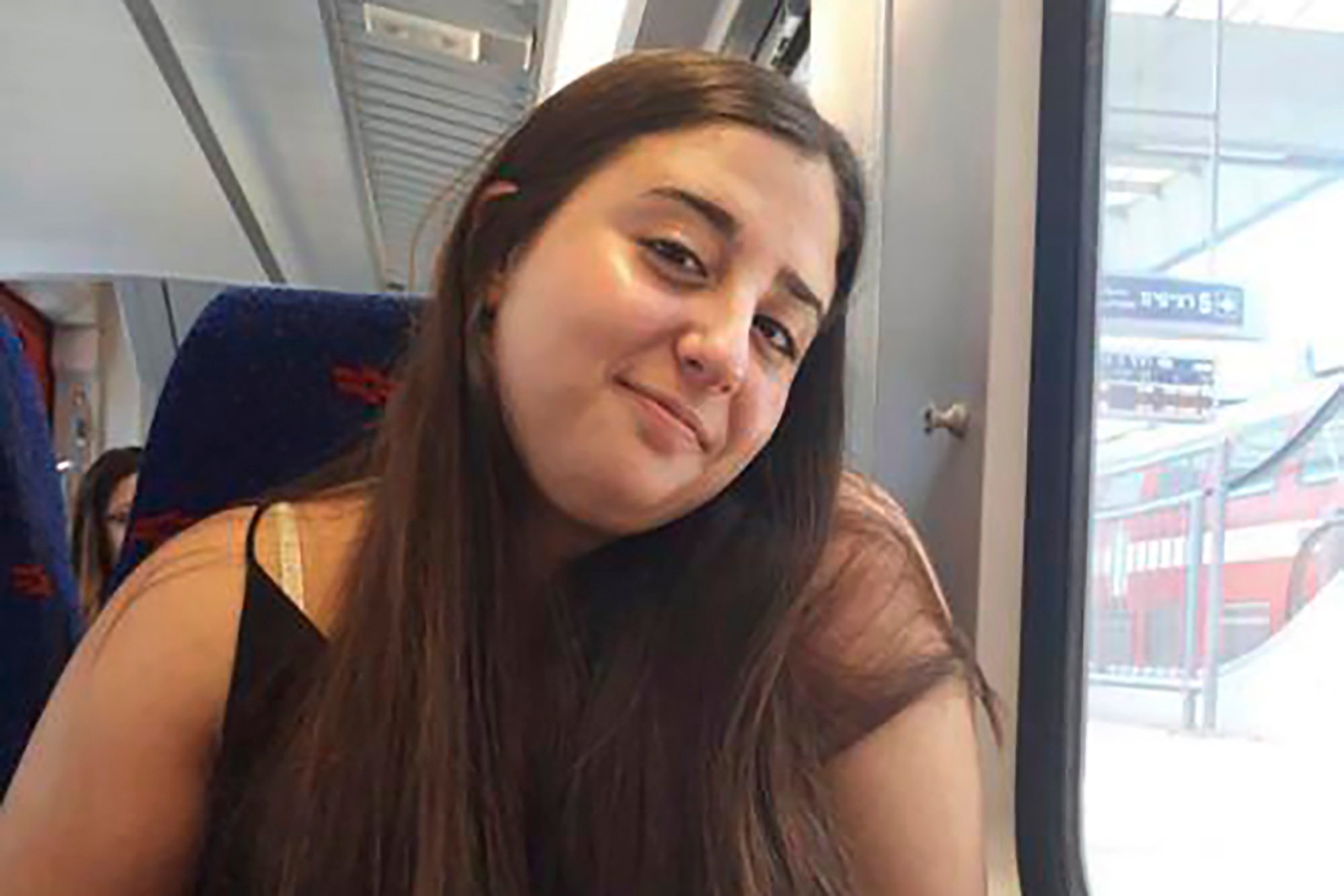
Consider Sgt. Roni Eshel, a young IDF surveillance soldier sitting in front of a screen at the border. Eshel issued clear, heartbreaking warnings that a massive Hamas assault was imminent, but her superiors dismissed her completely. She was murdered on October 7 at the Nahal Oz base.
It is the gulf between a leadership that refuses to plan for a postwar reality, perpetuates strategic failures, and drags Israel into unprecedented international isolation, and the vibrant civil society organizations that sprang up on day one to salvage the situation, assist displaced civilians, and fight to bring the hostages home.
It is a broad swath of a capable, caring public standing opposite a gaping vacuum of governance.
Finally, it is the gulf between an overwhelming majority of the Israeli public that demands a formal State Commission of Inquiry into the worst disaster in the country’s history, and a leadership that does nothing but evade accountability, block investigations, and flee from the truth.
Rabbi Ovadia Yosef, the late spiritual leader of the ultra-Orthodox Shas party, once famously said that “when the Holy One, blessed be He, is angry with His people, He puts at their head a blind goat that keeps walking and stumbling.” Three years ago, we learned the exact price of that catastrophic blindness.
Fortunately, the people of Israel have still not stumbled entirely in the footsteps of their failed leadership, even if many are exhausted and looking for an escape route. But if the leadership refuses to open its eyes, that resilience may soon run out.