Tibi exposes messages said to show Netanyahu camp sought Arab help while attacking parties publicly
Joint List MK reveals messages from longtime Netanyahu confidant Natan Eshel and says Likud minister also reached out and urged him to oppose Eisenkot-led government
Joint List MK Ahmad Tibi revealed messages during an interview with Channel 12 on Friday that he said he received from Natan Eshel, a longtime close associate of Prime Minister Benjamin Netanyahu, and accused the premier of privately seeking Arab lawmakers’ help in thwarting moves by Yashar chairman Gadi Eisenkot’s bloc while publicly attacking cooperation with Arab parties.
Tibi said the messages demonstrated what he described as the hypocrisy of Netanyahu’s campaign to delegitimize cooperation with Arab parties, arguing that Likud had sought their support when it suited the party.
Tibi said that, while he normally does not disclose private conversations, he had decided to do so after hearing Netanyahu’s latest speech in the Knesset, in which the prime minister accused Arab parties of involvement in “stealing” the election.
Netanyahu’s fiery address to the newly sworn-in Knesset on November 10 demanded a national unity government and warned against forming a coalition reliant on Ra’am or the Joint List. He accused Arab lawmakers of supporting terrorism and seeking Israel’s destruction, prompting Eisenkot to condemn the speech as “hate-filled” and Arab parties to denounce it as racist and inciting.
“You hypocrite. You sent your personal adviser to me a week before the election, the day after it, and again after the results were published,” Tibi said in the Channel 12 interview.
He also added that a minister from Netanyahu’s government also approached him this week, urging Tibi not to vote in favor of establishing an Eisenkot-led government and to push for another round of elections, telling him, “Don’t believe them, they won’t take you. It’s better that we go to elections.”

Tibi said he told the minister that the Joint List does not want another election, but rather to replace Netanyahu and far-right National Security Minister Itamar Ben Gvir, whom Tibi accused of inciting against Israel’s two million Arab citizens, with the assistance of Shin Bet chief David Zini.
Likud rejected Tibi’s allegations, calling them “a complete lie” and accusing Arab parties of trying to legitimize themselves. “Likud does not cooperate with parties that disrespect the national anthem and harm IDF soldiers,” the party said in a response to Channel 12.
Tibi also rejected Netanyahu’s allegations that Arab parties had helped “steal” the election. “Only a thief can call others thieves,” he said to the outlet. “A prime minister is supposed to behave responsibly. This is an attempt to delegitimize the leadership of the Arab public and two million Arab citizens.”
Netanyahu and Likud began alleging immediately after the October 27 election that Arab parties had “stolen” the vote, pointing to separate investigations into suspected vote-buying and possible foreign interference. Election officials have repeatedly said there is no indication the results were compromised, and Attorney General Gali Baharav-Miara said Sunday she had seen nothing that would “even remotely” affect the outcome.
Tibi attributed the sharp increase in Arab voter turnout to anger at the outgoing government and what he described as attacks and incitement against Arab citizens. “It was a heroic act of self-defense against a government that attacked the Arab public and incited against it,” he said.

He pointed to violent crime in Arab communities, rhetoric from far-right politicians Ben Gvir and Bezalel Smotrich and what he called an “existential threat” as factors that drove voters to the polls. “People went out in response to all of that and took action. I salute our public,” he said.
The disclosure came after Channel 12 separately reported earlier in the week that Eshel had repeatedly contacted Ra’am chairman Mansour Abbas before, during, and after the election, asking him not to help Eisenkot form a government.
According to transcripts cited in that report, Eshel asked Abbas before the vote whether Ra’am would support legislation preventing an indicted lawmaker from being tasked with forming a government, which could prevent Netanyahu, who is facing a corruption trial, from returning to office.
After the election, Eshel also asked whether Ra’am would support Eisenkot in the Knesset despite not being invited into his coalition. Abbas initially replied that the party would wait for the results before deciding, after which Ra’am stopped responding to Eshel.
Eshel denied that he had conveyed any messages on Netanyahu’s behalf. He told Channel 12 that he had asked “a few Arabs” whether they had “a shred of self-respect, or if they would support someone who doesn’t want them in his coalition,” and said Abbas had replied, “We’ll do what’s good for us.”

Asked during the interview about Yisrael Beytenu’s refusal to sit with or rely on Arab parties, Tibi said he had no praise for party leader Avigdor Liberman. He noted that Liberman had served as finance minister in the previous “change government” with the support of Arab lawmakers and had later been chosen to head the Knesset Foreign Affairs and Defense Committee with their votes.
“That is hypocrisy, and usually it’s dynamic — sometimes it’s directed against us and sometimes against the Haredim,” Tibi said.
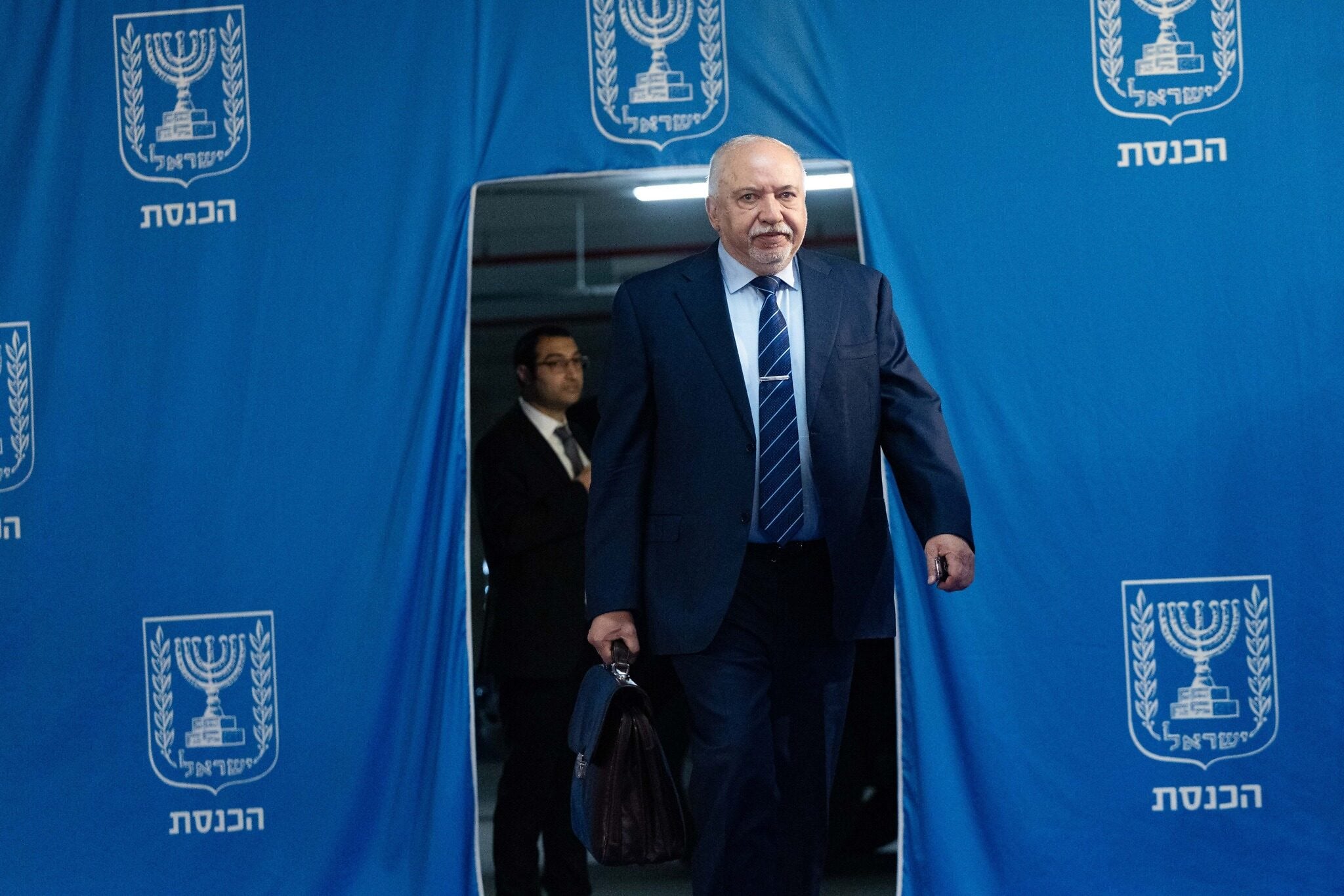
Liberman has repeatedly ruled out joining or supporting a government reliant on Ra’am or the Joint List, even while backing Eisenkot for prime minister. In recent days, however, he has softened another longstanding red line, saying he is prepared to consider joining a coalition with ultra-Orthodox parties and compromise on Haredi enlistment in order to avoid another election and end Netanyahu’s rule.