Trails of blood in a supermarket aisle
The Hebrew-language media mourns the death of Tuvia Yanai Weissman, 21, who was stabbed by two 14-year-old Palestinians in a West Bank market
Haunting images of blood-stained aisles at a West Bank supermarket are pasted across the front pages of Israel’s major Hebrew-language newspapers, as the country bemoans the death of yet another Israeli stabbed by Palestinian attackers.
“The youngest murderers of the intifada,” reads the headline of Yedioth Aharonoth, as it determines that the current round of violence is a full-fledged uprising, and draws attention to the fact that the two assailants are only 14.
Tuvia Yanai Weissman, 21, a resident of the West Bank settlement of Ma’ale Mikhmas, died of his wounds from the terror attack at the Rami Levy supermarket in the Sha’ar Binyamin Industrial Zone, located southeast of Ramallah in the West Bank. “The 30-second victim,” reads a caption accompanying a photo of Weissman along with his wife and four-month-old daughter.
A second man, 36, was seriously wounded in the attack Thursday afternoon, but is now reported in moderate and stable condition.
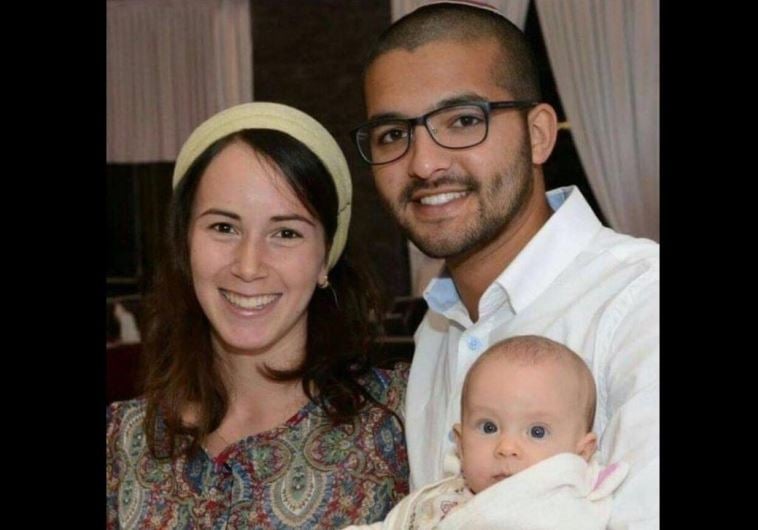
In Israel Hayom, the same heartbreaking photograph of Weissman, smiling as he holds his daughter, is displayed on the front page. The Israeli daily focuses on the “heroism of the civilians,” pointing out that the two attackers were prevented from carrying out further stabbings by locals who warded them off with shopping carts, until the Palestinians were shot and neutralized by an armed shopper. Omar Rimawi and Ihad Sabah, both 14, from Beitunia near Ramallah, were later identified as the two Palestinian attackers. Sabah died of his wounds. Rimawi remains hospitalized.
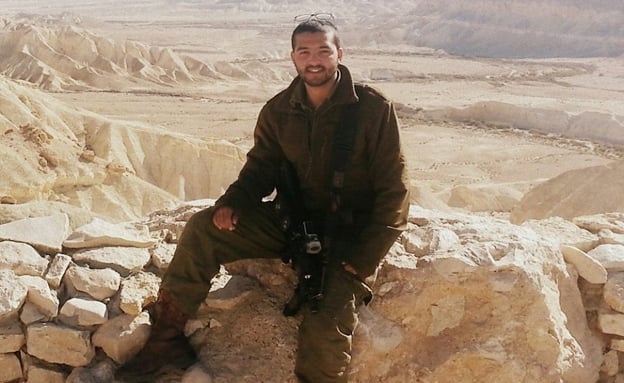
Haaretz leads with the attack as well, but dedicates a larger segment of its front page to a report on what it calls a “dramatic increase” in demolitions of Palestinian homes built illegally in the West Bank. According to the paper’s Amira Hass, 49 buildings in Palestinian villages were destroyed by the government on average every week since the beginning of the year, up from an average of nine in the parallel period of 2015. Hass says in the past six weeks, as a result of the demolitions, 480 people, among them 220 children, have lost their homes and now have no roof above their head. Most of the demolitions took place in the West Bank’s Area C, which is under full Israeli control. The exact reason for the sudden increase is not entirely clear, but Hass speculates that right-wing legislators from the Jewish Home party have been pressuring the Civil Administration to crack down on illegal construction in the West Bank.
The surprise acquittal of Nir Somech, a former Border Police officer who spent three years — out of the 14 he was sentenced to — in prison after being convicted of murder in 2013, is reported in all three major Hebrew-language dailies, who tout the affair as one of the most dramatic High Court decisions in recent memory.
Somech had confessed to killing his one-time neighbor, Ben Tal, but maintained that he had acted in self-defense, and that he and his wife had for years repeatedly been threatened by Tal, who was apparently infatuated with Somech’s wife. After three years of appeals, the court accepted Somech’s versions of the events, according to which Tal had charged at him with an iron bar before the former policeman shot Tal in the head three times. Israel Hayom says the acquittal “finally brought the truth to light,” and Yedioth hails the fact that Somech is a “free man.”
Yedioth reports that Culture Minister Miri Regev is planning to hand out special awards to musicians from the “Mediterranean” or “Eastern” genres, who, she said, have been neglected for years in favor of Western music. “It is about time that such musicians receive a warm hug from the establishment as well,” she said.