Turkey arrests 2 suspected of plotting IS attacks in Europe
Local news outlets say Danish citizen and Swedish national received months of weapons, explosives training in Syria
ISTANBUL, Turkey — Two men suspected of planning Islamic State group attacks in Europe were arrested in Turkey following 10 days of being interrogated by police, Turkey’s state-run agency reported Saturday.
The two were named as Abdullah El Halabi, 35, a Danish citizen of Lebanese origin, and Muhammad Tofik Saleh, 38, a Swedish citizen of Iraqi origin. They received weapons and explosives training in Syria for the past three months, the Anadolu Agency said.
Both men allegedly joined IS three years ago, the private Dogan news agency said. They illegally traveled back into Turkey 12 days ago, it added. Police then raided a house where the men were hiding in the southern Adana province near the Syrian border and questioned them for 10 days, the agency said.
“The two Daesh members were planning bloody attacks in Europe,” it said, using an Arabic acronym for the jihadist group.
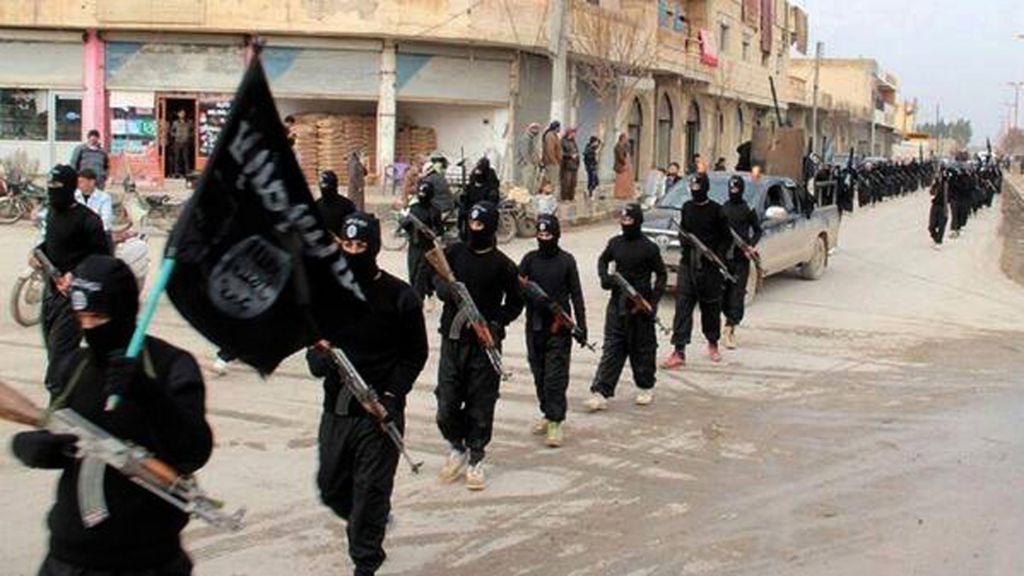
Anadolu said Saleh’s wife had informed Swedish authorities that he had crossed from Turkey to Syria and joined IS in 2014, along with his two daughters. The agency says the wife didn’t go to Syria and returned to Sweden.
The agency said the two men entered Turkey using fake identification with the intention of going to European countries.
Swedish intelligence agency SAPO confirmed the arrest of a Swedish national to the Aftonbladet daily.
“We are now concentrating on getting more information about this arrest and finding out what the Turkish investigation has shown,” SAPO spokeswoman Nina Odermalm Schei said.
In January, Interior Minister Suleyman Soylu said more than 52,000 people from 145 countries were on a no-entry list and some 4,000 people have been deported. Nearly 750 people with alleged IS links were detained in a major police sweep in 29 Turkish provinces last week.
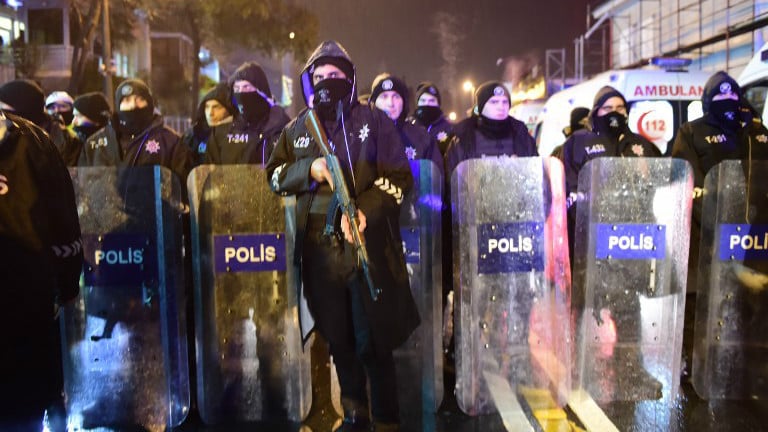
Turkey has been hit by a string of attacks by IS, most recently on New Year’s Eve in an Istanbul nightclub that left 39 people dead. The gunman, Abdulkadir Masharipov, was caught on Jan. 16 and formally arrested Saturday.
With coalition-backed Iraqi forces fighting IS in Mosul and Syrian Democratic Forces closing in on Raqqa, the capital of the so-called caliphate, fears have increased that IS fighters leaving Iraq and Syria may carry out attacks elsewhere.
In its 2017 terror threat assessment, Denmark’s intelligence agency — known by its acronym PET — pointed to an “increased terror threat against Denmark” with foreign fighters potentially heading home.