Turkish mosques in Germany back away from Ankara
Amid fears of divided loyalties and foreign influence post-coup attempt, local Muslim federation declares political neutrality
FRANKFURT — A key Turkish religious organization in Germany said on Sunday it would further distance itself from Ankara after politicians and media raised concerns of foreign influence.
Mosque federation Ditib “is and will remain politically neutral,” spokesman Zekeriya Altug told the Frankfurter Allgemeine Sonntagszeitung (FAS) newspaper.
“Apart from the imams supplied by the Diyanet (Turkey’s religious affairs agency), there is no financial support from the Turkish state or the Diyanet,” he said.
Some media and politicians have raised fears of divided loyalties among Germany’s roughly three-million-strong Turkish population — and suggested Ditib’s imams could be relaying political messages from the Turkish government.
Ditib hosts imams trained in Turkey and paid by Diyanet — most of whom are unfamiliar with German culture and may not even speak the language — at its 900 mosques and Islamic associations.
Altug’s comments were more conciliatory than a statement released by Ditib on August 8 in which the group rejected all criticism based on fears of foreign control of its imams.
The spokesman said Ditib would look for alternative sources of funding to train and pay preachers.
“In 10 years, at least half our imams will be socialized in Germany” thanks to a Ditib-funded program to send German-born imams for training in Turkey, he said.
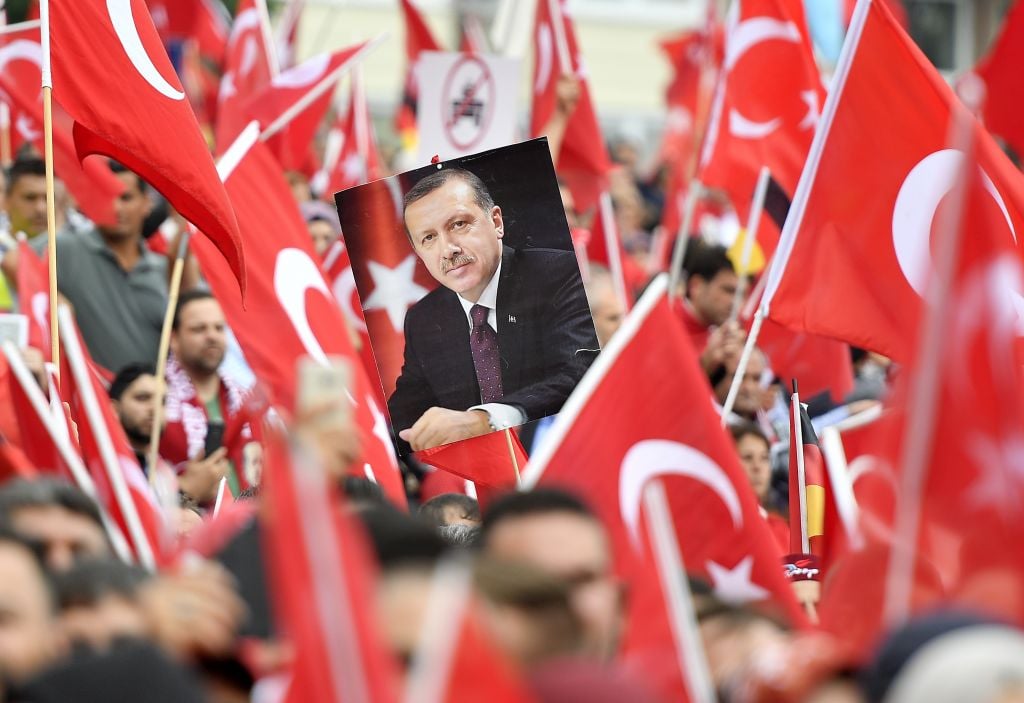
Supporters of President Recep Tayyip Erdogan demonstrated in Cologne and other cities following a failed putsch in July, stoking concerns that internal Turkish tensions could be exported to Germany.
Erdogan complained bitterly to the German government that he had not been allowed to address the crowds in Cologne by video link.
In an interview with the Bild am Sonntag weekly, Berlin Mayor Michael Mueller said Turkish officials had asked whether he would be prepared to act against schools belonging to the Gulen religious movement.
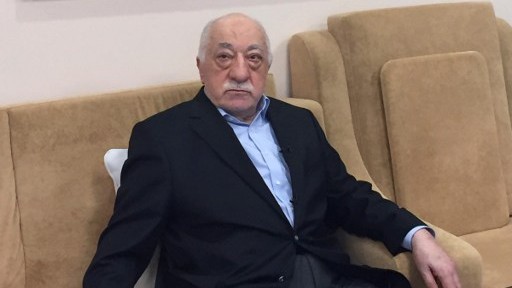
Erdogan accuses US-based preacher Fethullah Gulen, a former ally, of orchestrating the July 15 coup attempt.
Mueller said he had “made it very clear that Turkish conflicts cannot be carried out on our soil.”
Meanwhile, the state of Lower Saxony has delayed an agreement to recognize Ditib as its official Muslim civil society organization in the wake of the coup attempt and Erdogan’s harsh response.