Inaugural TV summit brings ‘Mad Men’ creator Matthew Weiner to Jerusalem
Jerusalem Sessions aims to create collaborative efforts during three-day meetup of Israeli and international television professionals
Some of television’s biggest names and creators will converge on the capital this weekend for the inaugural Jerusalem Sessions, a summit bringing together global entertainment leaders.
“Mad Men” and “The Sopranos” creator Matthew Weiner, “The Americans” showrunner Joel Fields, “In Treatment” and “Scenes from a Marriage” writer Hagai Levi, Sigal Avin of ‘Losing Alice’ and Hagar Ben Asher of “Bad Boy” are among the international and Israeli creatives who will attend, leading masterclasses and participating in discussions that will kick off on Saturday.
The first two days of the event will focus on small, closed gatherings and collaborative meetings held at Jerusalem-based video and image editing company Lightricks.
The summit will conclude on Monday, December 8, with a marathon of masterclasses and discussions open to the public and held at the National Library of Israel. Tickets for that day are sold out, though.
The conference is the product of the Jerusalem Media Initiative at the Jerusalem Development Authority (JDA), a joint agency of the Israeli government and the Jerusalem municipality. The summit is modeled after similar industry summits such as Series Mania and Canneseries.
The director of Jerusalem Sessions is Daniel Susz, a former staff member of the Jerusalem Film Festival who co-founded Scripted Israel Los Angeles. That summit was held in 2022 and 2024 and brought together delegations of Israel’s top TV producers, writers and executives in Hollywood for an array of intensive networking and professional programs.
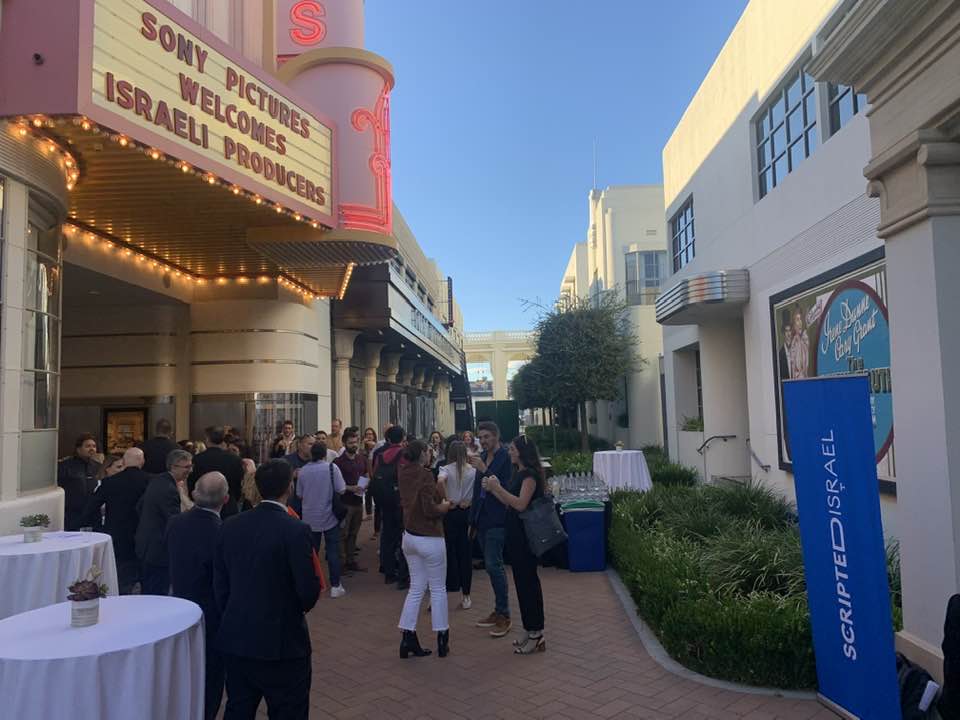
Eyal Benbenisty, who directs the JDA’s Jerusalem Media Initiative, had a vision to host the event in Jerusalem after attending Scripted in Los Angeles.
Holding it in Jerusalem, rather than Tel Aviv, brings attention to all the obvious tensions that define existence in Israel, rather than trying to avoid them, said Susz.
“At a time when people prefer to avoid ‘sensitive’ issues, and as the State of Israel — with all the inherent sensitivities of hosting international guests at this moment — we are offering exactly the opposite,” said Susz. “We’re not afraid to confront tensions, disagreements, and to hold an open and respectful discussion.”
Susz was conducting conversations about the realities of coming to Israel with potential guests long before any final decisions were made.
He spoke with industry executives, many of whom refused the invitation to attend, while others were willing to entertain the idea.
“We convinced some people. We had some difficult conversations with others, and some people just said no,” Susz said.
Those kinds of conversations have been at the crux of Susz’s work since he moved to New York with his partner in 2019 and began working at the Foreign Ministry to advance Israeli filmmaking in the US. This eventually led him to the television world.
At the time, he found that Israeli films, which were often partially funded by government budgets and non-profit organizations, were more difficult to manage in the liberal, progressive film space.
The TV world, however, was a very different ecosystem — more commercial in nature and closer to technology and funding.
“I began turning to studios, producers, Hollywood decision makers, Apple, and Netflix, and was shocked that they wanted to speak to me,” said Susz.
It was during the COVID-19 pandemic in the US that Susz began working with Israeli actor and producer Tchelet Semel, representing the Consulate General of Israel in LA by organizing Zoom sessions with Israeli and American TV creatives and professionals.
“It just worked from both sides, and the Americans liked it,” he said.
They realized it made sense to do a physical gathering and held the first event in 2022. Following the Hamas terrorist attack of October 7, they felt there was no reason to wait to work on the next gathering and held another in September 2024 in Los Angeles.
“I spend a lot of time telling people that the right thing to do is to engage, rather than canceling us,” said Susz. “Canceling [Israelis] is just easier. It’s more challenging to talk, but it’s a better option.”