Two days after Paris, two days after Otniel
Hebrew media examine the bloody attacks on the City of Light, leaving scant room for Israel's own terror victims
All Hebrew media eyes are on Paris in Israel’s Sunday editions, the first newspapers to come out since the Friday night attacks that left at least 129 dead in the City of Light.
Israel’s own Friday afternoon shooting attack, in which father and son Yaakov and Netanel Litman were killed, is left to play second fiddle to the flood of reports and analyses on the Paris attacks offered by the major Hebrew dailies.
Haaretz’s above-the-fold spread offers a total of eight articles on the attacks, including articles written by two of the newspaper’s staffers sent to Paris.
Not to be outdone, Yedioth Ahronoth has three of its veteran reporters, Nahum Barnea, Eldad Beck and Ben-Dror Yemini, in Paris to provide on-the-scene commentary — and announces this at the very top of its front page.
Yedioth Ahronoth makes use of the Eiffel Tower/peace sign image throughout its coverage of the deadly attacks.
The Israel Hayom tabloid, meanwhile, is the only daily paper to place the Otniel terror attack at the top of its front page, though its small photos of the victims pale in comparison to the images and dramatic headline — “The slaughter and the shock” — about France that cover most of the front page.
The only surprising thing perhaps in these Friday night attacks is that they only happened now.
In addition to reports on the stunned, uncomfortably still atmosphere on the streets of Paris, most of the newspapers’ correspondents offer only advice on what the French should have done to prevent the attack.
“The only surprising thing perhaps in these Friday night attacks is that they only happened now. France’s involvement in the fight against the Islamic State and the ease of striking France made experts believe that this could have happened long ago,” Yoav Limor writes in Israel Hayom.
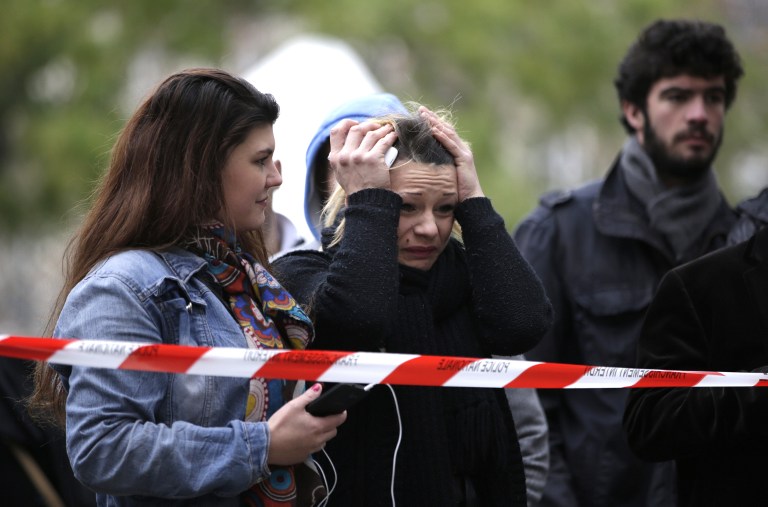
“It seems the next terrorist attack in France, or in another European city, can only be prevented through intelligence and early detection,” Haaretz’s Anshel Pfeffer, one of the two reporters sent by the broadsheet to Paris, writes.
“The moment the attackers are already within the target city with weapons and explosives, it is almost impossible to stop them,” he adds.
One of the Yedioth Ahronoth reporters, who was only in Paris by chance at the time of the attacks, describes his harrowing experience of finding out about the three nearly simultaneous assaults while eating a Shabbat meal with friends.
“Towards the end of the meal we started getting the text messages. Is everything OK? We had no idea what had happened,” Ben-Dror Yemini writes.
“I came to a Paris that was happy and lively; I leave it gloomy and stunned,” he says.
Hanoch Daum for Yedioth Ahronoth draws a parallel between the attacks in Paris, which left at least 129 dead and another 352 injured, and the shooting attack in Otniel, outside of Hebron.
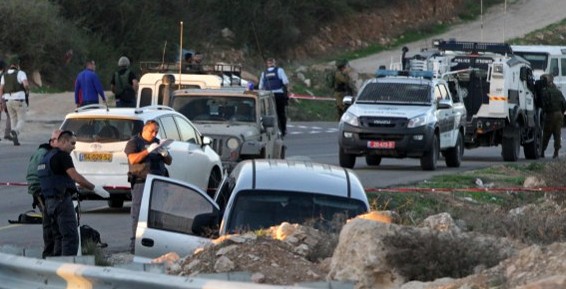
“There is a connection between the murder of Yaakov and Netanel Litman on Friday south of Mount Hebron, the brutal execution of a father and son who were driving to a family occasion, and the horrors that took place a few hours later in Paris,” Daum writes.
“There is evil in this world, and it is forbidden to try to understand it,” he writes.
Next to Daum’s article, the paper headlines its article on the Otniel shooting with a quote from Yaakov Litman’s daughter. The Litmans had been traveling at the time of the shooting to a Shabbat gathering in honor of her upcoming wedding this week.
“Father, I wanted you to be at my wedding. Who will walk me down the aisle now?” the paper quotes her as saying during the funeral on Saturday night.
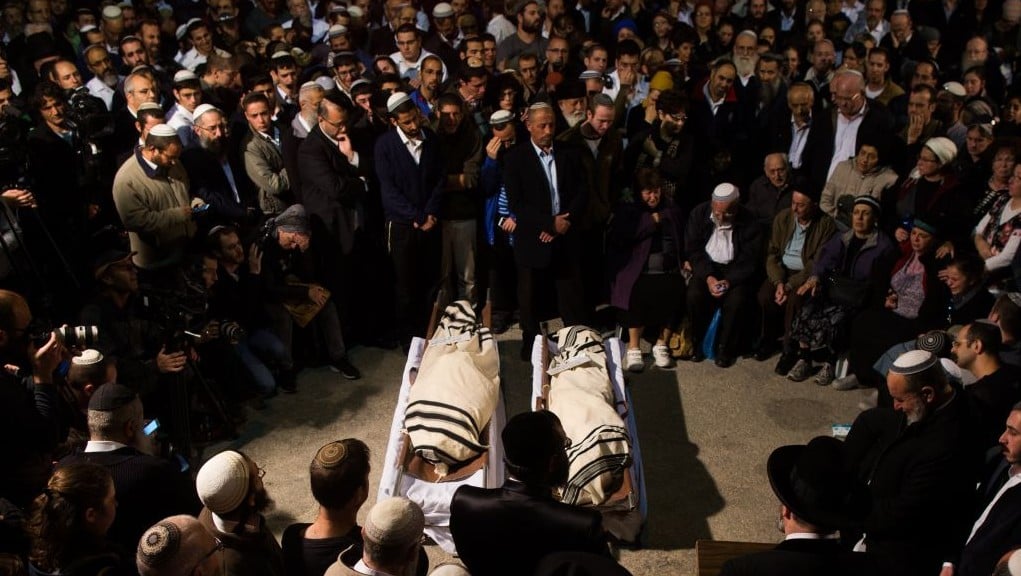
Israel Hayom also uses a similar quote as the headline for its article on Friday’s tragedy and Saturday’s funeral.
All three newspapers address the claim that a Red Crescent ambulance did not assist the family bleeding in their car following the attack.
Israel Hayom’s columnist Emily Amrusi even goes so far as to call the paramedics “terrorists” in her piece on the allegation.
“The Red Crescent terrorists refused to give assistance and finished the act of murder. Maybe they could have saved one of them,” she writes.
Haaretz cites the emergency medical service’s official response, which claims the ambulance did stop at the scene and try to help, only to be shooed away by Israeli soldiers with guns drawn.