Two Hezbollah operatives killed in Lebanon strikes — IDF
Attacks on terror group in Naqoura, Beqaa Valley, come as defense minister, US envoy tour border
Two Hezbollah operatives were killed in Israeli drone strikes in Lebanon on Sunday, the military said, amid an uptick in attacks on the terror group.
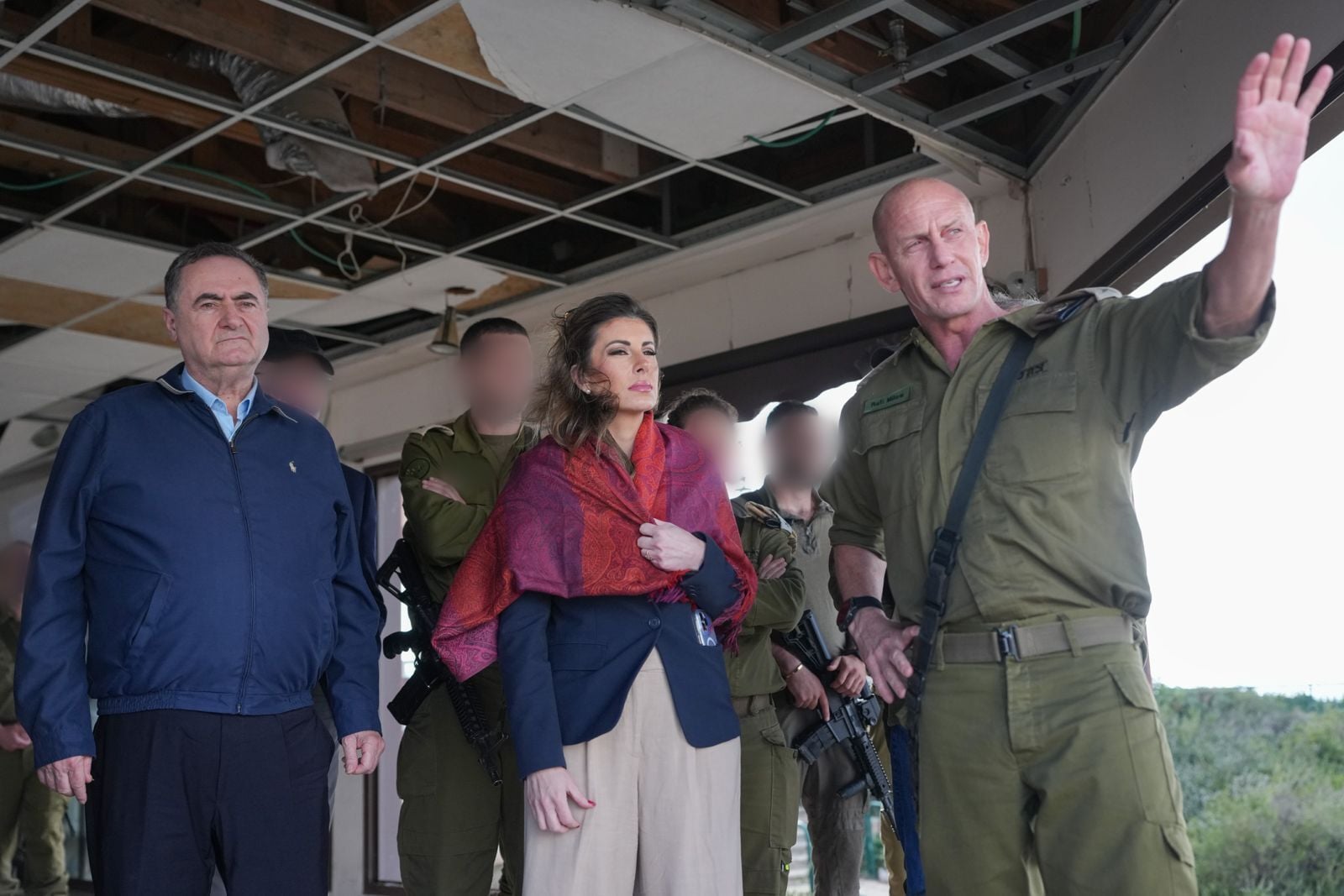
The strikes came as Defense Minister Israel Katz toured the Lebanon border with US envoy Morgan Ortagus.
The first strike, near the southern Lebanon town of Naqoura, killed Abd a-Sayed, who the military said served as Hezbollah’s local representative in the nearby village of Ras al-Bayada.
As part of his role, a-Sayed was responsible for liaising between the terror group and the residents “on economic and military matters,” the Israel Defense Forces said.
The IDF said a-Sayed was also involved in efforts to restore Hezbollah military capabilities in the village.
The second strike near the village of Nabi Chit in the eastern Beqaa Valley killed Ali Hussein al-Mousawi, who the IDF said was a weapons smuggler for the terror group.
The IDF said that as part of his role, “he handled the purchasing and transfer of weapons from Syria to Lebanon,” and he also “played a significant role in the reestablishment and strengthening of Hezbollah.”
“Throughout the past year, the terrorist has continuously smuggled weapons for Hezbollah,” the military said.
Lebanese authorities also reported two dead in the strikes.
Katz’s office said IDF commanders briefed the defense minister and the US Mideast envoy on the strikes targeting the two Hezbollah operatives during their tour of the border.
Also joining the tour were US Ambassador to Israel Mike Huckabee, Israeli Ambassador to the US Yechiel Leiter, Northern Command chief Maj. Gen. Rafi Milo, and other IDF and US Central Command officers.
Katz and Ortagus were briefed on Hezbollah’s activities in Lebanon, including efforts to rebuild its infrastructure, and the pair later toured the border and visited the border community of Misgav Am.
The military has repeatedly struck what it said were Hezbollah targets whose presence or actions violated the November 27 ceasefire, which ended over a year of conflict initiated by Hezbollah.
The strikes on Sunday followed several other Israeli attacks in Lebanon in recent days.
On Saturday, two commanders in Hezbollah’s elite Radwan Force were killed in drone strikes in southern Lebanon. On Friday, the IDF killed, in two separate strikes, a pair of Hezbollah operatives — including a senior commander — involved in restoring the terror group’s capabilities in south Lebanon.
A series of Israeli raids on south and east Lebanon on Thursday also killed four people, including an elderly woman, Lebanese authorities said, with the IDF saying its targets included a Hezbollah weapons depot, a training camp, a missile manufacturing site and other military infrastructure.
And on Wednesday, the IDF said it assassinated a platoon commander in Hezbollah’s elite Radwan Force in southern Lebanon, accusing him of moving weapons and working on future attacks.
The US-brokered ceasefire with Hezbollah came after two months of open conflict in south Lebanon, which Israel invaded in a bid to ensure the return home of some 60,000 northerners displaced by Hezbollah’s near-daily attacks. The rocket attacks began on October 8, 2023 — a day after fellow Iran-backed terror group Hamas invaded southern Israel, sparking the war in Gaza.
The ceasefire required both Israel and Hezbollah to vacate southern Lebanon, to be replaced by the Lebanese armed forces. Israel has withdrawn from all but five strategic posts along the border.
Since the ceasefire, the IDF said it has killed over 330 Hezbollah operatives in strikes, hit hundreds of Hezbollah sites, and conducted over 1,000 raids and other small operations in southern Lebanon.
Weakened by the war and still facing regular Israeli strikes, Hezbollah is under internal and international pressure to hand over its weapons, with the Lebanese army having drawn up a plan to disarm it.