UN agency report details Gaza’s ‘unprecedented socioeconomic collapse’ since Oct. 7
The UN Conference on Trade and Development identifies immediate priorities like transferring withheld Palestinian revenues and safeguarding the banking system for recovery
Gaza will need an estimated $71.5 billion to recover and reconstruct, according to a report published on Thursday by the United Nations Conference on Trade and Development, or UNCTAD.
The UN agency found that 92 percent of Gaza’s “economic establishments have been damaged or destroyed” since October 2023 and reported that the territory’s daily per capita GDP is $0.58 a day, while prices are 274 percent higher than they were in 2022.
“The collapse of the economy of Gaza is the world’s most severe economic crisis on record,” said Pedro Manuel Moreno, acting secretary-general of the UN Conference on Trade and Development (UNCTAD), speaking to reporters in Geneva. “It has wiped out decades of development and generated an acute economic crisis for its people.”
The report studied the deterioration of the economy since the Gaza war between Israel and Hamas began on October 7, 2023. The invasion of southern Israel by the terror organization that sparked the war killed 1,200 people, mostly civilians.
The war has killed more than 73,400 people in Gaza, including more than 1,330 since the October 2025 ceasefire, according to health officials linked to Hamas. The toll does not differentiate between combatants and civilians, but Israel believes the toll is largely accurate, with IDF officials estimating that two to three civilians were killed for every dead terror operative.
An October 2025 US-backed ceasefire halted major fighting in the shattered territory, but it failed to end strikes by the Israeli military, which it has said are meant to thwart attacks by Hamas and other Gaza terrorists.
Before October 7, “two out of three Gazans were poor. Today, everyone in Gaza is multidimensionally poor,” said Mutasim Elagraa, UNCTAD’s coordinator for assistance to the Palestinians.
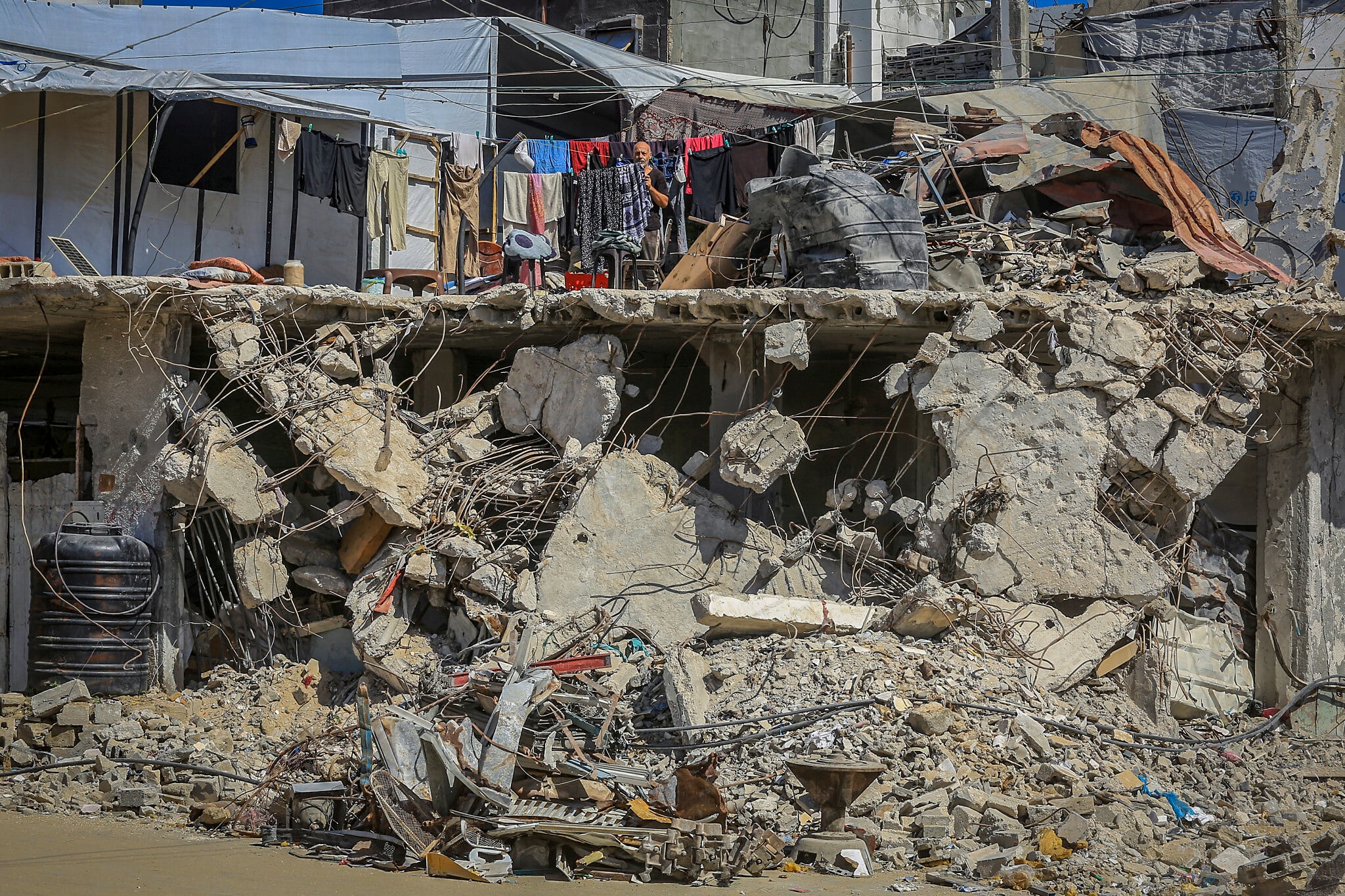
The report found that many sectors have remained far below their 2022 output levels, including agriculture and construction.
Because of severe job losses, more than 90 percent of Gaza’s working-age population is unemployed, according to the UN report.
An assessment by the World Bank, the European Union and the United Nations estimated physical infrastructure damage in Gaza at $35.2 billion and economic and social losses at $22.7 billion as of early 2026.
Palestinian authorities have also been calling attention to the impact of Israel’s actions in the West Bank.
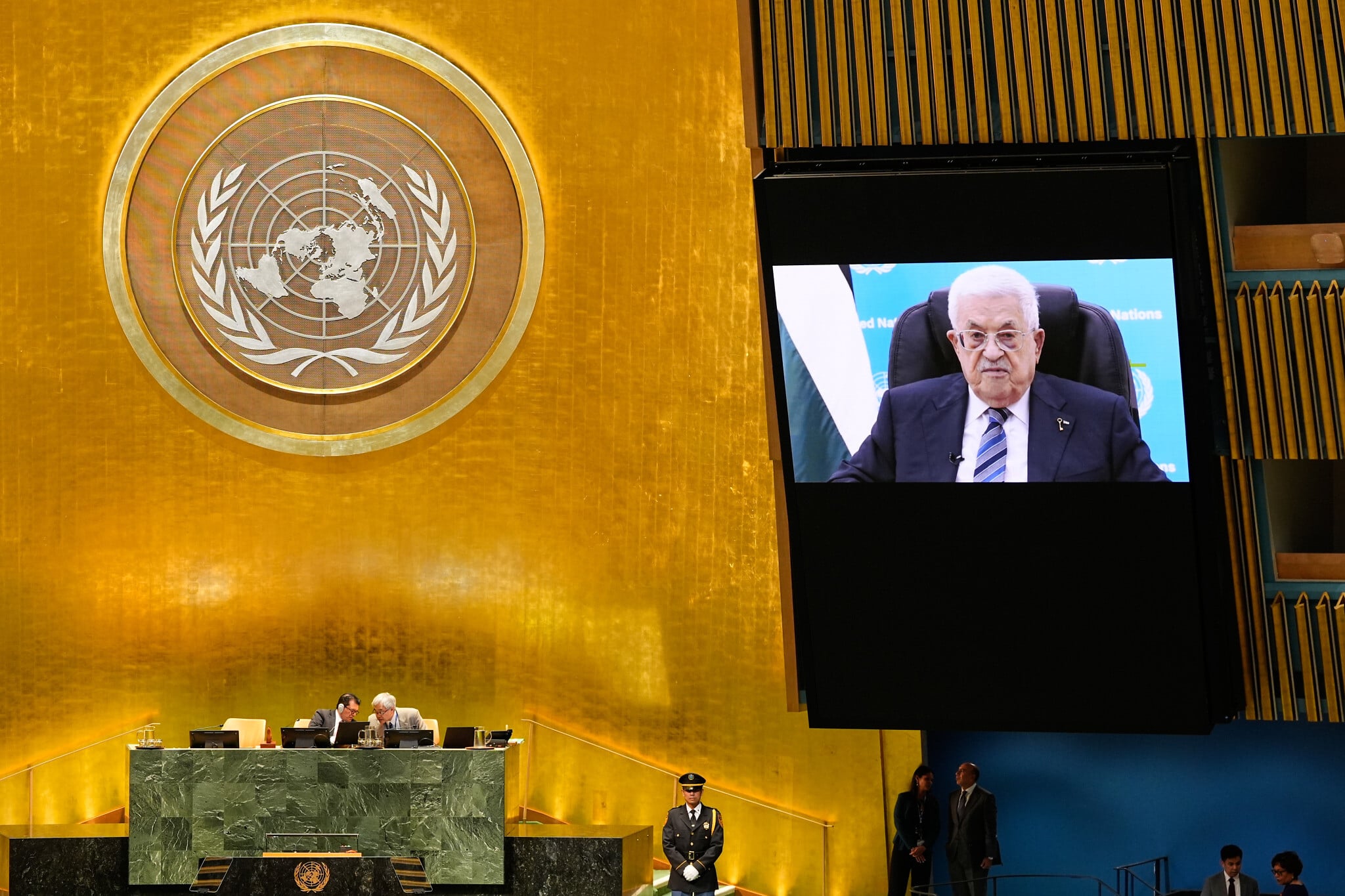
During the 81st session of the United Nations General Assembly at UN headquarters on Thursday, Palestinian Authority President Mahmoud Abbas delivered remarks in a pre-recorded video. He said, “Settlement expansion is accelerating, the West Bank is being fragmented… and settler terrorism is escalating under the protection of the occupation forces.”
The UNCTAD report also included the tightening constraints on economic activity in the West Bank.
In April, Israel’s Finance Ministry, led by Bezalel Smotrich, confirmed that it has not released Palestinian Authority tax revenues for a year. This came after PA Prime Minister Mohammad Mustafa said that the lack of transfers left the authority cash-strapped and unable to pay employees.
Since 2019, Israel has deducted amounts from tax revenues that are equivalent to the Palestinian Authority’s payments to security prisoners held by Israel and the families of those who carry out terror attacks targeting Israelis. Meanwhile, Ramallah has insisted it halted that policy last year.
Beginning in November 2023, following the Hamas-led October 7, 2023, attack and outbreak of the war in Gaza, Israel has transferred only partial funds, also deducting sums the PA had allocated to Gaza, including salaries for former PA employees and services such as electricity and water. The PA said at the time that it would refuse to accept partial transfers.
According to a statement from the Finance Ministry, the remaining funds — beyond those allocated to Gaza — “have been frozen for about a year due to the minister’s policy not to transfer funds to the Palestinian Authority in light of its actions against the State of Israel in the international arena and its support for incitement to terrorism.”
The report identified immediate priorities, including the transfer of withheld Palestinian revenues and safeguarding the banking system.