UN envoy back in Yemen as crisis deepens
Diplomat returns after meeting with Ban Ki-moon; Sanaa still battling Shiite rebels backed by Iran
SANAA, Yemen (AP) — The UN envoy to Yemen has returned to Sanaa and resumed contacts with major political players to find a way out of a deepening crisis caused by a Shiite rebel takeover, participants in the talks said Sunday.
Jamal Benomar had left suddenly for Saudi Arabia last week, where he is believed to have held consultations with visiting UN Secretary-General Ban Ki-moon. He returned to Sanaa late Saturday and held meetings with all the main political factions, including leaders of the ruling Revolutionary Committee set up by the rebels, known as Houthis.
The Houthis are under mounting pressure following their decision on Friday to dissolve parliament, which cemented their takeover less than five months after they seized the capital, Sanaa. Late Saturday, the party of former president Ali Abdullah Saleh — the Houthis’ main ally — added its voice to the growing opposition to the takeover and called for a return to the dialogue moderated by Benomar.
On Sunday, provincial leaders in Maarib east of Sanaa decided that they would resist any attempt by the Houthis to seize the energy-rich province east of Sanaa. The Houthis have been preparing a campaign to capture the province, but the emergence of a strong tribal alliance there as well as a heavy presence by al-Qaeda’s branch in Yemen have dissuaded them from pressing ahead.
A statement by the province’s so-called security commission, on which the governor and the local police and military chiefs sit, said it views Sanaa as an “occupied” city and that the province will resist the “coup’s policies.”
A powerful alliance of six Arab nations led by Saudi Arabia and the United Arab Emirates has denounced the Houthis’ “coup.” Egypt, a regional powerhouse with longtime interests in Yemen, says it is alarmed and is closely monitoring the situation there. On Sunday, the ambassadors of Egypt, Germany and Russia met with senior members of the Houthi movement to urge the group to return to the US-sponsored dialogue, according to officials, who spoke on condition of anonymity because they were not authorized to speak to the media. They gave no further details.
The Arab world’s poorest country is reeling from the crisis, with many areas experiencing lengthy power and water cuts. Authorities are finding it increasingly difficult to pay government salaries on time.
Yemen is home to one of al-Qaeda’s most active branches. Militants target army and security forces on a near-daily basis across much of the country, and US drone attacks targeting the militants have killed civilians, fueling popular resentment.
The Houthis’ capture of the capital in September and its formal takeover over the weekend puts the country of at least 25 million on a slippery path to civil war or sectarian strife. The Shiite Houthis have clashed with al-Qaeda militants, who are Sunni and backed by powerful tribes in northern Yemen.
The Houthi takeover has also stoked secessionist sentiments in the south, raising fears of a repeat of the 1994 civil war, when the formerly independent south attempted to break away from its union with the north, forged four years earlier.
Last month, the rebels raided the presidential palace and besieged the residence of President Abd Rabbo Mansour Hadi, a southerner. Within days, Hadi and his Cabinet resigned. They remain under house arrest.
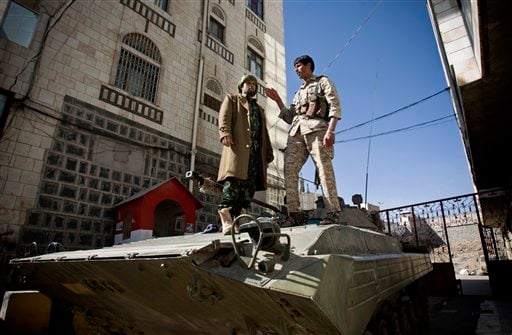
Hadi was elected president in 2012 after a popular revolt forced Saleh to step down.
Like the Houthis, Saleh is a member of the Zaydi sect, a small branch of Shiite Islam that exists almost solely in Yemen. Zaydis represent about 30 percent of Yemen’s population.
The Houthis’ opponents view them as a proxy of predominantly Shiite Iran, charges denied by the rebels.
Copyright 2015 The Associated Press