Israel’s UN envoy raps Security Council for silence on terror
Ron Prosor chastises world body for failing to condemn Jerusalem attacks and Palestinian incitement
Israel’s ambassador to the UN rebuked the Security Council for its silence in the aftermath of multiple terror attacks by Palestinians in Jerusalem over the past two weeks.
“If recent events offer any indication, the Security Council will once again remain silent as Israel buries yet another victim of Palestinian terrorism,” Prosor wrote Wednesday in a sharply worded letter to the world body’s most important organ.
“Shortly after the attack Hamas claimed responsibility, calling the perpetrator a ‘martyr’ and describing the attack as ‘a heroic operation,’” he added.
Prosor referred to a Wednesday attack in which a Palestinian man with ties to Hamas plowed his car into a crowd of people, killing an Israeli border policeman and injuring over a dozen other people near a Jerusalem light rail station.
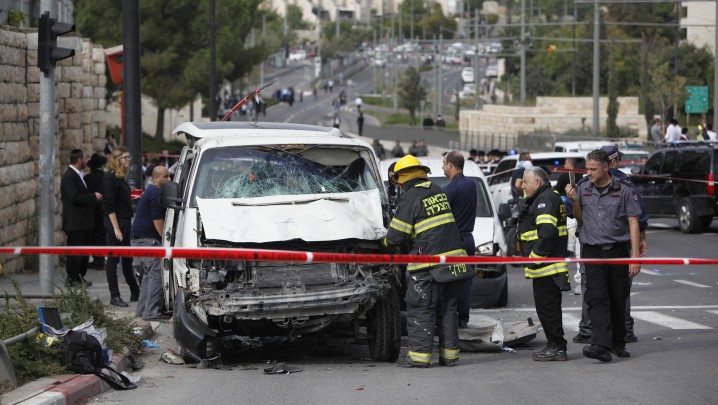
While the United Nations and its secretary general released a statement condemning the attack and calling for “deescalation,” the Security Council has yet to issue a formal condemnation of the attack, or of a similar attack that left two people dead, one of them an infant, two weeks ago, or of the attempted assassination of a right-wing activist last week.
The ambassador accused the Security Council of sitting quietly by as Palestinian Authority President Mahmoud Abbas incited violence by calling “on Palestinians to prevent Jews from visiting the Temple Mount using ‘all means’ necessary.”
He concluded: “I write to you today with the full expectation that the Council will continue adhering to its vow of silence. Should the Council revise its policy and deem it appropriate to condemn the Palestinian leadership’s incitement and the violence that follows, I will be the first to commend the Council for embracing sound judgment and upholding international peace and security.”
The Palestinians have accused Israel of provoking the violence by continuing settlement construction in the West Bank and East Jerusalem, which the Palestinians envision as the capital of their future state, and by right-wing lawmakers’ calls for changing the five-decade status quo on the Temple Mount.
Times of Israel staff contributed to this report.