UN unanimously backs Syria peace plan, but no mention of Assad
US, Russia, Saudi Arabia and Iran all commit to blueprint for negotiations and set of principles for country's future
UN Security Council members have unanimously approved a UN resolution endorsing a peace process for Syria including a ceasefire and talks between the Damascus government and the opposition.
But the resolution adopted Friday makes no mention of the most contentious issue — the future role of Syrian President Bashar Assad.
The resolution acknowledges that the peace process will not end the conflict because it bars “terrorist groups” operating in the country, including the Islamic State and al-Nusra Front, from participating in a ceasefire.
US Secretary of State John Kerry said the resolution sends “a clear message to all concerned that the time is now to stop the killing in Syria.”
Foreign ministers from 17 countries met on and off for more than five hours to overcome divisions on the text.
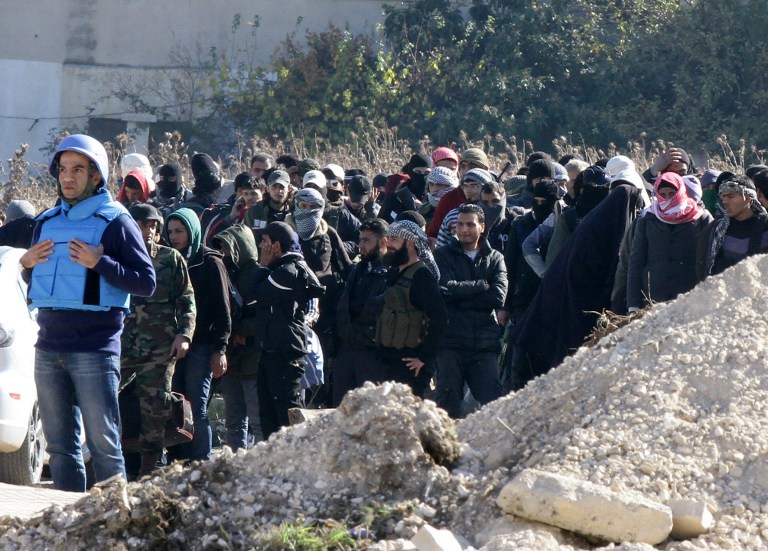
Earlier Friday, the Associated Press reported that nations meeting in New York essentially negotiated a Russian plan for a “political transition,” based on the Syrian government’s consent and with no clear reference to Assad’s departure.
And as they look for a way to secure and enforce a peace that has proved all too elusive since 2011, Russia’s recent military intervention appears to be providing the key leverage. As President Barack Obama said earlier this month, rebels who join the process could enjoy “pockets of cease-fire” where they no longer face Syrian or Russian bombs. The implication was that those who refuse could still be targeted.
In any event, diplomats from East and West said the chances for ending the conflict between Assad’s military and moderate rebel forces were better now than they’ve been for a long while. All spoke of seizing the momentum of several groundbreaking meetings in recent months.
For the first time, the rise of the Islamic State group has the US, Russia and even sworn enemies such as Saudi Arabia and Iran committed to a blueprint for peace negotiations and a set of principles for Syria’s future.
There are other signs of progress. The opposition is finalizing the makeup of its delegation for talks with the government that are supposed to start next month. Jordan is close to completing a list of militant groups that could join a unity government, and which, like the Islamic State and al-Qaeda, would be declared terrorists and enemies of all.
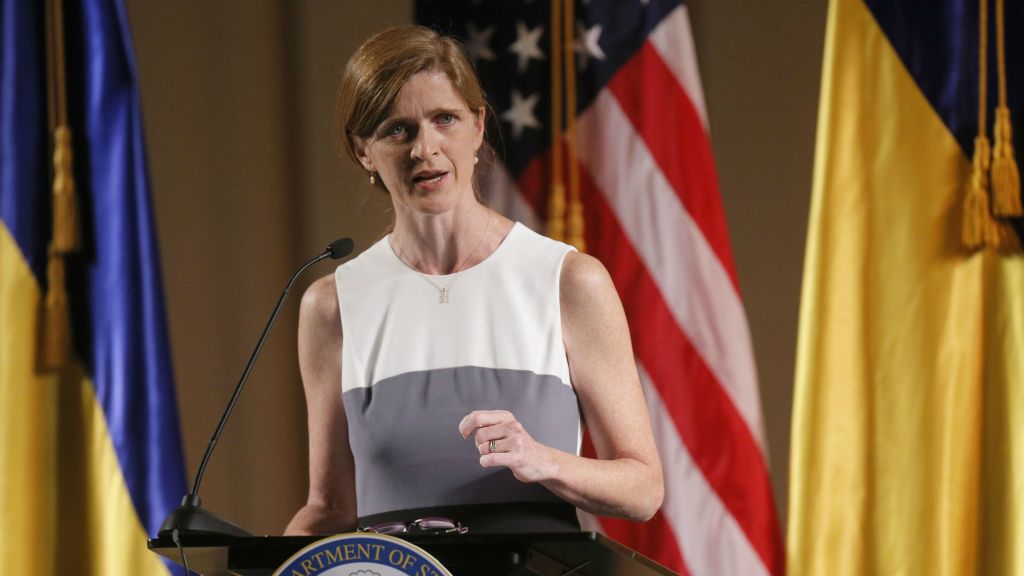
Earlier this week, Samantha Power, the US ambassador to the United Nations, told reporters that even with a resolution in the offing, “very real” gaps remain.
For one, the Russian division of “terrorist” vs. legitimate rebel forces differs significantly from that of US and Arab governments, diplomats say. And no agreement can be reached if Russia isn’t satisfied.
An even bigger divide concerns Assad himself, with Washington desperate to secure a guarantee that he will eventually leave office in a transition, having abandoned Obama’s previous demand that the Syrian leader step down immediately. Russia has spent the last five years blocking any international strategy or UN resolution that would show Assad the door.
Matthew Rycroft, Britain’s UN ambassador, said a Security Council resolution on the Syrian peace process would be a “very rare showing of unity” for world powers who’ve been bitterly divided even as death tolls have soared past 300,000 and migrant crises and violent attacks have engulfed Europe and beyond.

To this day, the US and its European and Arab allies are supporting anti-Assad rebels with training, equipment and funds. Russia is providing not only diplomatic and financial cover to Syria’s government, but targeting Assad’s moderate opponents in airstrikes, according to Western governments. Meanwhile, Iranian soldiers and proxy Hezbollah forces are dying on the battlefield alongside Assad’s troops.
Nevertheless, top diplomats such as Secretary of State John Kerry have found cause for optimism in declarations that all are now interested in securing a broad peace that would allow the world to concentrate on defeating Islamic State extremists. The group has exploited the war’s chaos to seize large parts of Syria and Iraq for its self-proclaimed caliphate.
The shared commitment against IS has governments believing they can sidestep their disagreements on Assad and other matters to end the killing. For the US, that has meant increasingly vague statements on when Assad might have to relinquish authority and even declaring the opposition’s demand for his immediate ouster — long America’s own stance — a “non-starting position.”
In many ways, the parameters of the international mediation were framed early on in Syria’s war by disagreements between Washington and Moscow. Russia prevailed in many of these disputes.
When diplomats gathered in Geneva in June 2012 to hash out a strategy, UN peace envoy Kofi Annan wanted a transitional government that would exclude “those whose continued presence and participation would undermine the credibility of the transition and jeopardize stability and reconciliation.”
“That was code for excluding Assad,” former Secretary of State Hillary Clinton, who backed such language, noted in her book “Hard Choices.”
But the Russians balked, and also prevented the inclusion of any penalties for noncompliance.
As a compromise, Clinton said she herself put forward the idea of a new Syrian government comprised of individuals chosen by “mutual consent,” believing that an accord along such lines would leave “Assad and his cronies … stripped of their authority.” The Russians took it as providing the Syrian leader a veto over any proposal for a would-be replacement.
The plan never went anywhere. After Kerry replaced Clinton as secretary of state, the talk went from “changing Assad’s calculus” to something closer to Russia’s position: an acknowledgement that he wouldn’t have to give up the presidency on “Day One” of a transition.
When direct talks between the Syrian parties finally occurred in 2014, they never even got to questions of leadership. Yet as the world community now tries again, the so-called “Geneva communique” is still accepted as the basis for diplomacy.
The United States has a lot riding on engineering a cease-fire and jumpstarting Syria’s transition.
Obama, who has ruled out any significant deployment of US ground forces, has failed to build an American-trained, local fighting force or cajole Arab partners into sending their forces into Syria to defeat the Islamic State. While Kurdish Peshmerga and Arab militants have fought effectively, no one sees their numbers or strength as sufficient to achieve the mission.
The US may have greater luck if peace between Syria’s government and mainstream rebel groups holds. American officials hope each would then cooperate and turn their guns on IS, with regional powers such as Saudi Arabia filling the remaining needs for a ground force.
It’s unclear if everyone would be on board, or if Russia would view such developments in its interests.