Unable to pay teachers, PA cuts West Bank students’ classes for fourth year running
With Israel withholding money needed to full fund government salaries, Palestinian public schools have been shuttered for half the week since 2023, and test scores may be starting to show the damage
For three days a week, Mahdi Daraghmeh sends his three kids, 6, 8 and 13 years old, off to elementary school.
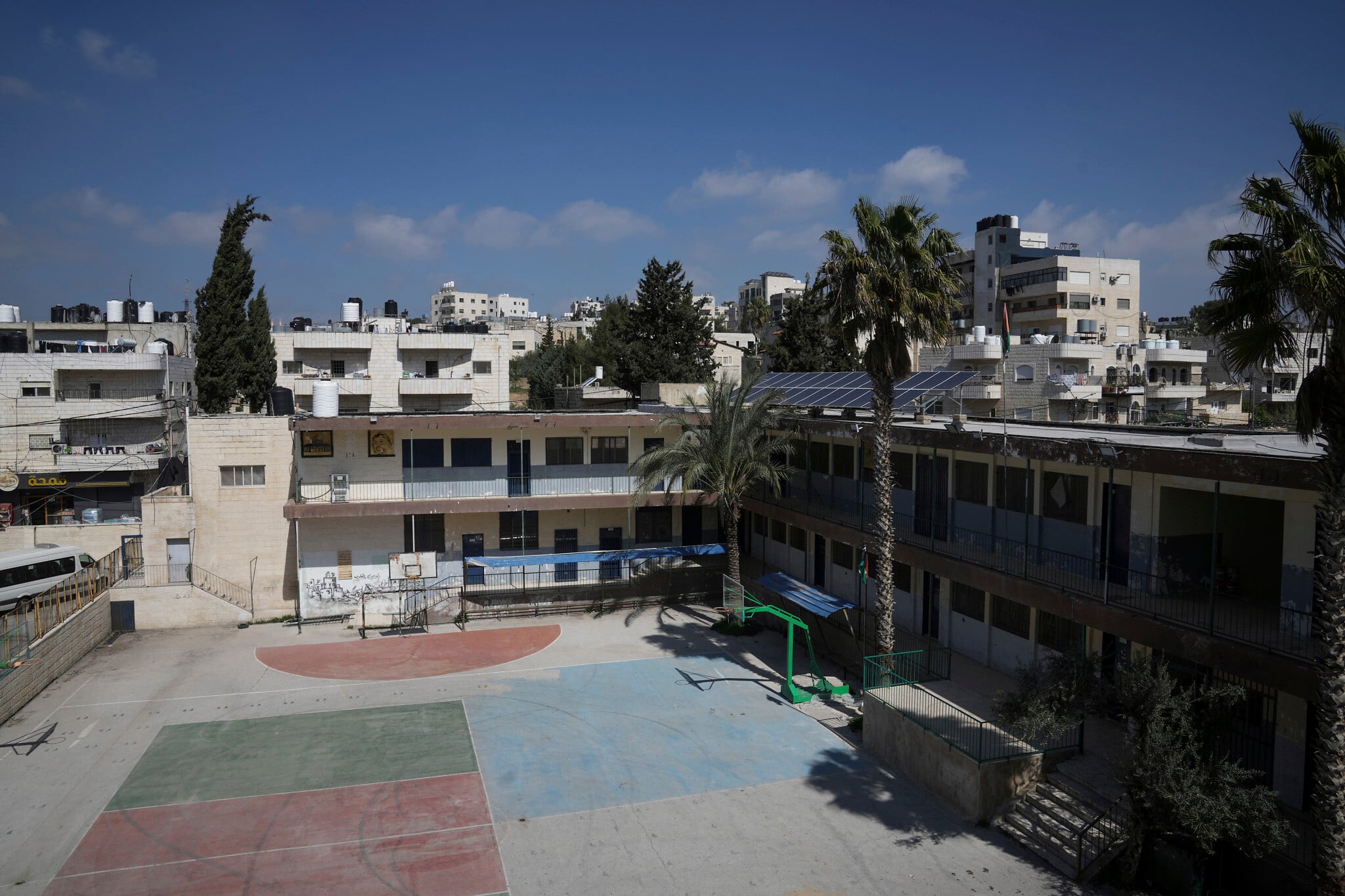
The rest of the week, though, the school is shuttered, leaving the kids staring at screens at their northern Jordan Valley home rather than learning in a classroom.
“They’re on smartphones and playing games,” Daraghmeh told the Times of Israel. “They forget everything they learned.”
The three-day school week is not unique to Daraghmeh’s West Bank town of al-Malih, nor is it a new schedule.
For the fourth year running, hundreds of thousands of students attending Palestinian Authority schools across the West Bank are learning only part-time, their educational prospects curtailed by a financial crisis that has no end in sight.
Though there has been little international attention or public outcry among Palestinians over the issue, test scores published in September showed declining levels of educational attainment among Palestinian 15-year-olds in 2025, seemingly offering the first hard evidence of the damage being caused by the reduced schooling.
“International organizations and experts in the field are certain that there has been a decline in academic performance because three days aren’t enough,” a West Bank principal, who asked not to be named, told The Times of Israel. “It’s a dangerous sign for the future of education.”
At the school he runs, serving first to ninth grades, students and teachers are present just three days a week rather than the standard five, as they were for the previous three academic years.
Like other teachers and PA employees, the principal said he has been receiving only a partial salary for the past three years — 50 percent of his regular pay, or around NIS 2,800 ($911) a month. Others have been getting even less.
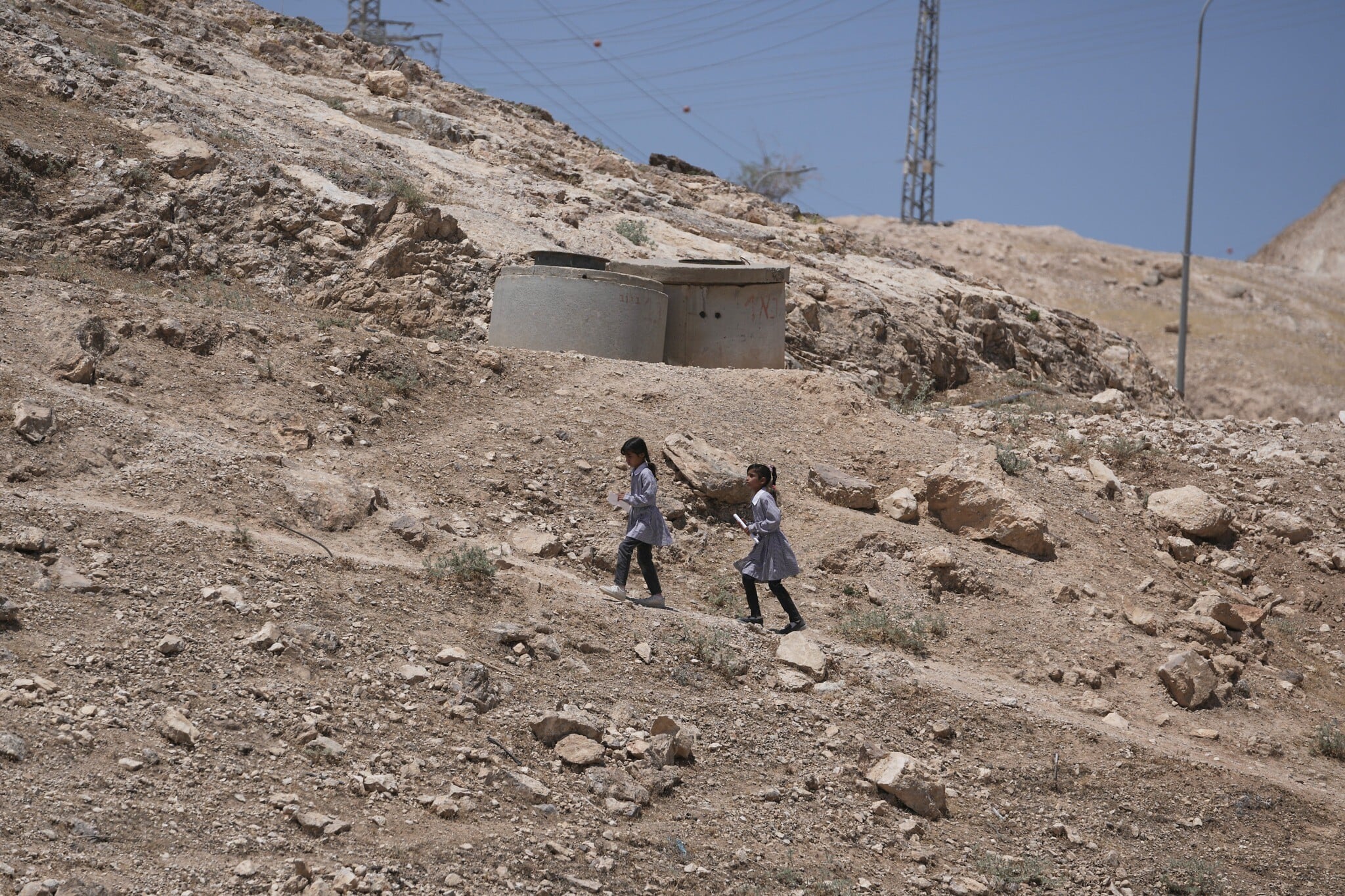
The PA has long struggled with financial solvency, relying heavily on foreign aid amid widespread allegations of official corruption. Those issues have been compounded by Israel increasingly withholding tax revenues it collects on behalf of the Palestinians, which previously averaged around NIS 700 million ($270 million) a month and accounted for some 60% of the PA’s budget.
In September, PA President Mahmoud Abbas said the amount being held by Israel had reached $6 billion.
For the last five years, the PA has attempted to deal with the shortfall by paying its public sector employees, including more than 40,000 teachers working in PA government schools, only part of their salary, often cutting the checks months late.
On September 22, 2026, for example, the Palestinian Finance Ministry announced that public-sector employees would be paid for the previous June, though only at 50% of their normal salary or NIS 2,000, whichever was higher.

In 2023, teachers in the West Bank went on strike over the partial payment of their salaries, but it failed to resolve the crisis.
Later that year, the PA issued a directive allowing public-sector employees to work just two days a week. The move meant schools would only be open for two or three days a week, depending on the facility, according to a recent report by the Association for Civil Rights in Israel detailing the crisis and other challenges to Palestinian schooling, including Israeli restrictions on movement.
Ahead of the start of the current school year, on September 4, Saad Erekat, head of the Palestinian Teachers’ Union, acknowledged in an interview with official PA television that schools had been operating just three days a week in recent years. His remarks indicated that the shortened week was part of an arrangement between the PA and teachers in light of the salary cuts.
He linked a return to a full school week to the restoration of teachers’ full salaries.
“I want a full salary and full schooling,” he said.
Declining scores
According to the ACRI report, even on the days when they are open, the schools often have shorter hours due to the cuts. The amount of time spent on Arabic language curriculum alone has been reduced by nearly two-thirds, ACRI says.
In early September, the Organisation for Economic Co-operation and Development published 2025 figures from the Program for International Student Assessment, or PISA, showing that proficiency in math and science among Palestinian 15-year-olds had fallen since 2022, the last time the PA was tested. Only reading scores remained nearly the same.
According to the published data, around 9,000 students took part in the tests in 2025.
It’s unclear to what degree the curtailed school hours were reflected in the test scores. Most other countries also saw declines in all three subjects, including Israel, where scores dropped by dozens of points.
Unlike Israel, however, Palestinian test scores fell well below the OECD average and were among the lowest globally in both 2022 and 2025.
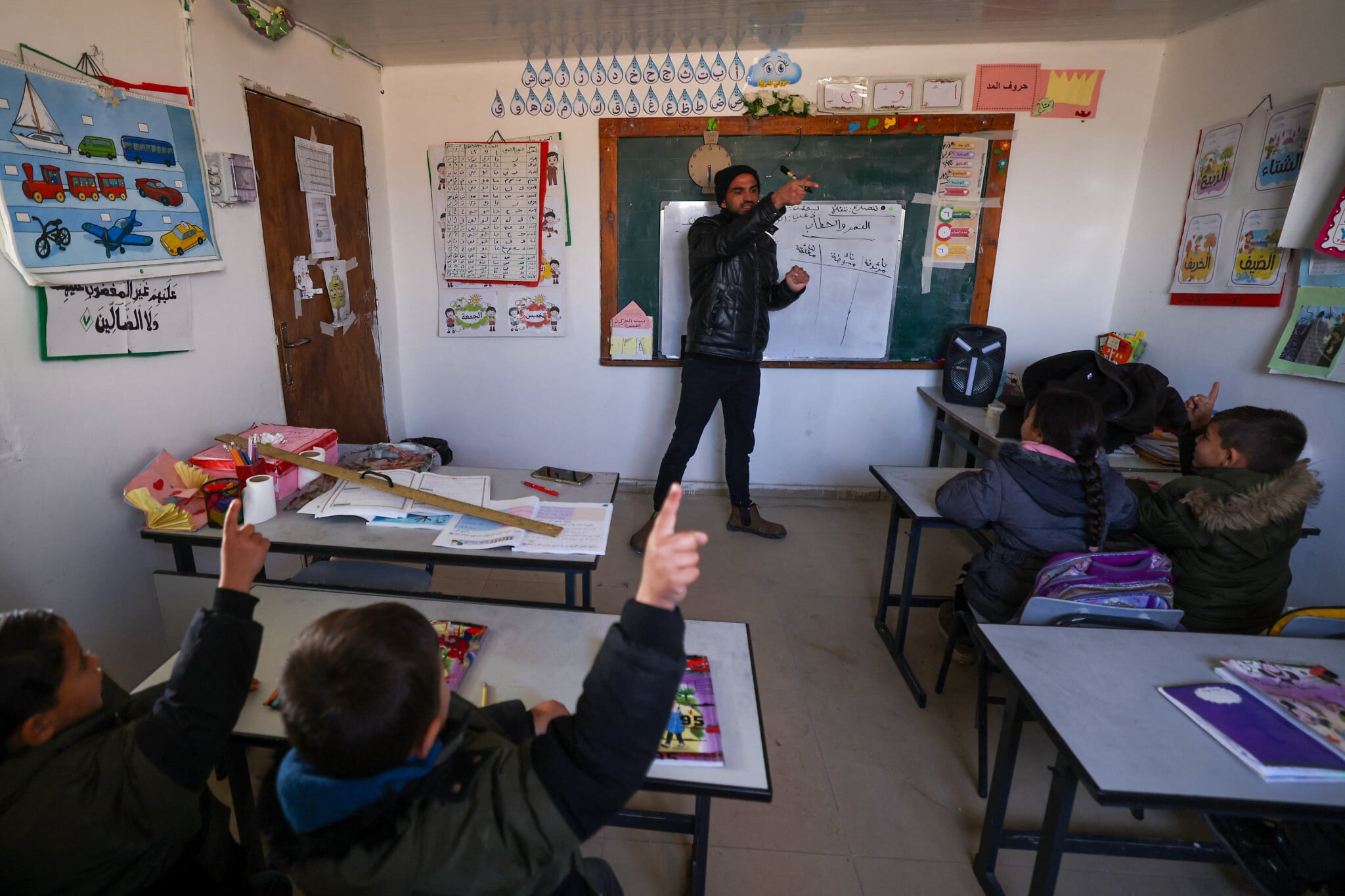
At the same time, passing rates for high school matriculation exams in 2023 and 2024 remained on par with 2022 levels, according to the Palestinian Central Bureau of Statistics. The agency has yet to publish figures for the last two years.
Though there is not yet clear data, Palestinian parents and grandparents interviewed for this article said the situation worried them, expressing fears for their children’s education and future.
Reut Shaer, an attorney with ACRI, said that based on her conversations with Palestinians, the West Bank education crisis “affects almost everyone.”
“It’s a kind of deficit for the future — something you know won’t be possible to repair,” she said. “In other words, it’s a loss of hope for the children’s future.”
According to ACRI, all students attending PA government schools in the West Bank are studying for half the week or less as a result of the cash crunch. As of September 2026, according to PA figures, more than 600,000 students in the West Bank were enrolled in the free government schools.
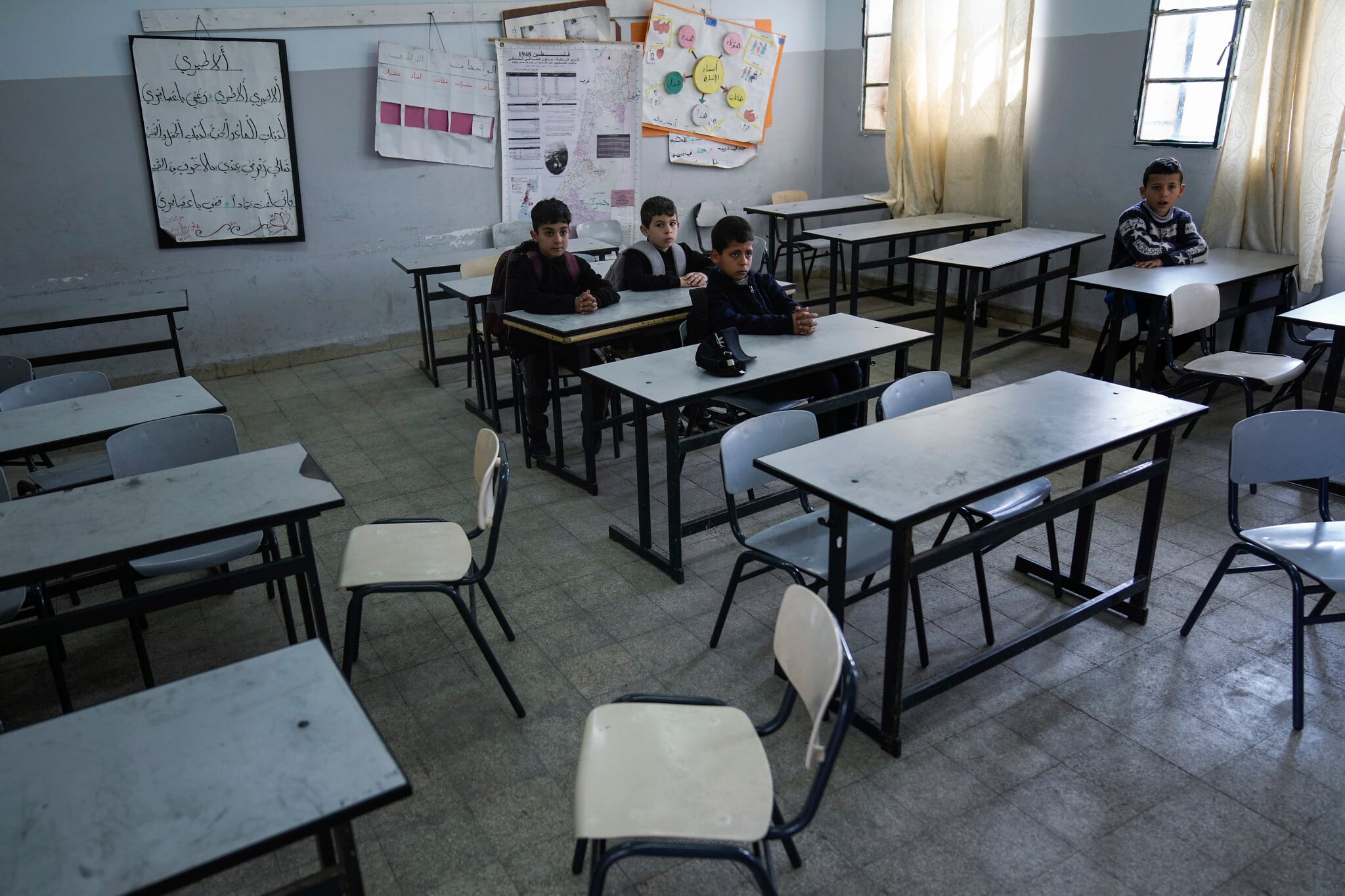
Largely unaffected are the approximately 46,000 students in the West Bank who attend schools run by the UN’s agency for Palestinian refugees, UNRWA, or the 163,787 pupils at private schools.
While government schools are funded by the PA and parents do not pay tuition to enroll their children, private schools charge several thousand shekels a year, allowing them to pay teachers and remain open as usual.
Palestinians say the crisis has only exacerbated disparities between pupils in private school and those in public school.
A Ramallah history teacher interviewed anonymously by ACRI said their daughter had graduated first grade without knowing her letters in Arabic or English. “We are considering moving our daughter to a private school, but tuition has risen significantly,” the teacher said. “Real gaps have emerged between children whose families can afford to provide them with regular schooling and children who depend on the public education system.”
A Ramallah resident who sends his children to private schools told The Times of Israel that tuition at a private school in the city now costs around NIS 10,000 ($3,150) per child per year. The father, who asked not to be named, said tuition fees rise every few years.
Uphill both ways
The shortened school week is only one of the problems facing PA government schools. Another challenge that has intensified in recent years, particularly since October 7, 2023, is the proliferation of checkpoints and movement restrictions that make it harder for students and teachers to reach school.
Daraghmeh said checkpoints erected in recent years and new restrictions imposed in the northern Jordan Valley have made it increasingly difficult for both students and teachers to get to school, cutting off some villages from the schools that serve their children.

“Teachers are late. There are days when it’s impossible to get there at all. Over the past two days, because of the Jewish holidays [the eve of Yom Kippur and Yom Kippur, shortly after which the interview took place], the checkpoints were closed and the children couldn’t get to school,” he said.
An especially acute example has emerged since October 7 in Hebron’s Jabari neighborhood, which lies within the city’s H2 area. Palestinians live in the neighborhood, but unlike most of the Palestinian city, H2 remains under full Israeli security control, under the 1997 Hebron Protocol.
Aref Jabari, a neighborhood resident whose children and grandchildren attend school, said students can no longer walk to the elementary school located within the neighborhood because of street closures and a fence erected in the area.
“The school is 50 meters from my house, I can see it from the window, but students can’t get there on foot. They have to make a detour by car through a checkpoint that remains open – a distance of three kilometers,” he said.
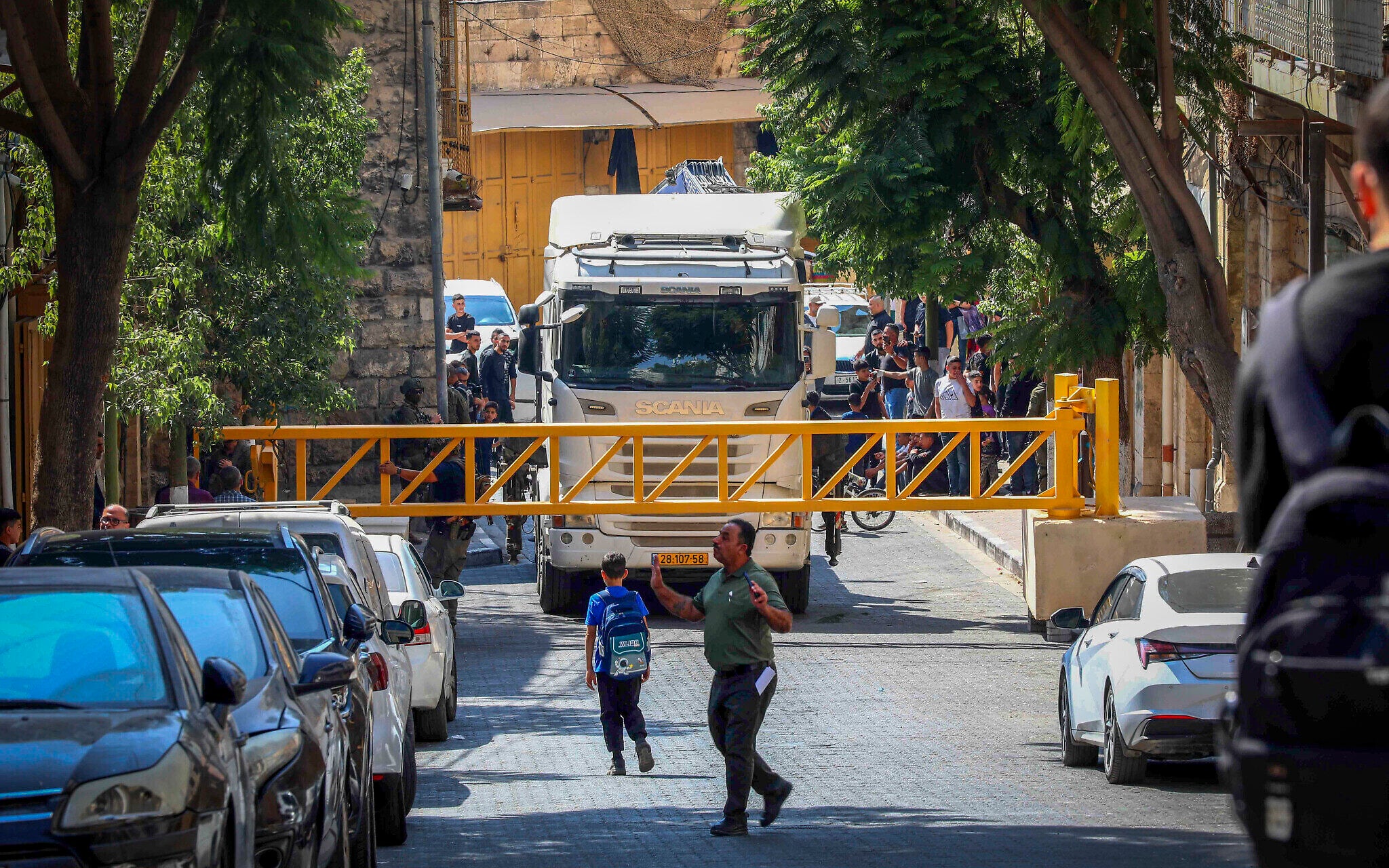
Private schools, by contrast, provide transportation that picks children up from their homes and takes them to school, Jabari said, shifting responsibility for navigating the closures from parents to the schools and making it easier to cope with Israeli restrictions.
Those factors are pushing some families in the neighborhood to move their children into private education.
“There are people in the neighborhood who are a little better off financially and send their children to private schools, the more expensive ones, which cost around NIS 6,000 ($1,900) a year,” he said.
According to the Association for Civil Rights in Israel report, attendance at government schools in Hebron’s H2 area has fallen by 25% since October 7, 2023, compared with the period before the war and it is believed that most of those students have moved to private schools.
Dangerous minds?
While the PA remains heavily reliant on foreign aid to weather financial crises, raising money for education is complicated by accusations that government curriculum includes inciting material against Israel and Jews.
A study of PA textbooks, published in late 2025 by the Institute for Monitoring Peace and Cultural Tolerance in School Education (IMPACT-se), found that such material had remained unchanged over the previous four years, despite PA commitments to the United Nations and European Union to reform the curriculum.

Shaer said blocking money meant to pay for Palestinian schools was poor policy.
“Preventing children from receiving an education doesn’t benefit Israel,” she said.
Daraghmeh, whose children currently attend PA schools and who himself studied in the Palestinian territories some 20 years ago, also rejected allegations of incitement in the Palestinian education system.
“I studied from first grade through high school and also at university. Nobody incited me against Jews,” he said. “In the curriculum today, nobody talks about Jews. On the contrary, they teach mathematics, language, culture and technology.”
Erekat, the Palestinian Teachers’ Union chairman, said the solution to the schooling crisis lies in confronting Israel over its decision to withhold the PA’s clearance revenues, though he did not elaborate on what such an effort should entail.
The union chief said teachers had sought to reach a deal with the PA to address their situation, including a proposal for teachers alone to get full salaries. The PA rejected the proposal, he said, on the grounds that it could not discriminate between different groups of public-sector employees.
The Palestinian Authority did not respond to a Times of Israel request for comment on whether it has plans to address the crisis or is pursuing efforts to resolve it.
Erekat voiced concern over whether the education system could continue operating on a reduced schedule indefinitely.
“Life is unbearable. It’s a heavy burden on teachers and public employees,” he said. “You can endure it for a month or two, three or four months. You can’t endure it for five years.”