UNESCO‘s first Holocaust guide meant to advance global study of mass atrocities
UN cultural organization was founded in the wake of Nazi crimes in WWII, director Irina Bokova tells Jewish group
UNESCO’s director general has hailed the organization’s first policy guide on Holocaust education as a document that places “Holocaust Education and Genocide Prevention at the heart of our action for peace.”
At the launch of the guide Monday during the 15th plenary assembly of the World Jewish Congress in New York, Irina Bokova said, “I am convinced education, culture and knowledge have become core security issues in the world today to combat violent extremism built on distortions of faith or history.”
The 72-page guide, which Bokova said was the first in a series of projects to be conducted in partnership with the United States Holocaust Memorial Museum, notes that UNESCO, the UN’s educational and cultural arm, was created in the wake of the Nazi crimes of World War II. That past placed education about the Holocaust, and about genocide and mass atrocities more generally, “at the heart of UNESCO’s efforts to foster peace and mutual understanding.”
Aimed at policy-makers, curriculum developers and textbook writers, the guide suggests linking the Holocaust to other examples of genocide, while avoiding generalizing about each event.
“It is important to incorporate a local or regional perspective into the study of genocide, or more generally of mass atrocities,” it says.
It adds: “Many European countries teach about the Holocaust as well as other crimes perpetrated by Nazi Germany and its collaborators.”
Countries in sub-Saharan Africa often express interest in studying the 1994 genocide of the Tutsi in Rwanda or the 1904 genocides of the Herero and Nama in German South-West Africa (today Namibia), according to the guide.
Other regions might explore the genocides and mass atrocities in Cambodia, Darfur or Bosnia’s Srebrenica.
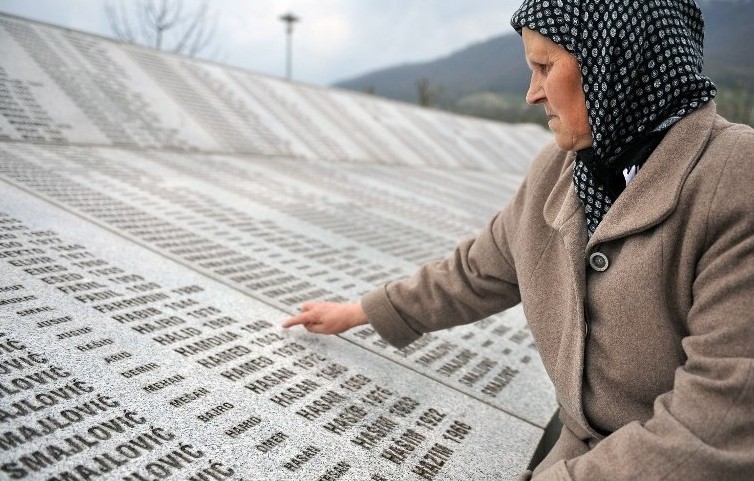
“Learners may feel that examining events from within their own geographic region offers a sense of connection and more commonalities with their own realities and history than cases from other regions.”
Conversely, the guide cautions that local case histories may be too sensitive in countries where genocides or other mass atrocities have taken place.
“Introducing the topic through the lens of another historical case can provide an opening for examining one’s own history.”
“One can draw on the body of knowledge, experiences and conceptual understanding that have emerged from genocide studies. A study of the Holocaust, for example, can be a good starting point, due to the wealth of high-quality educational resources supported by extensive pedagogical knowledge regarding learning outcomes.”
The guide emphasizes that each event has specific features and differences “that make each historical context unique” and that “comparison should not lead to minimizing the importance of one or the other event; each should be understood and recognized in its own right and complexity.”
In her WJC address, Bokova also addressed the controversy over UNESCO’s recent statements about the Temple Mount. She defended Jewish links to holy sites in Jerusalem, criticizing her own agency’s governing board for passing a series of resolutions that downplay or deny any Jewish connection to the city’s most sacred spaces.
Bokova called the Temple Mount the “holiest place in Judaism.”
“The Al Aqsa Mosque/Al-Haram al-Sharif, the sacred shrine of the Muslims, is also the Har Habayit – or Temple Mount – the holiest place in Judaism, whose Western Wall is revered by millions across the world, a few steps away from the [Holy] Sepulchre and the Mount of Olives holy to the Christians,” she said.
Defending the links of all three monotheistic religions to Jerusalem, Bokova told delegates that “to deny, conceal, or erase any of the Jewish, Christian or Muslim traditions runs counter to the reasons that justified [the Old City’s] inscription on the UNESCO World Heritage list.”
Last October UNESCO passed a resolution sponsored by Arab states that ignored Jewish and Christian historical ties to Jerusalem’s holy sites, sparking an outcry in Israel.
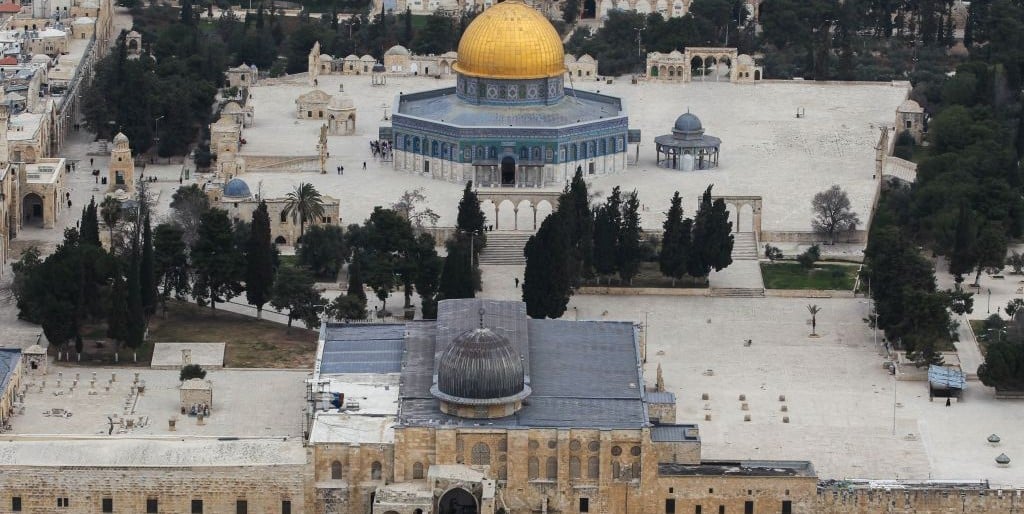
Bokova subsequently criticized the agency saying, “The heritage of Jerusalem is indivisible, and each of its communities has a right to the explicit recognition of their history and relationship with the city.”
Israel and the United States suspended their funding to the committee in 2011 after the Palestinians were admitted as members. Both countries lost their voting rights as a result, which has made it easier to pass anti-Israel resolutions.
UN Secretary General Antonio Guterres, who also attended the WJC plenary assembly, said anti-Semitism has worsened in recent years, the UN News Center reported.
He called the denial of Israel’s right to exist a modern form of anti-Semitism, saying that right was undeniable, and that Israel also had the right to live in peace and security with its neighbors.
Guterres said he would be on the front lines in the fight against anti-Semitism to make sure it was condemned and eradicated.