Unsure of victory, government to bring MK suspension bill to vote
2 Likud lawmakers say they won't support legislation to allow MKs to boot colleagues, but Yisrael Beytenu expected to abstain, giving prime minister victory anyway
The Knesset was scheduled to vote Monday evening on a controversial bill that would allow a vote by 90 MKs to suspend fellow lawmakers — despite the coalition not having mustered the necessary support to win the vote.
The legislation was drafted after in early February after three Arab MKs from the Joint (Arab) List faction visited families of Palestinian assailants killed while carrying out attacks on Israelis and observed a moment of silence, drawing the ire of lawmakers on the right.
Prime Minister Benjamin Netanyahu, who has pushed the bill, will likely need all 61 members of his coalition to vote for the measure. However, Likud MKs David Amsalem and Abraham Naguise announced this week they would not vote with the government, Channel 2 reported, leaving the bill two short of the majority required in the 120-seat parliament.
The two said they were protesting the government’s policies toward Ethiopian immigrants to Israel, according to Channel 2.
The bill aims to allow 90 MKs to vote to suspend a fellow lawmaker for one three reasons: negating the existence of the State of Israel as a Jewish and democratic state; inciting to racism; and supporting armed struggle by a hostile state or a terrorist organization against the State of Israel.
Speaking before his Likud party meeting in the Knesset, Netanyahu made it clear he still hoped to see the bill pass the vote.
“I expect all those who say they are in favor of the bill to vote in support and to not give an advantage or profit to those who support terror,” he said, pinning hopes on right-wing and centrist opposition parties voting with the government.
Avigdor Liberman, head of the hawkish Yisrael Beytenu opposition party, said Monday he would not support the measure unless he gets tit-for-tat backing from the coalition for a bill to block the Supreme Court from involvement in activities of the Central Elections Committee.
“There won’t be any free gifts: If they give, they’ll get. If they don’t give, they won’t get,” he said.
According to Channel 2, Liberman did indicate, though, that his six-member faction would not vote against Netanyahu’s bill, either, effectively letting it pass.
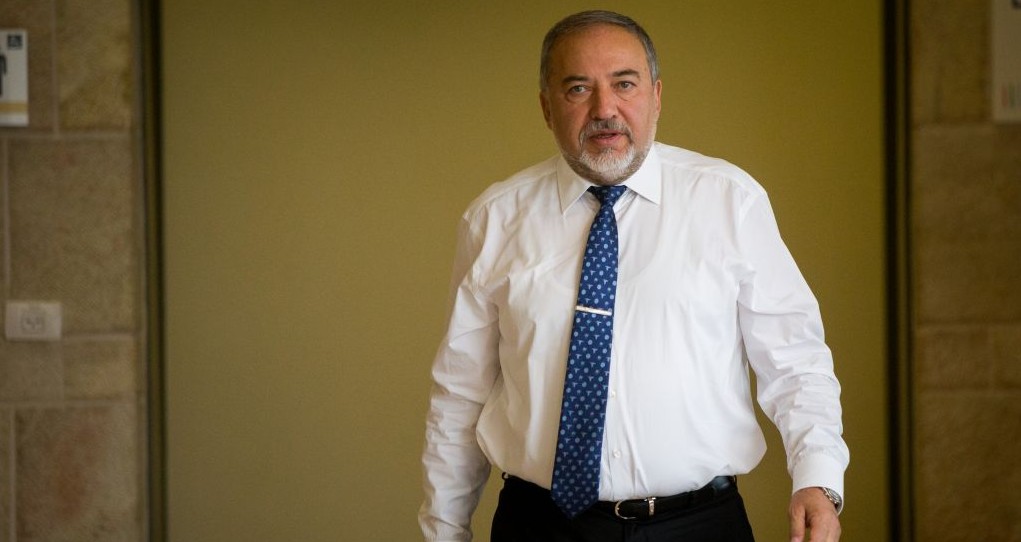
Liberman’s Supreme Court bill would allow the elections panel to boot some Arab factions, including the Balad party, from which the three Arab MKs under fire hailed, without the court overturning the move, as it has done in the past.
Liberman said Netanyahu’s measure alone would “give immunity to the representatives of terror organizations who are sitting in the Knesset,” predicting that mustering 90 MKs to kick out a lawmaker would be a near-impossible feat.
The MK suspension bill has drawn considerable opposition.
In February President Reuven Rivlin harshly criticized the draft legislation, saying the bill reflected “a problematic understanding of parliamentary democracy” and that the correct address for MKs who had committed or were suspected of committing crimes was the attorney general, not fellow lawmakers.
In February a stormy meeting of the Knesset’s Constitution, Law and Justice Committee voted to send the MK suspension bill for a first reading in the Knesset — prompting the head of the Joint List MK Ayman Odeh to announce that he and members of his party were considering resigning from the Knesset if the three lawmakers who made the condolence visit were expelled.
The three lawmakers were suspended on February 8 by the Knesset Ethics Committee — Hanin Zoabi and Basel Ghattas receiving for four months and Jamal Zahalka for two.
Odeh also said a bill such as the one under discussion could strengthen a nascent debate in Arab Israeli intellectual circles about creating a separate Arab parliament in Israel, which would act as counterweight to a Knesset that only represented the country’s Jews.